7 Ways to Style Kitchen Shelves Like a Natural Cottage Home
· thehazelcottage@mail.com
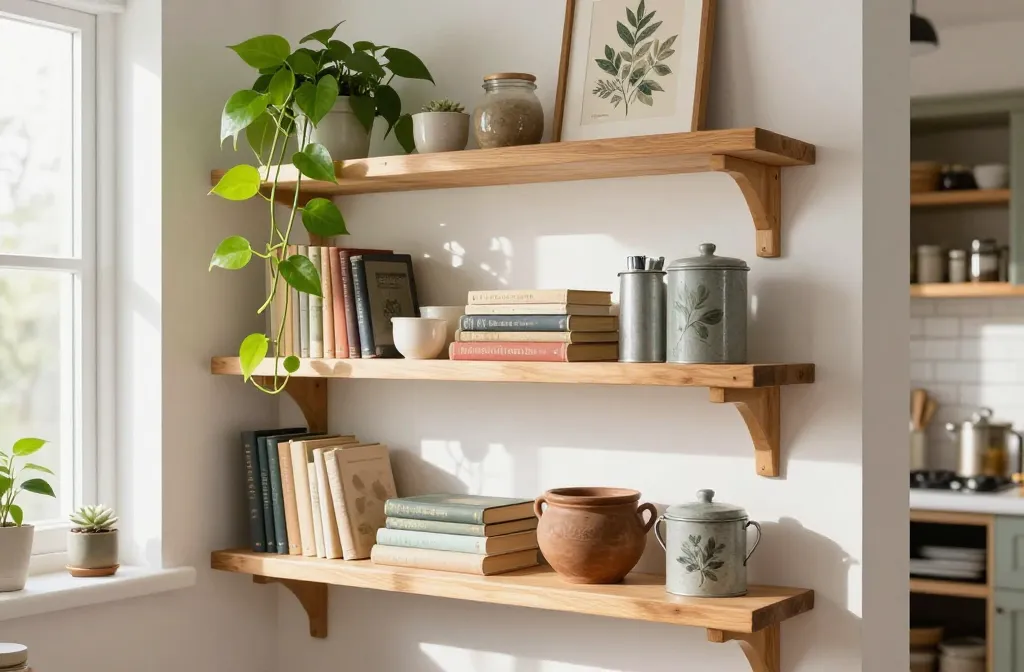
I’ve rearranged my own apartment kitchen shelves dozens of times, chasing that warm, cottage-in-the-country vibe without clutter. You’ll learn practical, room-tested ideas that anyone can implement with items from a garden centre or hardware store. By the end, your shelves will feel intentional, bright, and inviting—even in a small space.
1. Layered Books, Farmhouse Accents, and Fresh Greenery
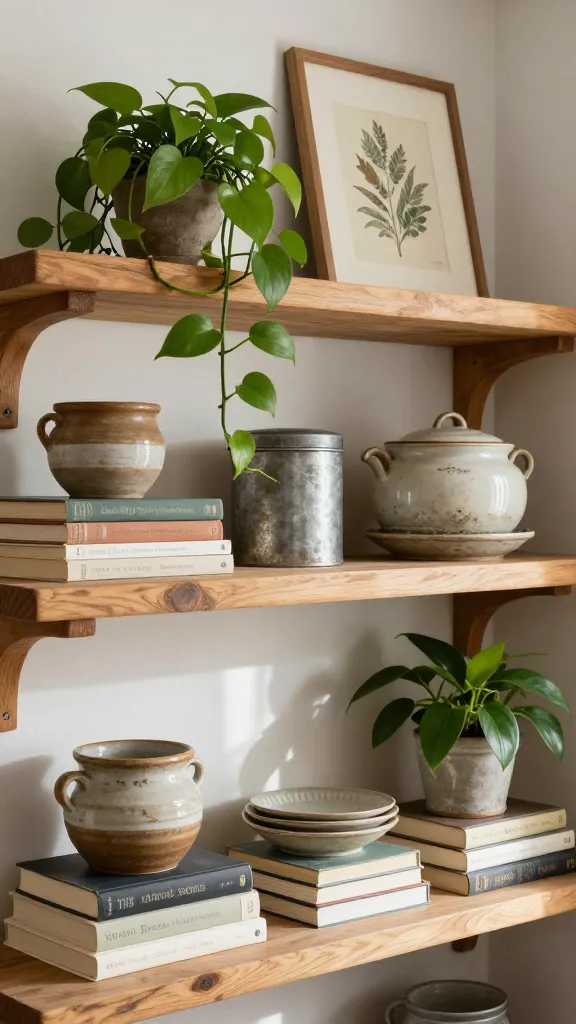
The first mistake is trying to fill every inch with single-purpose items. When shelves mix books, small decorative pieces, and living greens, the eye travels and the space feels larger. A cottage look thrives on texture, color, and a sense of collection rather than perfection.
Signs to Watch For
-
<li shelves look busy or sparse at the same time
<li mismatched heights create visual tension
<li greenery wilts quickly from dry indoor air
How to Fix It
- Stack a few novels horizontally to create plinths for smaller items.
- Interleave rustic pottery, a vintage tin, and a framed botanical print.
- Add a low-maintenance plant like a pothos or philodendron near a bright window.
What to Use Instead
- A small woven basket to tuck away everyday items
- Two to three in-range book heights to create step-like levels
- A single stem of greenery in a simple jar
Takeaway: Build staggered heights with books and decorative pieces, then crown with a live plant for instant cottage charm.
2. Perfectly Imperfect Dishes as Decor Elements
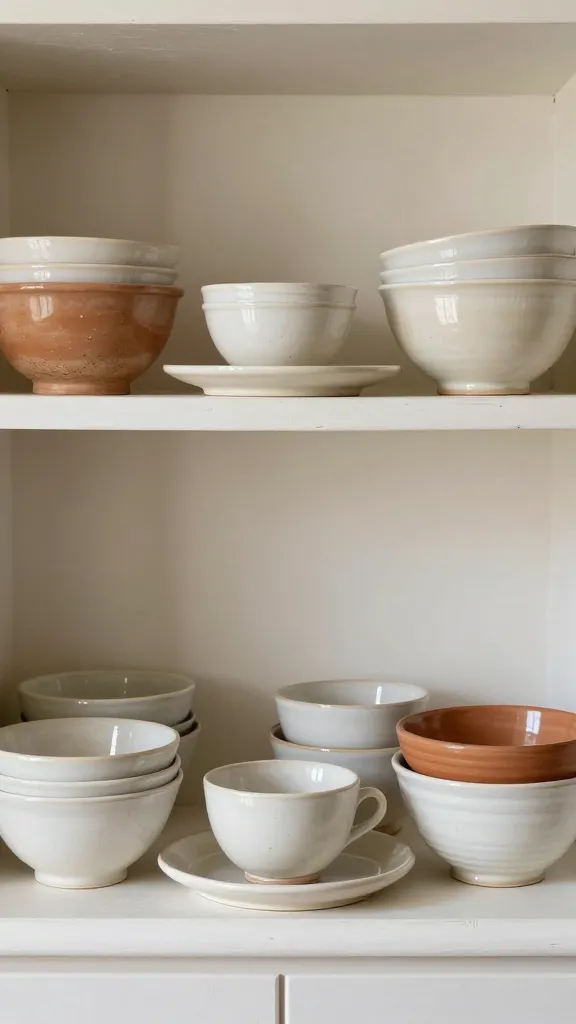
Dishes are practical items, but when displayed with care they become furniture-like accents. A few well-chosen pieces echo a country kitchen and keep shelves from feeling clinical.
Signs to Watch For
- Too many matching pieces that read sterile
- White ceramics dominate and wash out color schemes
- Haphazard spacing between items
How to Fix It
- Rotate 2-3 bowls with natural textures (terracotta, stoneware, or glazed ceramic).
- Group 3 differently shaped pieces together on a small tray.
- Pair a dish with a plant or a stack of vintage cookbooks.
What to Use Instead
- A shallow wood tray to group items
- Two matching mugs on a small stand
- A single colorful plate framed in a simple border
Takeaway: Use a tray to curate a mini vignette of dishes and greenery for instant cottage warmth.
3. White Walls, Warm Wood, and Subtle Contrast
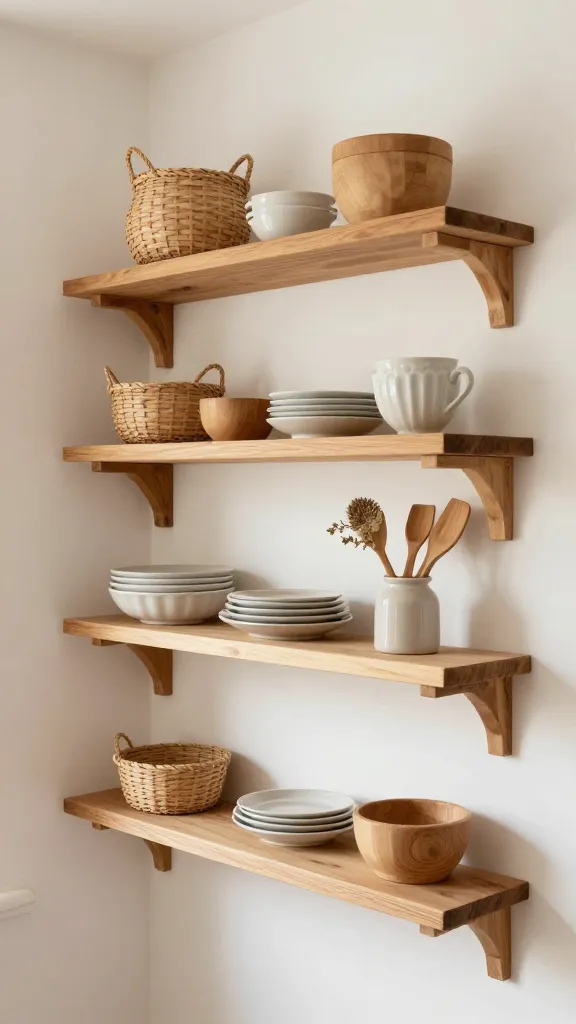
Bright walls with wooden shelving create that light, airy cottage feel. The challenge is avoiding stark white shelves that clash with natural textures.
Signs to Watch For
- Overly glossy shelves that reflect too much light
- Wood tones clash with wall color
- Textures don’t repeat across shelves
How to Fix It
- Choose shelving in a warm pine or driftwood finish.
- Paint walls in a soft, warm white or pale cream to soften the contrast.
- Carry one wood tone across all higher pieces for coherence.
What to Use Instead
- A thin satin paint for shelves that catches light softly
- Rope-edge or beaded details for subtle cottage character
Takeaway: Harmonize wall and shelf finishes to keep the space bright without feeling clinical.
4. Natural Textiles: Linens, Ribbons, and Burlap Accents
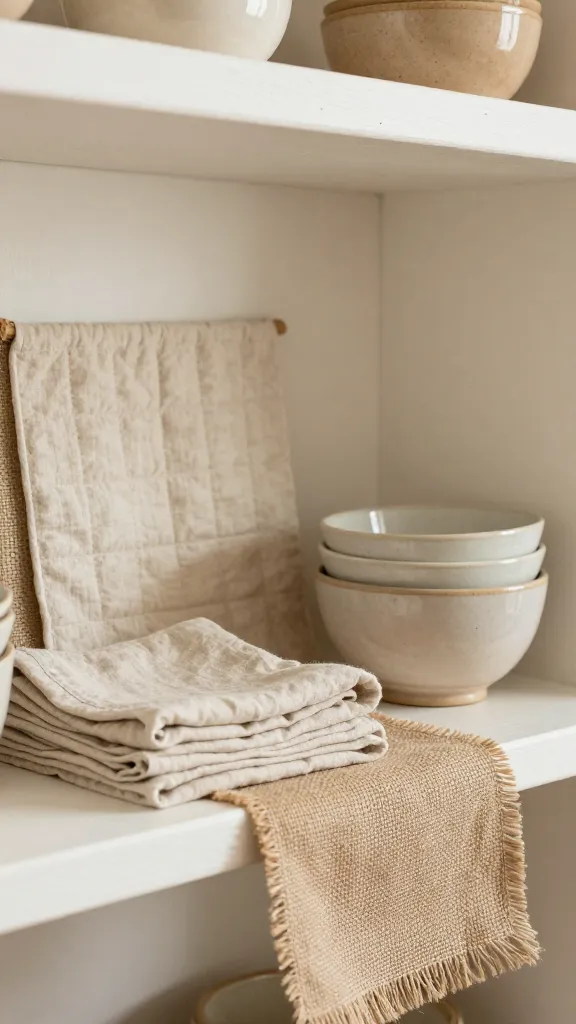
Textiles soften shelves and add tactile warmth. The cottage aesthetic leans on natural fibers that pair well with kitchen life.
Signs to Watch For
- Shiny or synthetic textures dominate the display
- Color palette feels flat or overly neon
- Textiles look stiff or unwashed
How to Fix It
- Incorporate a linen napkin or burlap runner under a stack of bowls
- Use a cotton or jute drape to cover the back of a shelf section
- Add a small quilted placemat as a backdrop
What to Use Instead
- Two-tone linen napkins in muted greens or blues
- A natural-fiber storage basket with texture
Takeaway: Introduce natural fabrics to soften gaps and unify the cottage vibe.
5. Greenery That Survives Indoors Without a Green Thumb
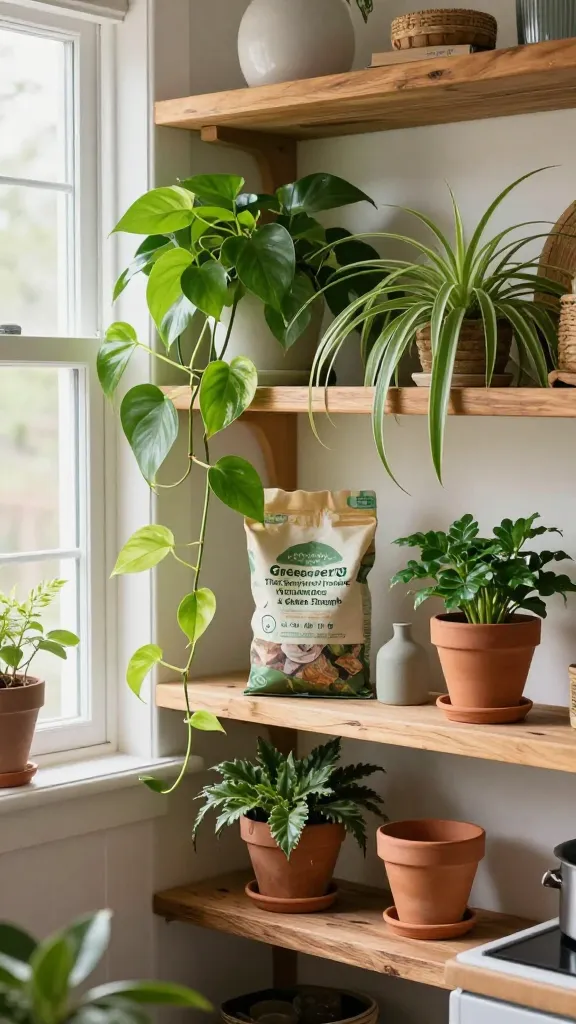
Real plants are non-negotiable for cottage shelves, but they should be forgiving. Choose varieties that thrive in bright indirect light and tolerate occasional neglect.
Signs to Watch For
- Leaves yellowing or brown at edges
- Plants look leggy or shrink away from light
- Soil dries out or stays perpetually wet
How to Fix It
- Place pothos, spider plant, or a small ZZ plant on shelves near a window
- Water only when the top inch of soil feels dry
- Use a lightweight potting mix from the garden centre for better drainage
What to Use Instead
- Compact succulents in shallow bowls for low maintenance display
- A single trailing plant that can creep along the edge of a shelf
Takeaway: Choose forgiving greens and water them on a simple schedule to keep shelves lively year-round.
6. Metal and Glass for Light, Air, and a Hint of Industrial Cottage
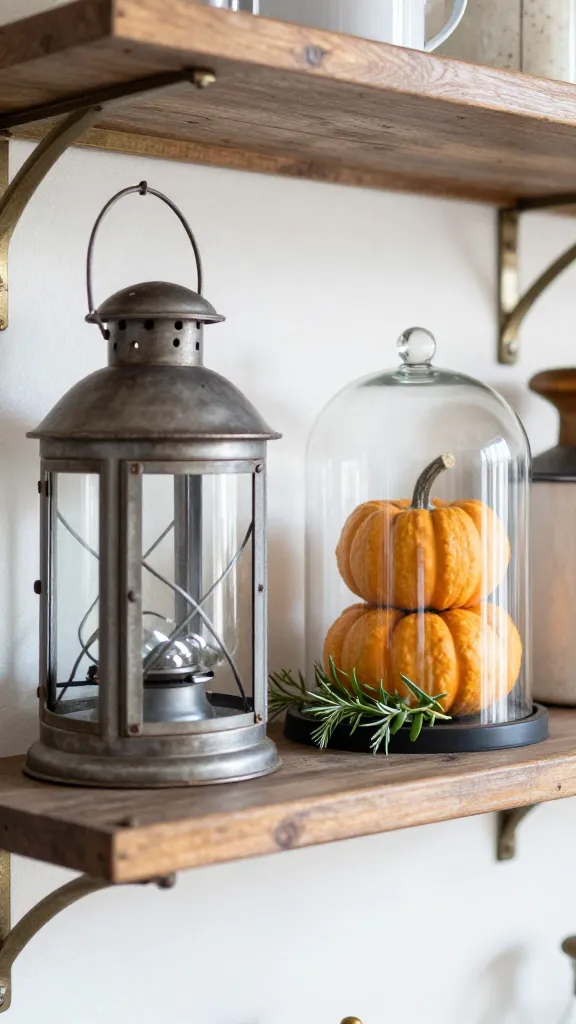
Metal and glass add structure without weighing down the cottage mood. Use them to echo hardware-store finds while keeping the look soft.
Signs to Watch For
- Too many shiny accents that look cold
- Bulky metal pieces crowd a small shelf
- Glass items dominate and create fragile vibes
How to Fix It
- Rotate a small metal lantern with a glass hurricane
- Pair a glass cloche over a seasonal arrangement
- Use matte-finished metal finishes rather than chrome
What to Use Instead
- A vintage tin or enamel mug as a small decorative accent
- A simple wire basket to hold herbs or dried fruit
Takeaway: Mix metals with soft textures to keep the cottage look bright and approachable.
7. Seasonal Swaps and Thoughtful Rotations
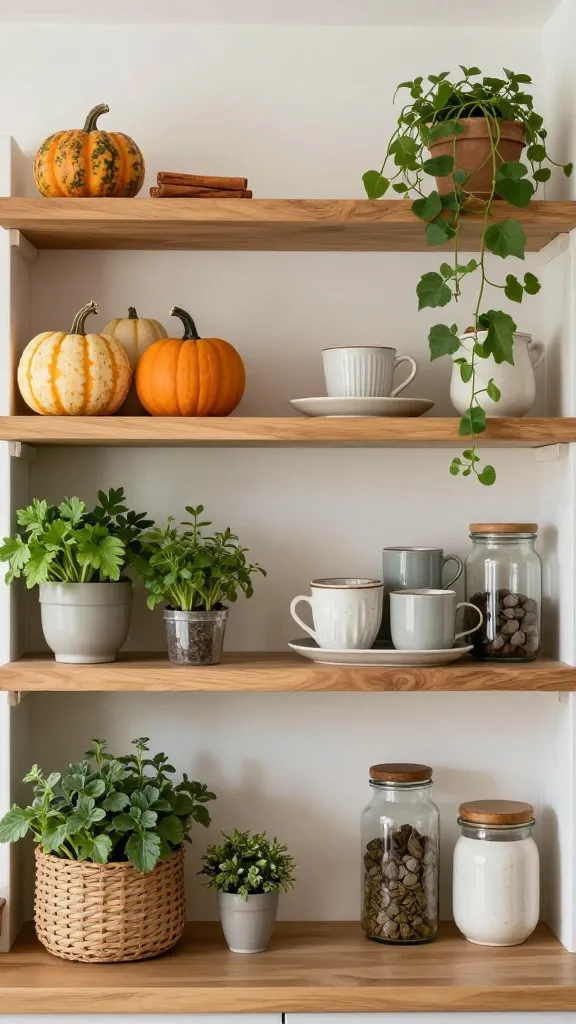
Static shelves feel stale quickly. Small, thoughtful changes keep the cottage vibe fresh and personal without turning into a full redesign.
Signs to Watch For
- Items look dated or repeated across multiple shelves
- Seasonal colors clash with your everyday palette
- Display feels crowded or underutilized
How to Fix It
- Swap one item per shelf with a seasonal piece (pumpkins in autumn, herbs in spring)
- Rotate a plant or two to different shelves to refresh spaces
- Replace a right-sized dish or mug set with a seasonal colorway
What to Use Instead
- A small seasonal table runner or placemat
- One new plant or sprig of dried florals each month
Takeaway: A light rotation schedule keeps the shelf styling lively without a full refresh.
Frequently Asked Questions
How do I choose the right shelf height and spacing?
Start with one shelf unit and measure available space. Leave 2–3 inches between items and adjust so tall pieces don’t block the view of shorter ones. Use a few multi-height items to create visual steps across the display.
What if I don’t have much natural light?
Focus on bright indirect light near a window and use light-reflecting surfaces like a clear glass vase to bounce what light you have. Choose plants that tolerate lower light, such as pothos or ZZ plant, and group them where the light is best.
How can I prevent shelves from looking cluttered?
Embrace negative space and rotate 1–2 pieces monthly. Keep a consistent color palette and vary texture instead of quantity. Use trays to group items and keep surfaces clean.
What are safe, affordable options for shelf storage?
Wooden crates, small wicker baskets, and metal tins from the garden centre are practical and stylish. Use them to corral loose items, like tea towels or seed packets, to maintain a tidy look.
How often should I refresh shelf styling?
Every 4–6 weeks, swap 1–2 elements or introduce a new plant. This keeps the look fresh without requiring a full redo. Keep a small stash of versatile pieces you can rotate in quickly.
What are common mistakes to avoid on kitchen shelves?
Avoid overcrowding, matching everything exactly, or placing heavy items on the top shelves. Keep the arrangement balanced with a mix of scales, textures, and a single focal piece per section.
Conclusion
With these practical tweaks, your kitchen shelves will read as a natural cottage space—cozy, welcoming, and distinctly yours. Start with one or two changes this week, then expand as you settle into the look you love.
Leave a Reply