15 Cozy Living Room Design Ideas Using Natural Materials Only
· thehazelcottage@mail.com
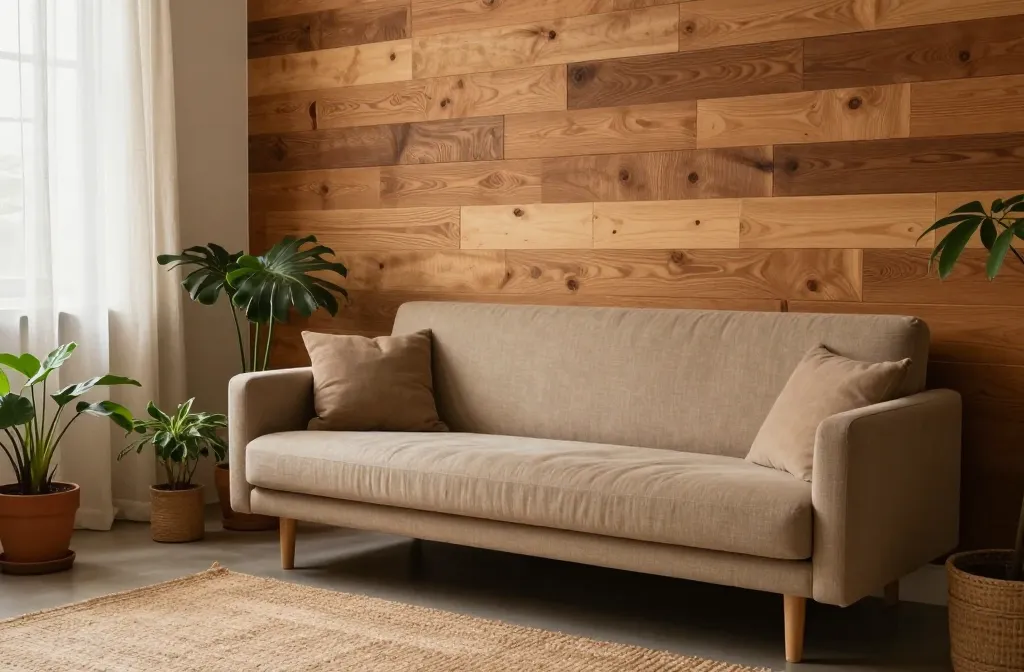
Fifteen small swaps changed my living room. Not one renovation, and nothing that happened overnight. None of them needs synthetic materials or a builder, and you do not have to do all fifteen. Pick the two or three that suit your space and the room starts reading as deliberate rather than generic almost straight away.
1. How Does a Wood Plank Accent Wall Transform a Room?
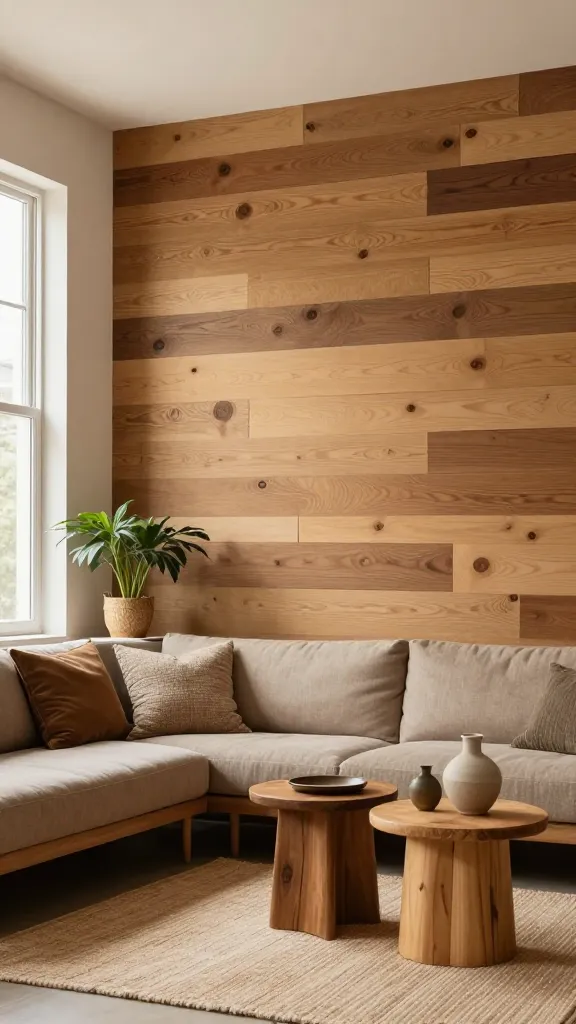
Real wood panelling, reclaimed pine sheets work well, adds texture and helps absorb sound in a way painted or laminated surfaces never will. Keep the panels to one wall, seal with a clear matte varnish, and let the surrounding walls stay a soft neutral so the grain does the talking.
Research on biophilic design shows that incorporating natural elements into indoor spaces reduces stress and improves wellbeing, and a 2021 systematic review of randomised trials found visual exposure to wood produces measurable but modest reductions in physiological arousal. Your guests may not articulate why the wood wall feels welcoming, but their nervous systems register the natural texture and respond.
A plain wall reads flat whatever you put in front of it. We once rented a place in Val d’Isère with cork on the walls, which sounds like a mistake and was the warmest room I have ever stayed in. Sound stopped bouncing. The whole space felt lined rather than painted. Reclaimed pine does the same job in a living room, and paint of any colour will not get you there.
Takeaway: One accent wall. Reclaimed pine. Matte varnish. Let the grain speak.
2. Why Do Linen and Wool Feel More Cozy Than Synthetics?
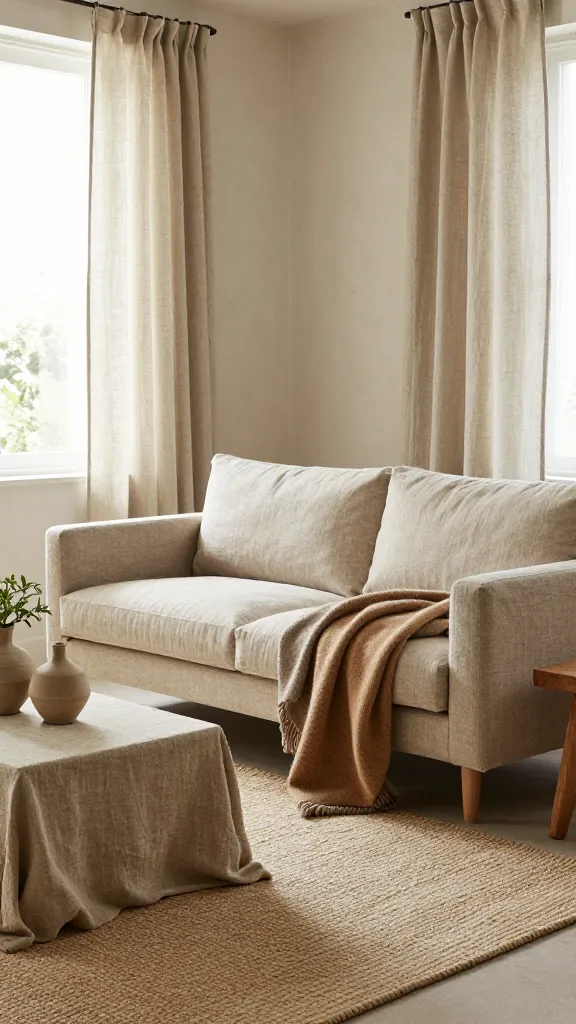
Synthetic fabric looks cheap the moment it sits beside anything natural, it doesn’t hold a crease, doesn’t soften with age, and traps heat oddly. Linen cushions and a wool throw on every seating piece fix this in an afternoon.
Linen breathes, wrinkles well, and softens with use, while wool research shows it regulates temperature, warm in winter, cool in summer, making it a year-round layer. Stick to undyed or naturally toned fabric rather than anything heavily chemical-dyed; it ages far better.
The cushions here are all linen or cotton now, and the throw is wool. One set of polyester cushions survives in the guest room, bought in a hurry years ago, and they look exactly as you would expect next to everything else. Nobody has ever commented on them. Everybody sits somewhere else.
Takeaway: Linen cushions. Wool throw. Undyed or naturally toned. Let it age gracefully.
3. What Does a Natural Fibre Rug Do That Synthetic Can’t?
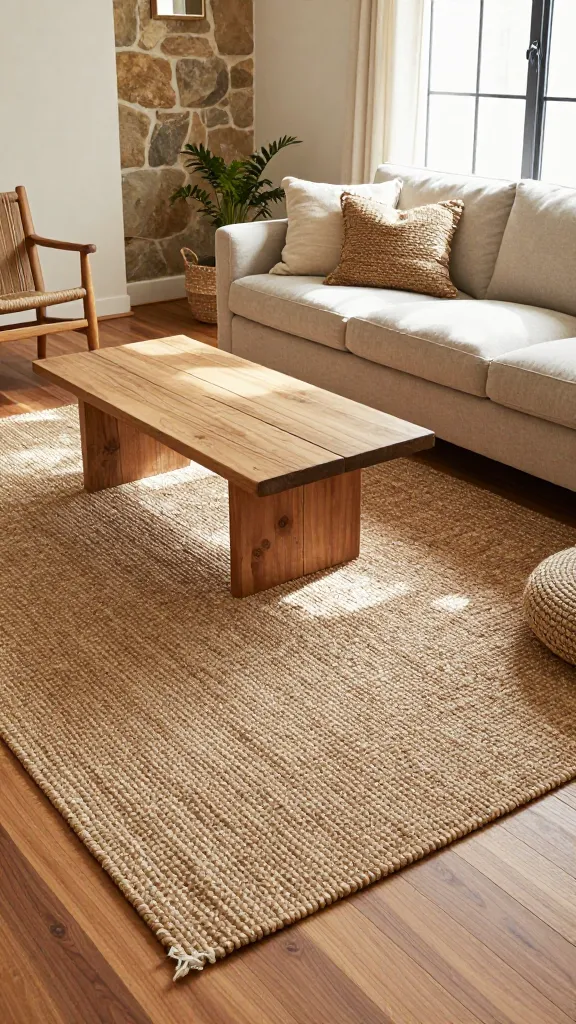
A natural fibre rug does two jobs a synthetic one can’t: it grounds the room visually, and it genuinely improves the acoustics of a hard-floored space. Jute and sisal both resist staining and pair naturally with wood and stone. Use a natural rubber or felt pad underneath rather than a synthetic one, and give it a full five-by-eight feet so it defines the seating area properly.
The room only came together once I switched to jute, it grounds the space, it defines the seating area, it absorbs sound. The acoustics improved immediately; the room stopped echoing. The synthetic rug before it had always looked slightly plasticky, no matter how nice the furniture around it.
Takeaway: Jute or sisal. Natural rubber pad. Five-by-eight feet. Let it ground the room.
4. Why Must Stone Be Real, Not Stone-Look?
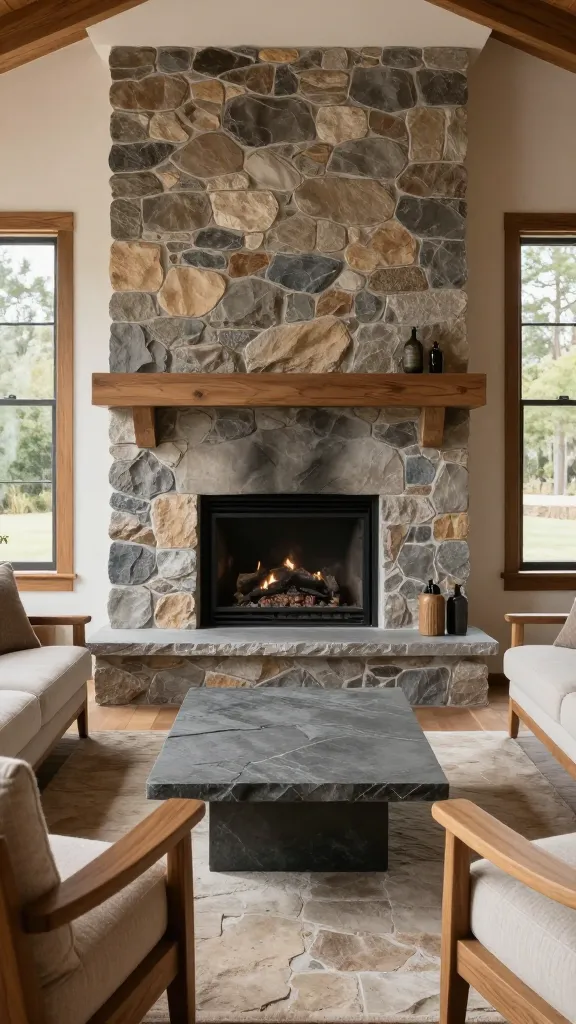
A slate coffee table top or a small stone veneer accent gives the room a cool, tactile counterpoint to all the warm wood and textile, but it has to be real. Stone-effect porcelain tile might look similar in a photo, but it reads flat and slightly plasticky in person, and it undercuts the whole point of building a room from genuine materials.
Seal it against staining and then leave it alone. Slate, limestone and marble all carry variation that a printed surface has to fake. My grandmother tiled her balcony in natural stone for an entirely practical reason, which was that spilled soil disappeared into the pattern and a sweep brought it back. That is the same quality doing decorative work indoors. Real stone hides its own life. Stone-effect porcelain shows every mark on a flat, even face.
Takeaway: Real stone only. Seal against staining. Let it contrast with warm wood.
5. How Do Unglazed Clay Pots Age Better Than Plastic?
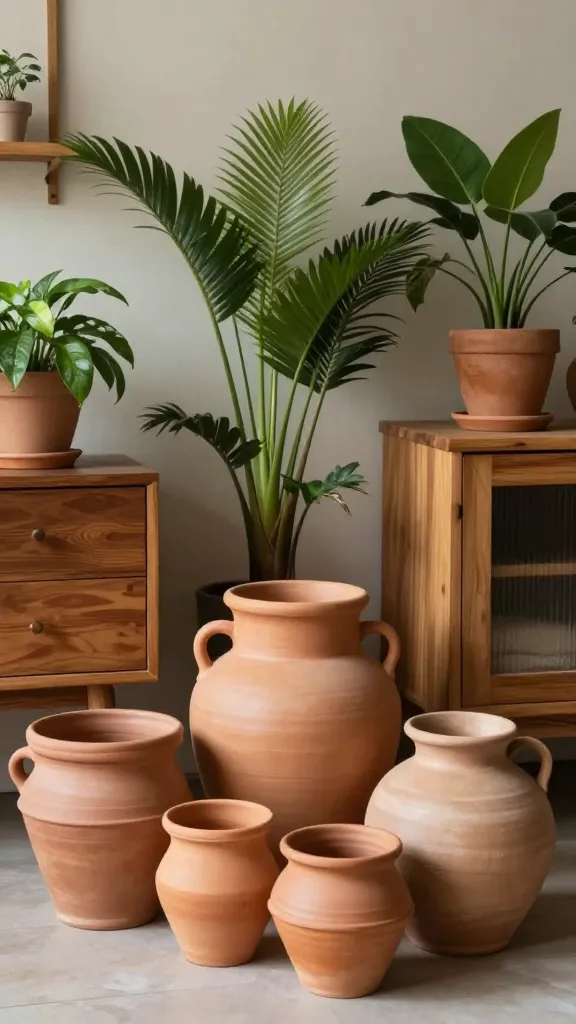
Plastic and glossy ceramic planters clash with wood the moment you put them side by side. Unglazed terracotta or stoneware pots, six to twelve inches, do the opposite, they age and weather in a way that only makes the room feel more considered over time. Group plants by size, keep drainage trays out of sight, and resist adding more than a few at once.
Terracotta ages, it develops a patina, it weathers, it tells a story, the whole dynamic changed once I made the switch. The plants look healthier, and the pots look like they belong. The plastic ones before always looked cheap, no matter how nice the plant.
Takeaway: Terracotta or stoneware. Six to twelve inches. Group by size. Let them weather.
6. What Does a Woven Chair Add to a Room Full of Solid Furniture?
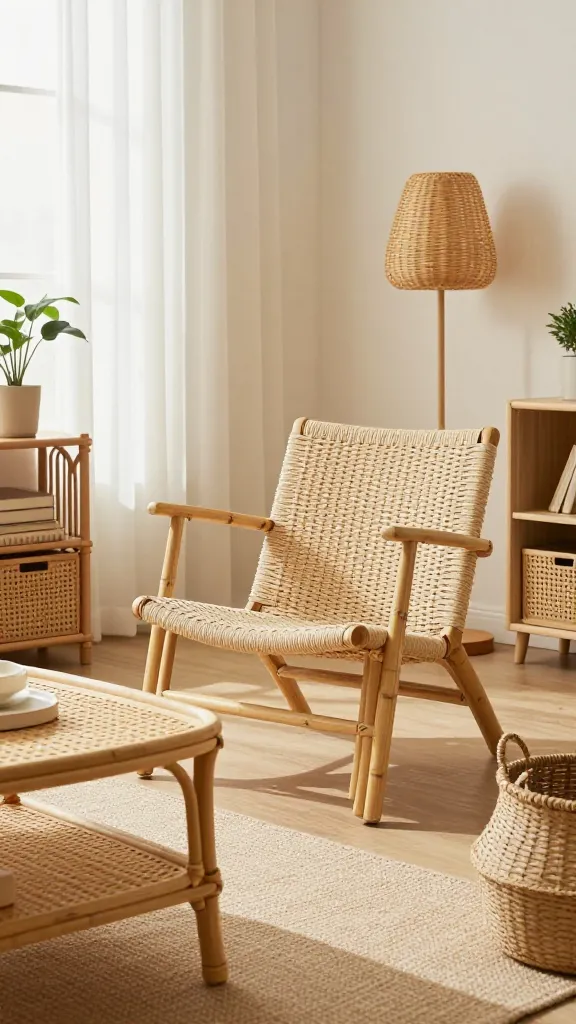
A single woven chair breaks up a room full of solid, heavy furniture and adds the lightness and breathability that heavy dark wood can’t. Bamboo and rattan both age gracefully with sun and daily use. One statement piece is enough, more than that starts to compete with itself rather than anchor the room.
All dark wood made the room feel closed in. One rattan chair fixed it. The weave reads as air rather than mass, so the eye passes through the chair instead of stopping at it, and rattan takes on a warm patina from sun and use that new furniture spends years trying to imitate.
Takeaway: One woven chair. Bamboo or rattan. Let it break up the heaviness.
When is a natural material the wrong choice?
More often than this category admits. Jute and sisal are the clearest example, because the same property that makes them good underfoot makes them bad in a house with real life in it. Natural plant fibre absorbs liquid rather than repelling it, cannot be wet-cleaned without risking shrinkage and mildew, and stains permanently. Spill red wine on a jute rug and you own a stained jute rug. A cheap synthetic in the same spot sponges clean.
So the honest rule is narrower than “natural is better”. Jute belongs in a low-traffic sitting room, not a hallway, a dining room, or anywhere a dog shakes itself dry. Untreated wood wants a coaster far more than laminate does. Linen creases, which is the entire point of linen, and if that reads as untidy to you rather than lived-in then you will be ironing cushion covers forever and quietly resenting the room. Choose the natural version where its weaknesses do not matter, and the room stays beautiful instead of becoming a maintenance project.
Natural vs Synthetic Materials: What’s the Difference?
| Material | Natural Version | Synthetic Alternative | Key Difference |
|---|---|---|---|
| Flooring | Reclaimed pine planks | Laminate flooring | Real wood absorbs sound, laminate reads flat |
| Textiles | Linen cushions, wool throw | Polyester cushions, acrylic throw | Natural fibres breathe and soften; synthetics trap heat |
| Rug | Jute or sisal | Polypropylene rug | Natural fibres improve acoustics; synthetics look plasticky |
| Surface | Slate, limestone, marble | Stone-effect porcelain tile | Real stone has variation and character; faux reads flat |
| Planters | Terracotta, stoneware | Plastic or glossy ceramic | Unglaged clay weathers and develops patina; plastic stays static |
| Furniture | Bamboo, rattan woven chair | Plastic or MDF chair | Natural woven adds lightness and breathability; plastic looks cheap |
7. Why Does Warm Lighting Matter More Than Fixture Style?
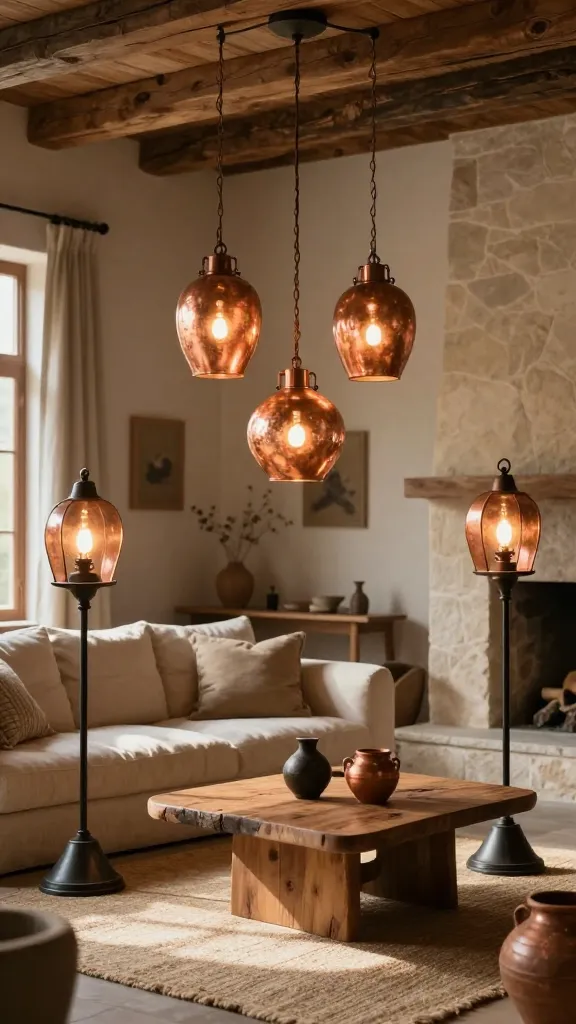
Cold LED light and glossy chrome fixtures fight everything else on this list. Swap to warm-toned bulbs, 2700–3000K, in fixtures with a matte, dark or aged finish, cast iron or copper both work, and position the lamps to create small pockets of warmth near the seating rather than one flat overhead wash.
Research on lighting and circadian rhythms shows that warm-toned light in the evening supports melatonin production and improves sleep quality, so the living room lighting sets the tone for the whole evening. The fixtures, cast iron, copper, aged brass, add texture and warmth even when the lights are off.
The living room felt like a clinic with the bright white LED bulbs and chrome fixtures, warm-toned bulbs in cast-iron lamps changed the whole atmosphere. Pockets of warmth near the seating, not a flat overhead wash that makes everything look harsh.
Takeaway: Warm bulbs. Matte fixtures. Pockets of warmth. No flat overhead wash.
8. How Does a Real Wood Beam Change a Ceiling?
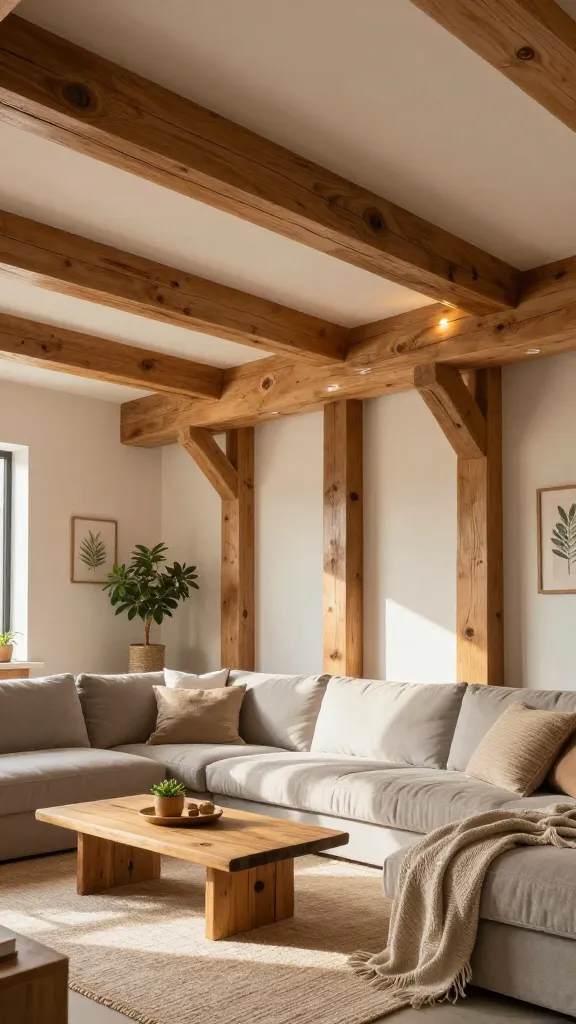
A single beam across the ceiling gives an otherwise flat room a genuine architectural focal point. It’s worth doing this one in real reclaimed timber rather than a lightweight foam or faux-wood substitute, the foam versions read hollow up close in a way that undermines the entire natural-materials premise.
If a full structural beam isn’t possible, a slim solid-wood slat run along the ceiling’s long axis gets you most of the effect honestly. The real wood has character, imperfection, weight, even a slim slat achieves most of the effect without looking fake.
Takeaway: Real reclaimed timber. Slim slat if full beam isn’t possible. Let it anchor the ceiling.
9. Why Do Fewer Stoneware Pieces Create More Impact?
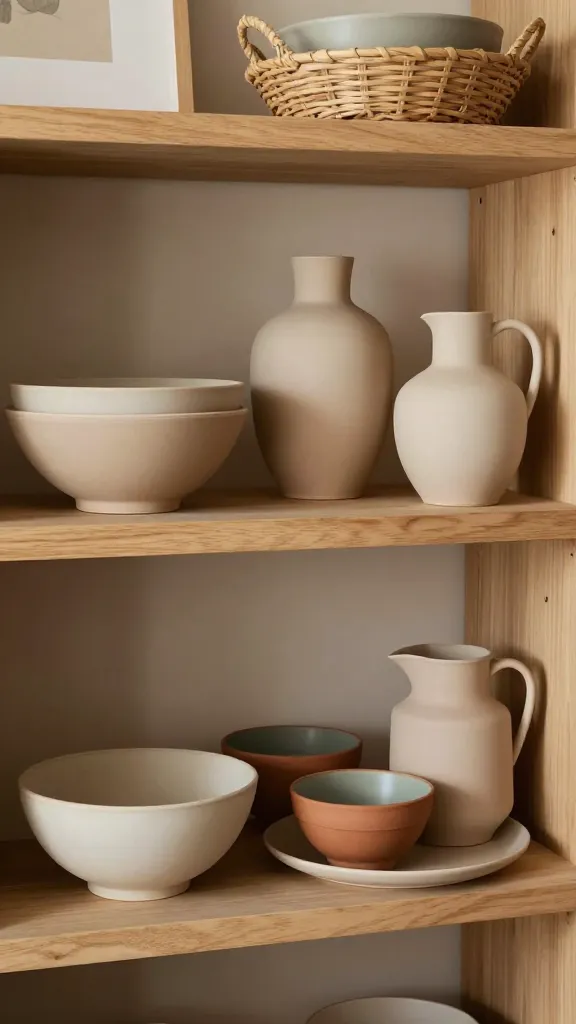
Four to six stoneware or matte-glazed ceramic pieces, a couple of bowls, a vase, a mug or two, do more for a shelf than a dozen small trinkets. Group them in odd numbers, keep the finishes unglazed or matte, and let the negative space around them do some of the work too.
Restraint is the secret, four to six stoneware pieces grouped in odd numbers, with negative space around them, feels intentional rather than accidental. The pieces breathe, and the shelf looks considered. My old shelves full of small trinkets felt cluttered, not curated.
Takeaway: Four to six pieces. Odd numbers. Matte finishes. Let negative space work.
10. How Do Potted Herbs Add Life Without Commitment?
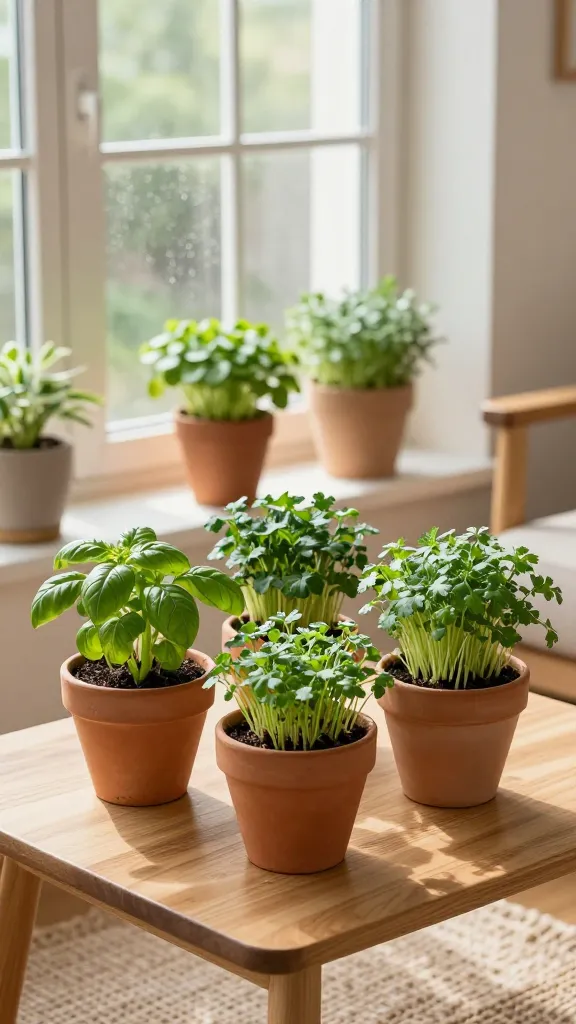
Thyme, oregano and basil in terracotta pots do double duty, they’re genuinely alive in a way dried or artificial greenery isn’t, and they’re useful. Two to four pots on a sunny sill is plenty; water only when the top inch of soil is dry, and rotate them occasionally so they don’t lean toward the light.
The old claim that houseplants purify indoor air does not survive scrutiny, since Cummings and Waring (2020) found ventilation clears airborne compounds far faster. Windowsill herbs earn their place by being useful for cooking, not ctively cleaning the air. University of Georgia Extension notes that container herbs need proper drainage and a quality potting mix, not garden soil, to thrive indoors.
Growing my own in terracotta pots on the windowsill changed everything, the herbs are alive, they grow, they smell wonderful, and I can use them in cooking. Two to four pots is enough; more than that becomes a chore. The cut herbs I bought at the store would wilt within days.
Takeaway: Two to four pots. Sunny sill. Water when dry. Rotate occasionally.
11. What Role Do Small Details Play in a Natural Room?
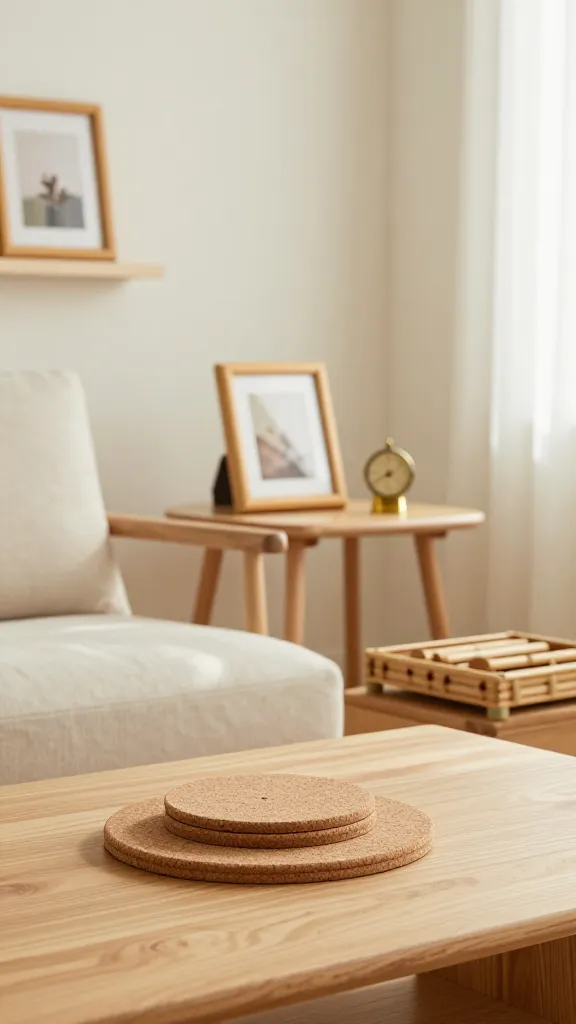
The small details are where synthetic materials sneak back in, a plastic coaster here, a glossy picture frame there. Cork coasters, a bamboo tray, a couple of woven baskets close that gap without adding visual weight, and they’re an easy, low-cost way to make sure the natural-materials principle actually holds at every scale in the room.
My living room looked beautiful, wood, linen, stone, but the small details betrayed me. Plastic coasters, glossy frames, synthetic baskets. Then I swapped them all, cork coasters, a bamboo tray, woven baskets, and the room came together completely. The small details close the gap between the principle and the execution.
Takeaway: Cork coasters. Bamboo tray. Woven baskets. Close the gap at every scale.
12. Why Do Warm Matte Walls Work Better Than Bright White?
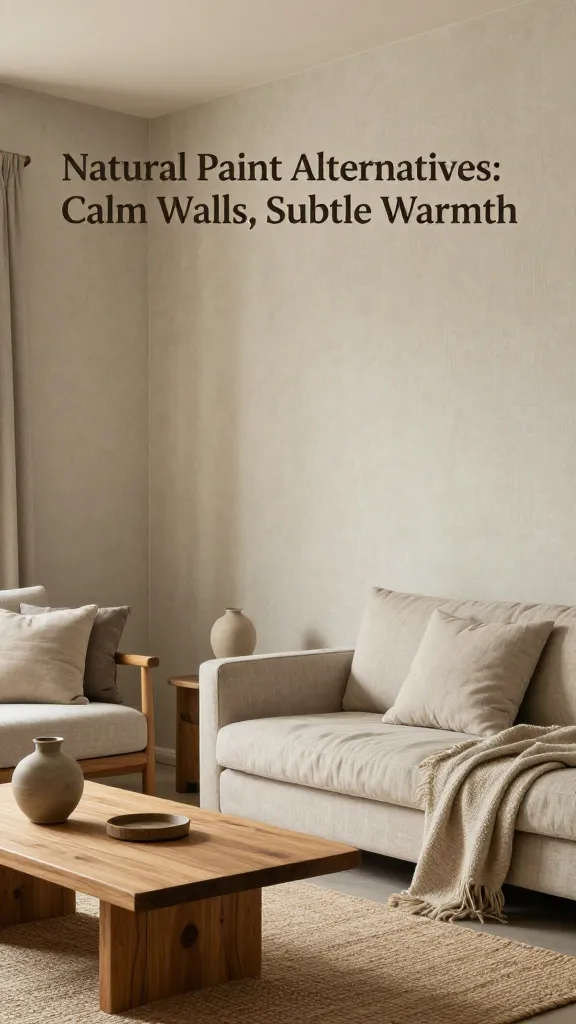
A bright white wall reads cold beside wood and linen, full stop. A soft ivory, warm beige or gentle greige in a matte finish gives the room a backdrop that lets the natural materials read as intentional rather than fighting the wall for attention.
Colour and mood research shows that warm, muted tones signal safety and rest to your nervous system, while stark white can read as clinical. If you want texture without full paint commitment, a linen or grasscloth-effect wallpaper as a single accent does the job.
Soft ivory walls changed the whole room, they stopped competing with the natural materials and started supporting them. The wood grain pops against the warm backdrop. The linen looks softer. The bright white walls before looked cold beside the wood and linen.
Takeaway: Soft ivory, warm beige, or greige. Matte finish. Let the walls support, not compete.
13. How Do Linen Curtains Soften Light Without Blocking It?
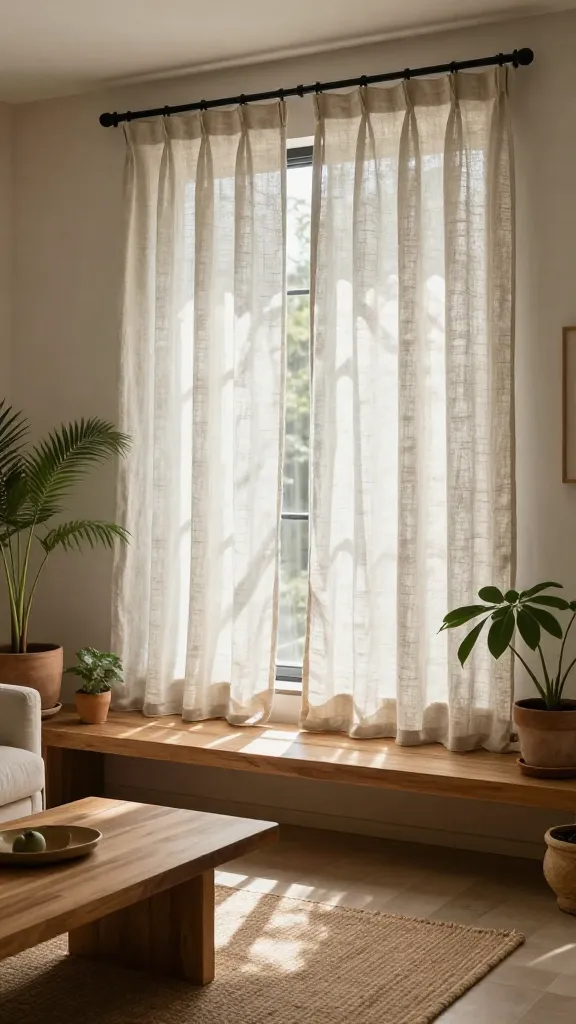
Heavy dark drapes block the light this whole look depends on. Linen curtains in a neutral tone, hung to just the sill for a casual drop, soften the light without closing the room off. Simple rods in matte black or oil-rubbed bronze finish the look without adding shine.
Linen curtains changed the whole atmosphere, the linen softens the light, it filters, it diffuses, it creates a warm glow. The room feels open, airy, connected to the outside. The heavy dark drapes before blocked all the light, making the room feel closed off.
Takeaway: Linen curtains. Neutral tone. Hung to the sill. Let light through.
14. Why Does Proper Plant Care Matter More Than the Plant Itself?
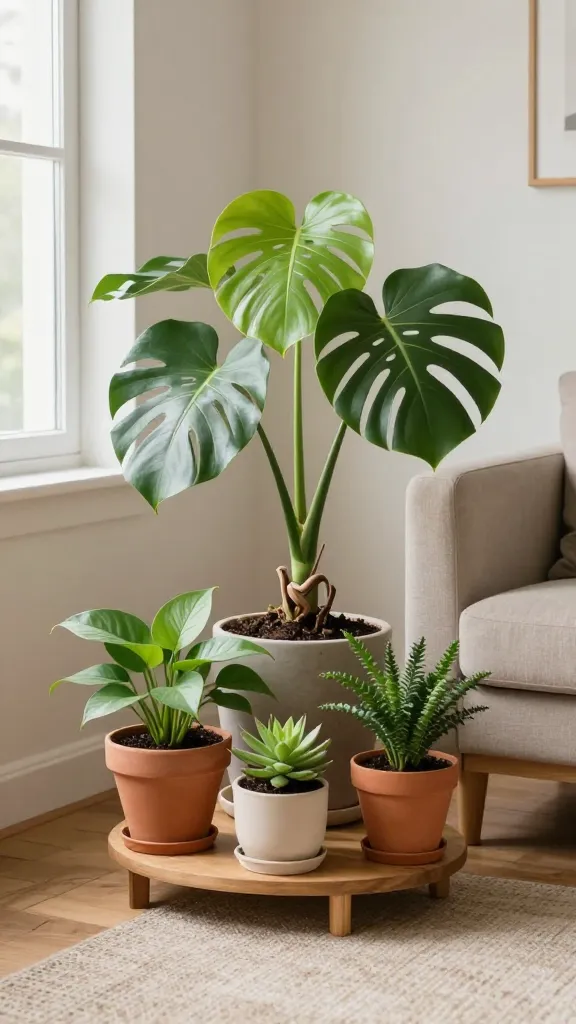
Plants that are struggling undo the “living, natural” feeling faster than almost anything else on this list. A proper indoor potting mix, watering only when the top inch of soil is dry, and a pebble tray underneath to catch overflow are the whole trick, no special equipment needed, just the basics done consistently.
Overwatering kills more container plants than drought does, because saturated soil starves the roots of oxygen. The care matters more than the plant itself.
Overwatering was the problem, not underwatering, the plants I killed regularly were victims of too much care, not too little. Proper potting mix (not garden soil), water only when the top inch is dry, pebble tray underneath. The plants stopped struggling, and the room started feeling alive.
Takeaway: Proper potting mix. Water when dry. Pebble tray. Consistency over intensity.
15. How Does a Genuine Focal Point Anchor a Room?
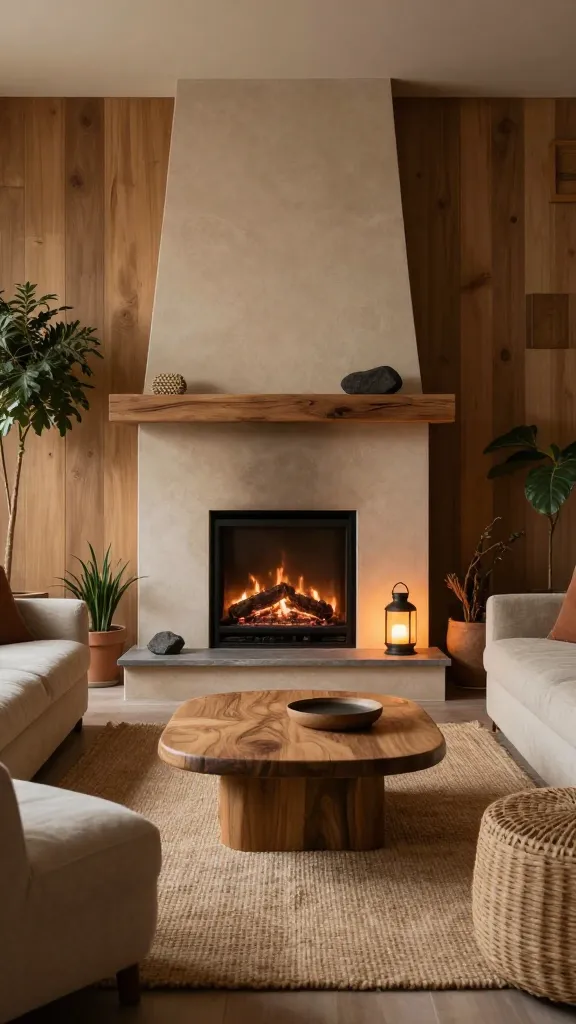
Every room needs somewhere for the eye to land. A small non-working fireplace facade, or a grouped set of ceramic lanterns with warm-toned bulbs and a dimmer, gives the room a natural centre without adding heat or hassle. Keep the materials around it consistent with everything else, wood, stone, a plant nearby, and it’ll read as the room’s anchor rather than an add-on.
The room felt scattered and unfocused with no focal point, the eye had nowhere to land. A grouped set of ceramic lanterns with warm-toned bulbs and a dimmer changed everything; the lanterns create a natural centre, the eye is drawn to them, and the rest of the room arranges itself around them.
Takeaway: One focal point. Ceramic lanterns or fireplace facade. Consistent materials. Let it anchor.
Frequently Asked Questions
What’s the cheapest way to start with natural materials?
A rug, two linen cushions, and a terracotta pot or two, all achievable in an afternoon and available at most garden centres or home stores. Second-hand natural-finish pieces stretch the budget further, and keeping to one cohesive palette makes even a few small pieces read as considered rather than scattered.
How much upkeep do natural materials actually need?
Less than people expect, a weekly dust, a gentle vacuum setting for textiles, and keeping wood dry to prevent warping covers most of it. An occasional oil or wax every few months keeps wood finishes healthy, and natural materials age gracefully, they wear in, not wear out.
Can this work with furniture I already own?
Yes, pick one or two pieces you already love and build outward with natural textiles and accessories in a shared colour family. The goal is a few well-chosen additions, not a wholesale replacement; your existing furniture provides the foundation, and the natural materials provide the cohesion.
Is this practical with pets or kids in the house?
Generally yes, linen and cotton blends clean up well, and natural materials tend to wear in rather than wear out. Keep planters somewhere they won’t get knocked over, and choose a washable rug for the highest-traffic spot; natural materials are durable and meant to be lived with, not just looked at.
Conclusion
None of these fifteen changes needs a renovation budget or a weekend of demolition, most of them are an afternoon’s work or less. Pick two or three that suit the room you actually have, get those right, and the rest follows naturally. Fewer, better, genuinely natural choices, done properly, that’s the instinct. Your living room will feel calmer, more grounded, and unmistakably yours. If you want to apply the same natural-materials approach to other rooms, my cozy bedroom guide covers fifteen ideas for the sleep space, and my seasonal home changes show how to keep the whole house feeling fresh throughout the year.
Leave a Reply