10 Cozy Reading Nook Ideas Using Only Natural Materials
· thehazelcottage@mail.com
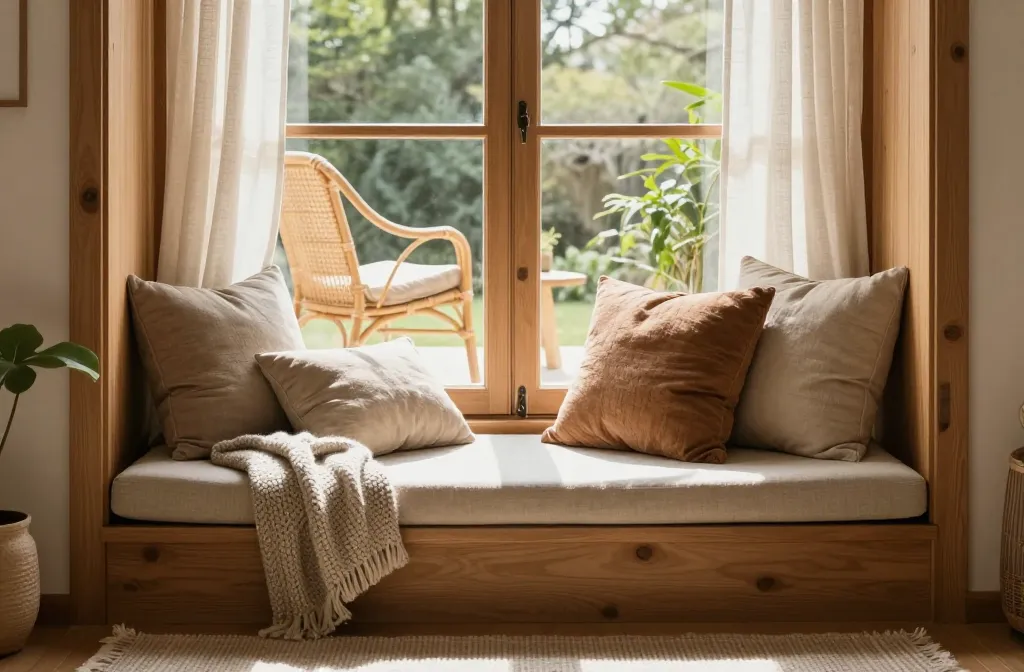
I’ve rebuilt my reading corner with nothing but natural materials, and the softness is undeniable. If your space feels sterile or cramped, these ideas prove you don’t need synthetic tricks to get a warm, inviting nook. Here’s how to create cozy, budget-friendly reading spots using items you can find at a garden centre, hardware store, or around the home.
1. Timber Frame Window Seat With Wool Cushions
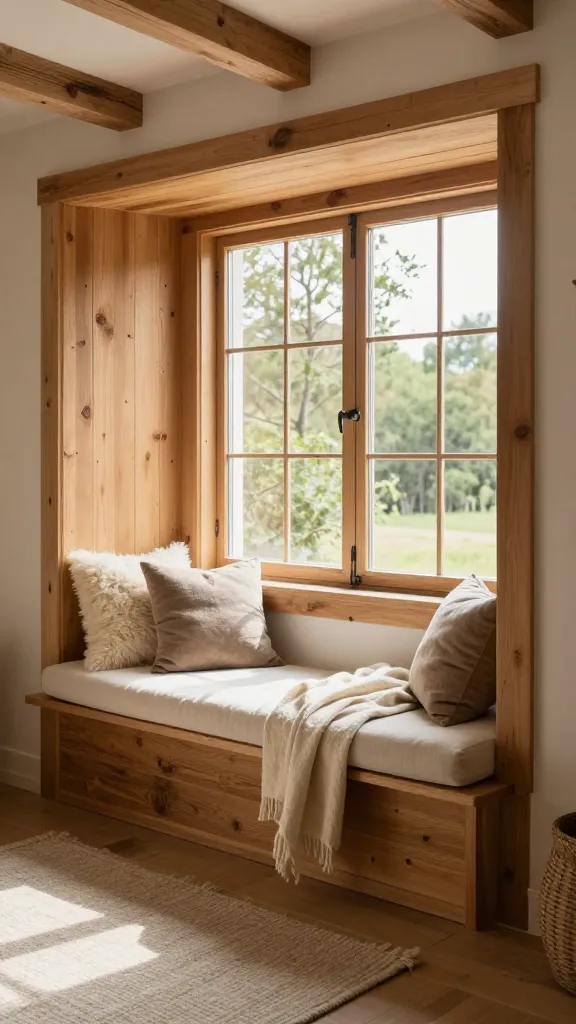
The glow of natural timber around you makes a book feel 20% more inviting. A simple timber frame placed beneath a sunny window creates a dedicated spot that doubles as a quiet retreat.
Signs to Watch For
-
<liSlight creaking or loose boards around the seat
<liSofter light during afternoon reading due to shade or glare
<liDust buildup in the corners after long use
How to Fix It
-
<liSand and finish timber boards with a matte, beeswax-based finish for a breathable surface
<liAdd a small back cushion and a lumbar pillow for posture support
<liPlace a hand-woven or knitted throw for texture and extra warmth
What to Use Instead
- Reclaimed timber or affordable pine boards from the hardware store
- Natural wool or cotton cushions and a simple cotton throw
Takeaway: Build a low, timber-framed window seat and layer with wool cushions for instant coziness today.
2. Rattan Lounge Nook With Linen Curtains
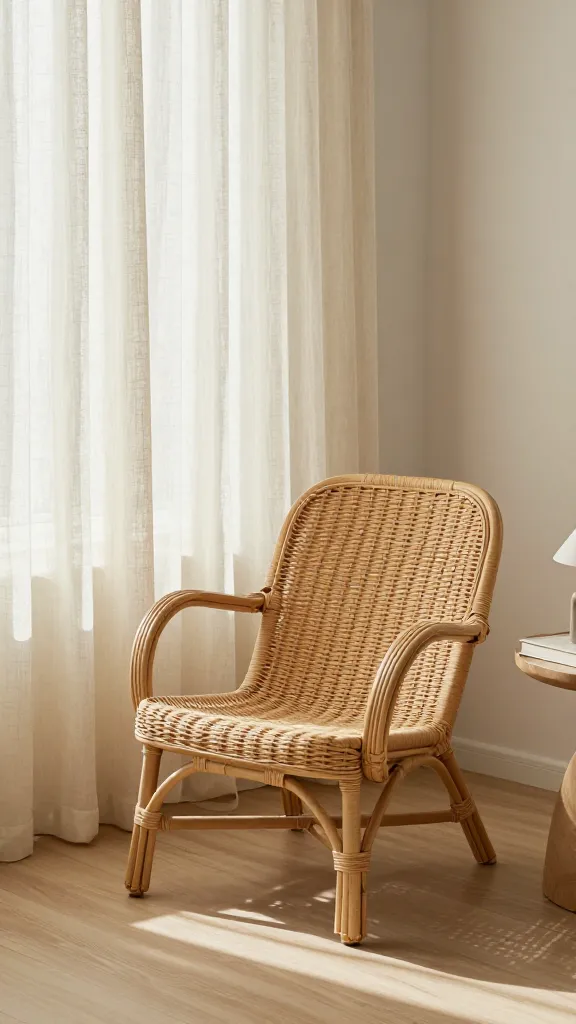
Rattan brings a light, breathable texture that doesn’t overwhelm a small room. Pair it with airy linen curtains to filter sun softly and invite reading without glare.
Signs to Watch For
- Overheating under direct sun during peak hours
- Rattan strands loosening at joints
- Felt or fabric impressions on the seat from long use
How to Fix It
-
<liSecure any loose joints with wood glue and a clamp until dry
- Shade with a linen curtain that can be opened or closed as needed
- Dust weekly with a soft brush to keep fibers looking fresh
What to Use Instead
- A light bamboo bench or a woven rope chair for similar texture at a lower cost
- 100% linen curtains available at most home retailers
Takeaway: Create a breezy, sun-filtered nook with a rattan piece and linen drapes for a daily dose of relaxation.
3. Hemp-Faced Floor Cushions With Wooden Tray Table
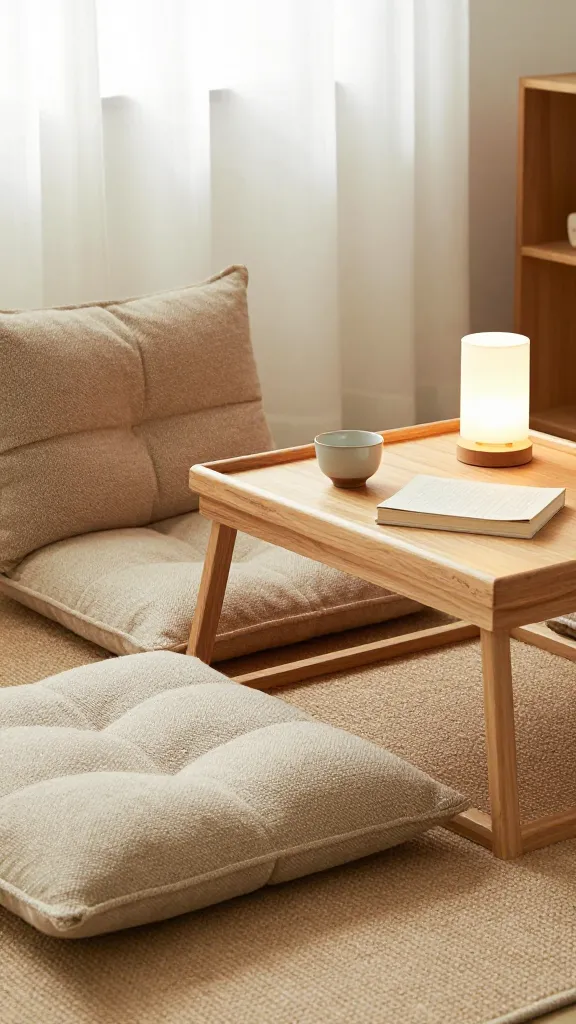
This compact setup delivers warmth and utility. Hemp fabric is durable and breathable, while a wooden tray table brings a natural surface for tea, a lamp, or a good book.
Signs to Watch For
- Cushions flatten quickly or show wear on the fabric
- Table moves easily when you lean on it
- Lower shelf collects dust because the space isn’t used
How to Fix It
- Fluff and rotate cushions weekly to maintain loft
- Choose a lightweight, sturdy tray table with non-slip feet
- Use a small, natural-fiber rug to define the space and keep the area tidy
What to Use Instead
- Compact jute floor cushions paired with a low wood side table
- Mat-protective rug pads to prevent slipping and wear
Takeaway: Ground your nook with hemp cushions and a wooden tray table for a sturdy, tactile reading corner.
4. Clay Pot Planter Bench With Wool Throw
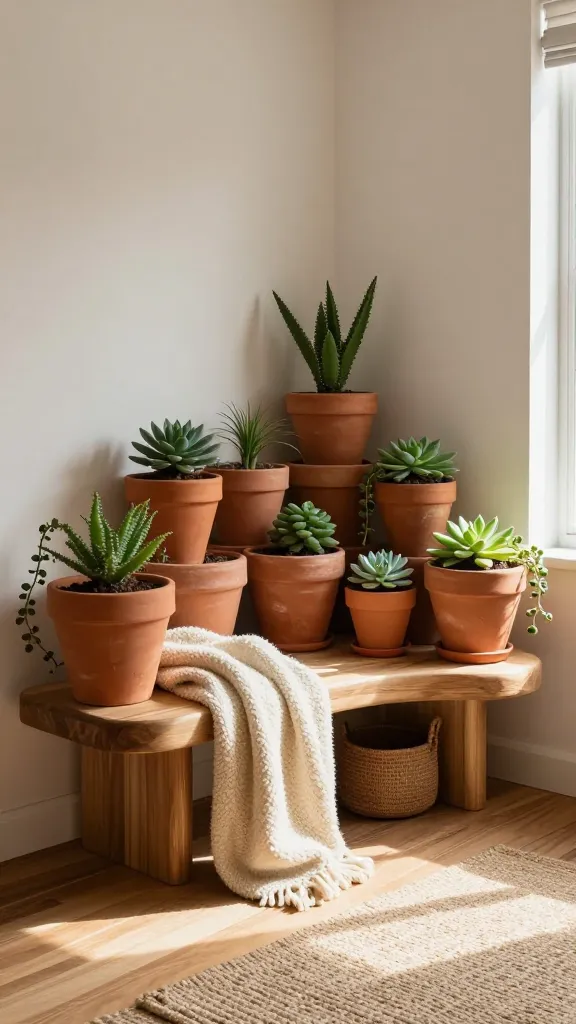
Planters turned into a bench create a sculptural, earthy look. Add a warm wool throw for texture and comfort, and you’ve got a nature-forward retreat.
Signs to Watch For
- Plant containers tip easily when sat upon
- Soil moisture lingering near the bench surface
- Storage clutter underneath the bench
How to Fix It
- Attach planters to a sturdy base or mount them to a wall to free space
- Place a tray under pots to catch excess water
- Store reading accessories in a small woven basket beneath the bench
What to Use Instead
- Use a single large clay pot as a base for a compact bench structure
- Opt for a low, wide planter that doubles as seating when secured properly
Takeaway: Combine planters with a soft wool throw to craft a grounded, nature-inspired reading lounge.
5. Cork Floor Mats And Pine Stool Corner
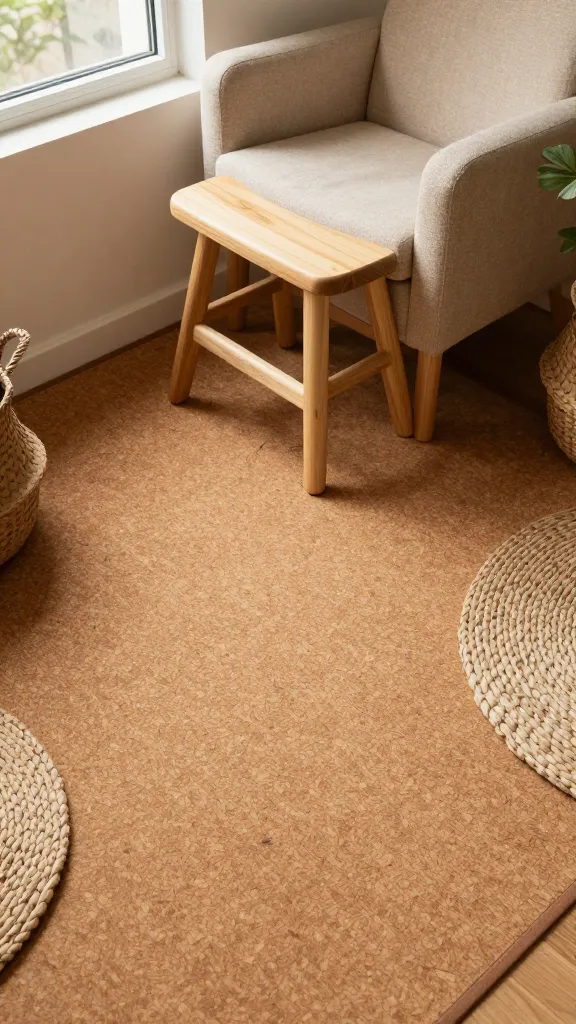
Cork is warm underfoot and naturally damp-resistant. A pine stool adds a simple seat or footrest, turning a corner into a focused reading zone.
Signs to Watch For
- Stool wobble or squeak with movement
- Cork mat shows compression lines after long sessions
- Corner gets chilly in winter due to poor insulation
How to Fix It
- Tighten screws and add felt pads under legs
- Roll and swap floor mats to distribute wear evenly
- Pair with a warm blanket for added insulation
What to Use Instead
- Natural fiber woven rug for warmth underneath a small pine stool
- Solid wood stump or crate repurposed as a seat
Takeaway: A cork mat with a pine stool creates a comfortable, natural spot for long reading sessions.
6. Stone-Lined Window Sill Reading Nook
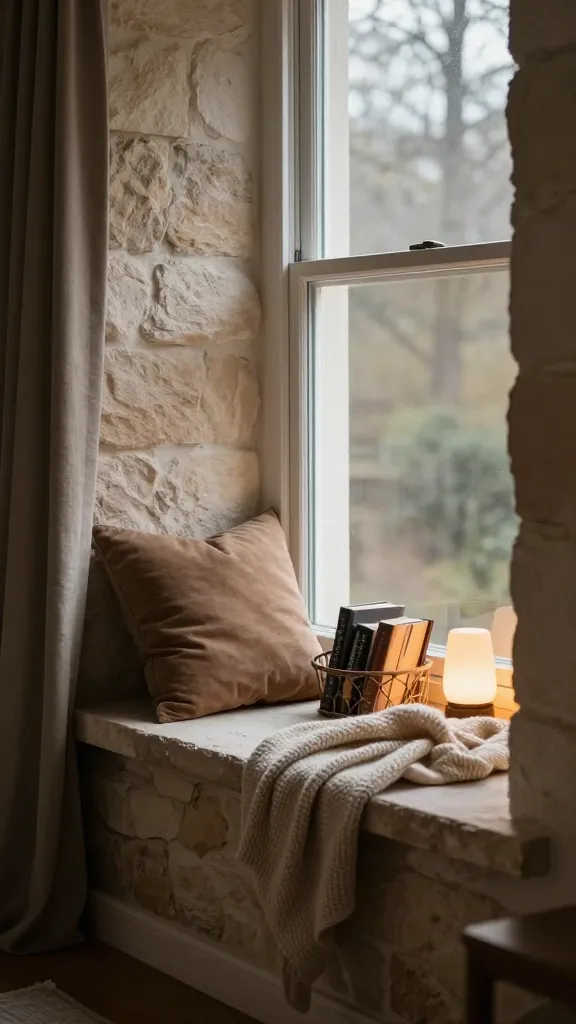
A stone sill with a small cushion becomes a compact, grounded perch that feels like a retreat without leaving the apartment.
Signs to Watch For
- Cold sill in winter that makes sitting uncomfortable
- Dust accumulation on narrow ledges
- Window draft that disrupts concentration
How to Fix It
- Add a thin, insulating cushion and a lightweight blanket for insulation
- Seal small gaps with weatherstripping to reduce drafts
- Keep a small basket of books and reading light nearby for convenience
What to Use Instead
- Use a narrow bench or a stack of soft cushions on the sill with a fabric cover
- Decorate with natural stones as a decorative touch, not seating weight
Takeaway: Transform a cold stone sill into a cozy, sunlight-filled reading perch with a cushion and light blanket.
7. Bamboo Peg Shelf With Soft Linen Hammock
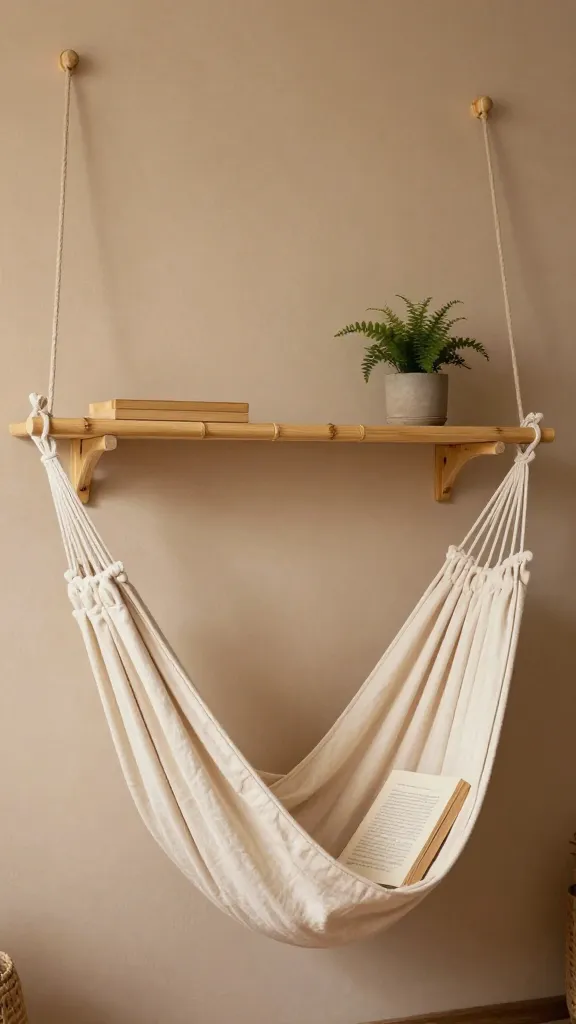
A simple wall-mounted bamboo shelf paired with a linen hammock creates an elevated sense of space and a cloud-soft spot to read.
Signs to Watch For
- Hammock sagging when loaded with a book
- Dusty shelf surfaces that make the nook feel neglected
- Instability of shelf brackets over time
How to Fix It
- Replace sagging hammock with a higher-tiber or heavier suspension line
- Wipe shelf surfaces weekly and add a simple cedar block to deter moths
- Check wall anchors and tighten as needed
What to Use Instead
- A small, sturdy wall shelf and a cotton rope hammock substitute
- Natural fiber rug under the seating area for added warmth
Takeaway: Lean into vertical space with bamboo shelving and a linen hammock for a serene reading loft feel.
8. Moss-Panel Wall With Hemp Baskets
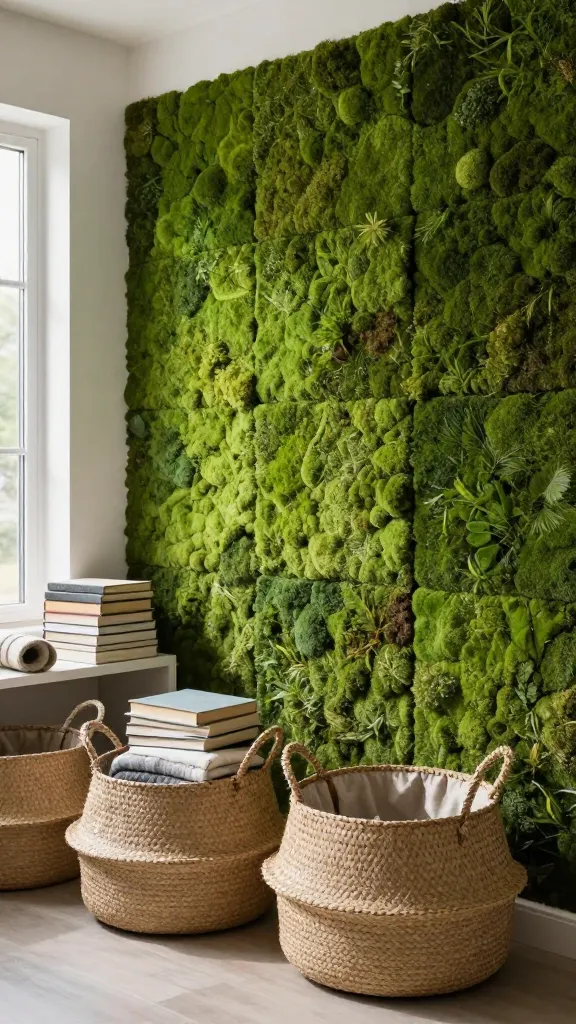
Living greenery from moss panels softens walls while hemp baskets provide storage for books and blankets, maintaining a calm, natural aesthetic.
Signs to Watch For
- Moisture buildup on moss panels in humid rooms
- Hemp baskets losing shape or fraying edges
- Books tipping out of baskets when moved
How to Fix It
- Place moss panels away from direct moisture sources and ensure good air flow
- Line baskets with fabric to reinforce structure
- Limit the number of books per basket to keep weight balanced
What to Use Instead
- Dry stock moss sheets for a low-maintenance wall accent
- Natural jute or seagrass baskets for sturdy storage
Takeaway: Pair a moss wall with hemp storage for a tranquil, green-focused reading corner.
9. Cork Barrel Table With Seed-Seeded Linen Cushions
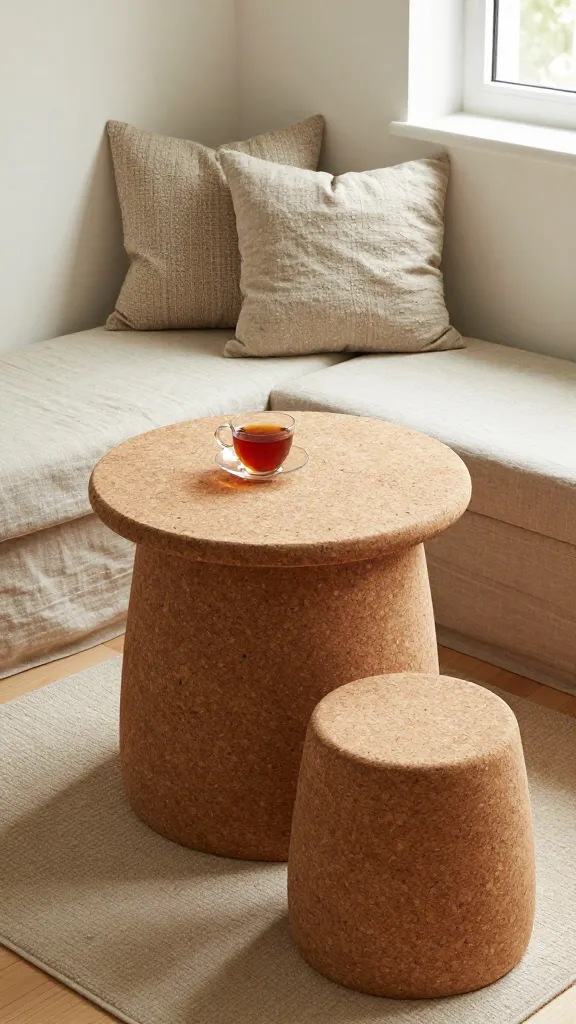
A cork barrel table doubles as a small stool and a natural surface for a cup of tea. Seeded linen cushions add texture and color without overpowering the space.
Signs to Watch For
- Table weight causing floor dents on soft surfaces
- Cushions losing shape after repeated use
- Rips or loose threads in linen fabric
How to Fix It
- Place a soft rug under the table to distribute weight evenly
- Trim loose threads and reinforce seams with a needle and thread
- Switch to a heavier linen or add a protective cover
What to Use Instead
- Small solid wood stool as a companion table
- Natural fiber cushions with kiln-dried linen covers
Takeaway: A cork table and linen cushions deliver warmth and practicality in a compact package.
10. Earth-Toned Pillow Nook With Timber Frame Divider
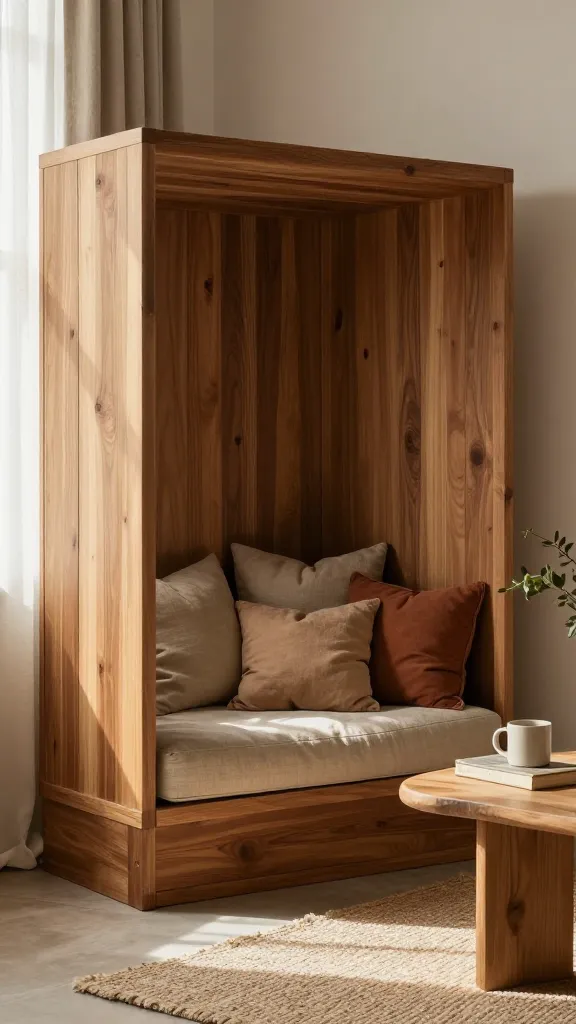
Use a timber frame to define a small reading zone and surround yourself with earth-toned pillows for a grounded, comforting feel.
Signs to Watch For
- Frame flex under weight or movement
- Pillow cores flatten unevenly
- Color fading on sun-exposed fabrics
How to Fix It
- Strengthen the frame with corner braces and a light satin finish
- Rotate pillows weekly to keep their loft and shape
- Choose natural dyes or undyed fabrics for longevity
What to Use Instead
- Use a solid wood divider and a curated set of cushions for a cohesive look
- Opt for a low-profile bench with a mix of textures
Takeaway: Build a calm, earth-toned nook with a timber divider and layered pillows for daily reading joy.
Frequently Asked Questions
What natural materials are best for a reading nook?
Wood, wicker, cork, stone, linen, wool, cotton, hemp, and moss all work well. They create warmth, texture, and a sense of calm without relying on synthetics. Start with one or two elements and layer gradually to avoid a cluttered look.
How can I keep a small nook feeling spacious?
Use light colors on walls and furniture, maximize natural light, and keep the floor clear. Choose multi-use pieces like a stool that doubles as a table or a bench with hidden storage. A mirror placed to reflect light also helps expand the space.
What maintenance do natural-material corners require?
Regular dusting, occasional refreshes with natural finishes or beeswax, and checking for moisture or pests keep the space healthy. Vacuum textiles weekly and air out cushions monthly to prevent mold or musty smells.
Can I mix several natural materials in one nook?
Yes. The key is to balance texture and color so nothing competes too strongly. Start with a dominant material (like wood) and add two complementary textures (linen and wool) to create depth without chaos.
How do I choose the right light for a natural nook?
Opt for warm, soft lighting such as a beeswax candle or a warm LED lamp. Place lighting to avoid glare on pages, and consider a dimmer so you can adjust mood for daytime reading or evening relaxation.
What is the fastest way to transform a space using natural materials?
Start with one anchor piece—like a timber window seat or a bamboo shelf—and build from there with cushions and small plants. Small, incremental changes are more sustainable and easier to manage than a full remodel.
Conclusion
With a few thoughtful, natural pieces, you can craft a cozy, book-loving corner that feels like a retreat. Pick one or two ideas to start, and let texture, light, and natural fibers do the rest—your next great read awaits.
Leave a Reply