9 Garden-to-Table Styling Ideas for Earthy Home Entertaining
· thehazelcottage@mail.com
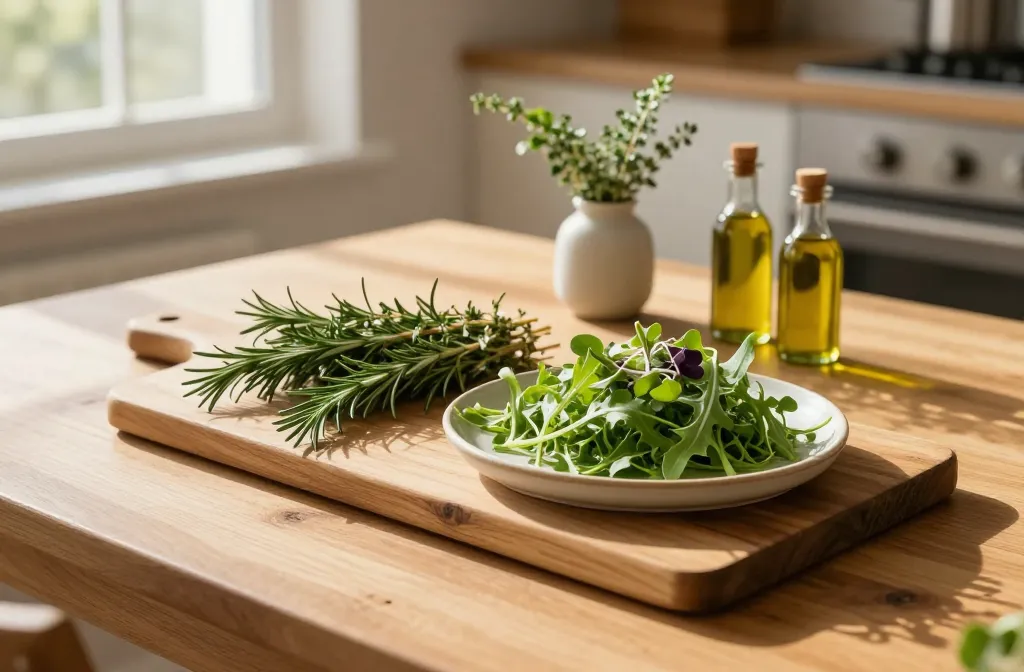
From my first apartment balcony to today’s sunlit kitchen windowsill, I’ve learned that earthy, garden-to-table styling is less about perfection and more about small, repeatable habits. You’ll learn practical, repeatable ideas that make your meals feel grounded, seasonal, and inviting—without needing professional tools. Read on to discover how simple plant-and-plate harmony can transform everyday entertaining.
1. Use What You Grow: Living Centerpieces That Double as Salads
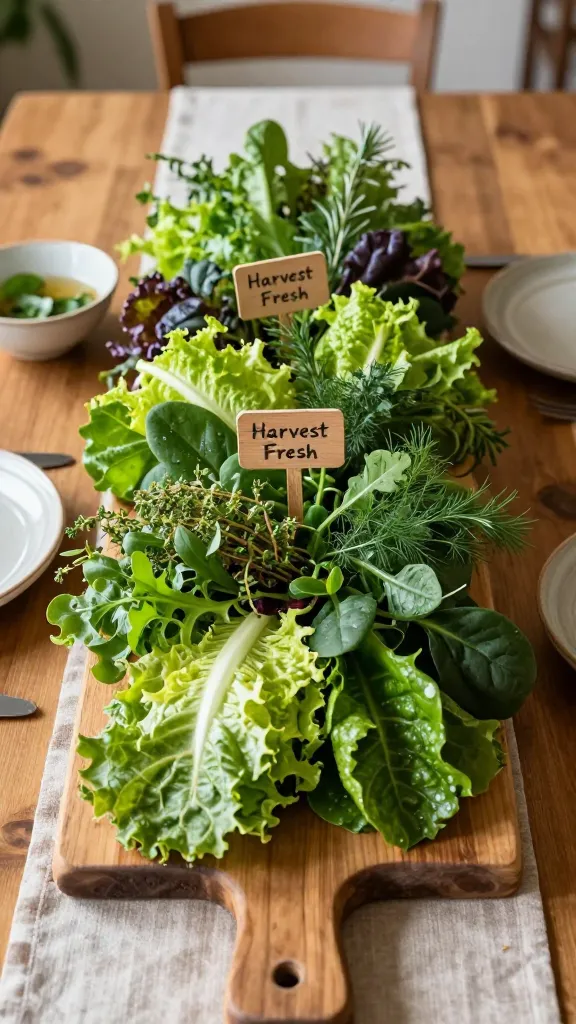
The centerpiece is the guest of honor, but it shouldn’t be a static ornament. When you combine herbs, edible greens, and a rustic board, you create a dynamic focal point that you can harvest from throughout the meal. This keeps the table fresh and super practical.
Signs to Watch For
- Wilted herbs on the board before serving
- Flowers or greens drying out too quickly
- Condensation fogging the centerpiece, causing limp leaves
How to Fix It
- Choose herbs and greens that tolerate room temperature for a few hours, like rosemary, thyme, arugula, and microgreens.
- Water cut greens lightly just before plating; blot excess moisture to keep the board clean.
- Place the centerpiece near a bright indirect light spot, not directly in sun or drafty air.
What to Use Instead
- A sturdy wooden board, a simple ceramic platter, and a small vase with fresh sprigs as accents
- small vials of olive oil and balsamic for quick seasonal drizzles
Takeaway: Build a multi-purpose centerpiece with edible greens you’ll harvest during the event, keeping flavor and presentation tied together.
2. Harvest-Inspired Placemats: Leaf Motifs and Terra Cotta Textures
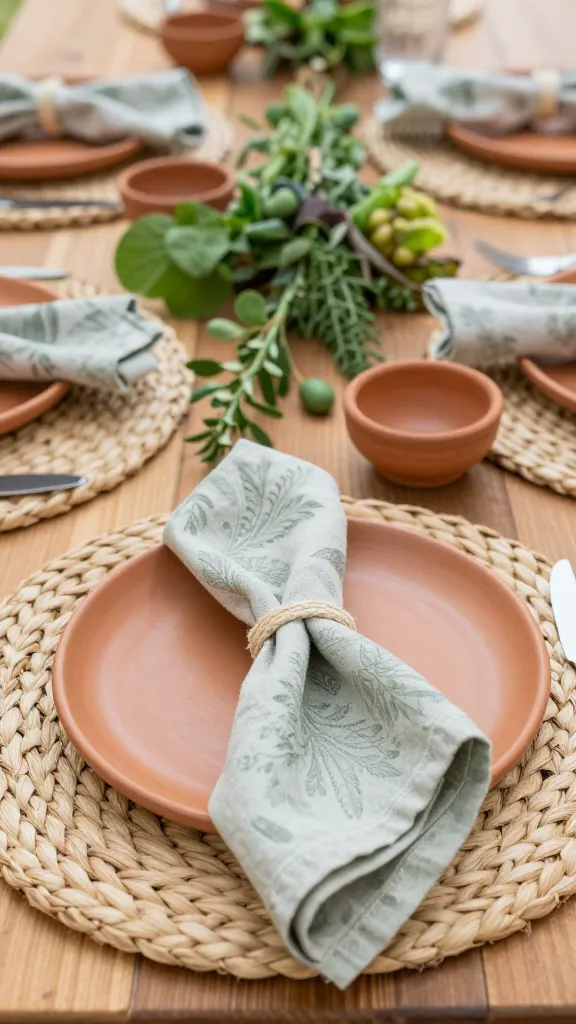
Earthy textures create a cohesive mood. A simple mix of leaf-patterned napkins, terracotta dishware, and woven placemats sets a warm, garden-first vibe without looking theme-heavy.
Signs to Watch For
- Plates feel too slick for the table’s texture
- Napkins clash with other greens or wood tones
- Terracotta warms the room too aggressively under bright lights
How to Fix It
- Pair terracotta with muted greens and natural linen
- Use reusable cloth napkins in earthy tones like olive, sage, or cream
- Keep a couple of wood-toned candle holders to soften the look
What to Use Instead
- Two or three napkin colors, not a full rainbow
- One terracotta piece per place setting, balanced by white or sage tableware
Takeaway: Create depth with textures rather than patterns; you’ll win a cohesive, garden-inspired table with minimal effort.
3. Plant-Fuelled Drinks Station: Herb-Infused Sparkling Water
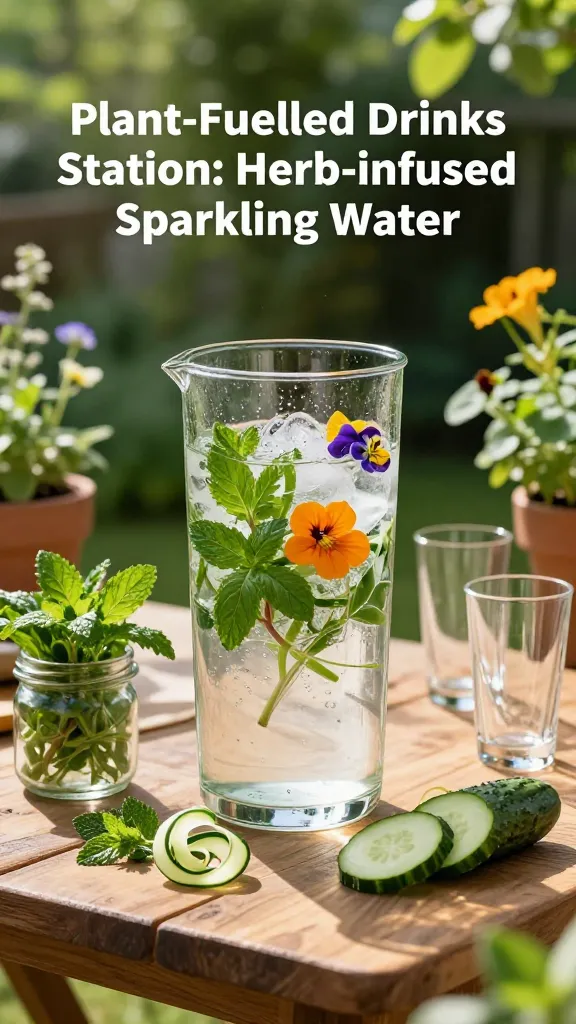
A drinks station that doubles as a garden vignette makes guests feel welcomed and cared for. Use a clear pitcher, fresh herbs, and edible flowers to elevate simple sparkling water into something festive.
Signs to Watch For
- Herbs browning in the water or petals wilting quickly
- Water becoming flat or off-tasting after a long wait
- Glassware fogging up due to condensation on the pitcher
How to Fix It
- Replace herbs every 2–3 hours or keep them in a separate herb jar to refresh as needed
- Use cold sparkling water and serve over ice to maintain fizz
- Trap aromas with a light garnish, not a heavy fruit bowl
What to Use Instead
- A basic pitcher, fresh mint, lemon slices, edible flowers (like violets), and a small bouquet of rosemary sprigs
Takeaway: A garden-inspired drinks station is inviting, refreshingly simple, and doubles as décor throughout the event.
4. Garden-to-Table Cheese Board: Microgreens and Seasonal Crunch
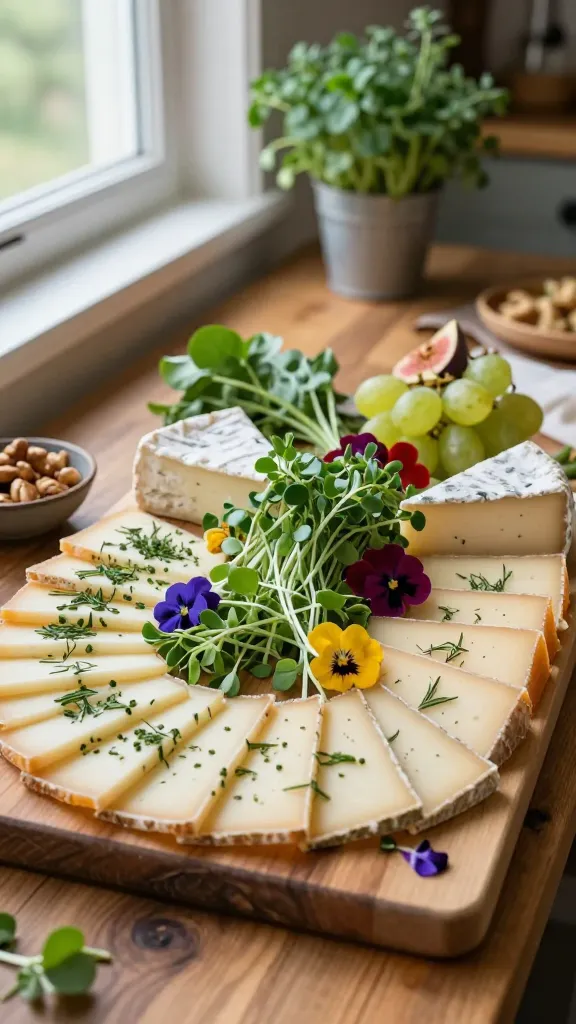
Cheese boards benefit from the same plant-forward philosophy you apply to meals. Add microgreens, edible flowers, and herbs to build height, color, and aroma without extra prep time.
Signs to Watch For
- Greens on the board turn slimy or brown
- Cheeses browning or drying out too fast
- Greens overpowering the cheese flavor
How to Fix It
- Keep microgreens crisp by wrapping them in a damp paper towel before arranging
- Slice cheeses shortly before serving to release their aroma
- Interleave greens with nuts for added texture and stability
What to Use Instead
- Herbs like thyme and rosemary dotted between cheeses
- Edible flowers to add color without a strong flavor
Takeaway: A well-composed cheese board with microgreens is a tactile, edible table accent that stays fresh longer than a dry spread.
5. Window-Lillipop Garden: Small Pots as a Seasonal Focal Point
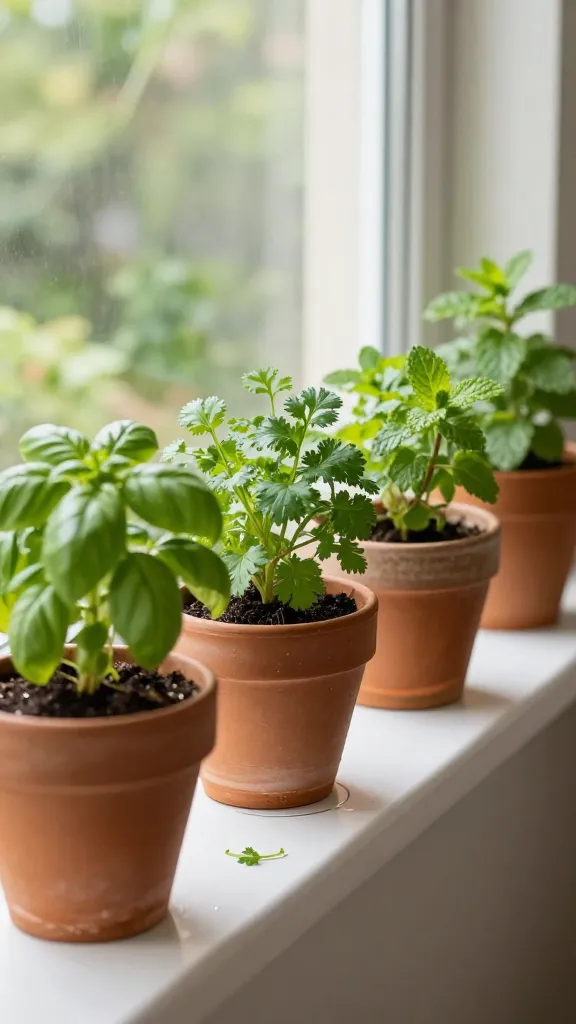
Use small pots on a kitchen sill or window ledge to mirror the garden atmosphere. Seasonal herbs like basil, cilantro, or mint keep flavors close and the room feeling alive.
Signs to Watch For
- Herbs leaning, drying out, or losing vibrancy
- Soon-to-be-harvested herbs fading away after a few days
- Watering routines inconsistent with bright indirect light
How to Fix It
- Rotate pots every two days to prevent legginess
- Water when the top inch of soil is dry to touch
- Trim after harvest to encourage bushier growth
What to Use Instead
- Two to four compact pots, each labeled with date of harvest
Takeaway: A windowsill garden brings aroma and color to the table and ensures you have fresh garnish at hand.
6. Rustic Table Runner of Reclaimed Wood and Moss
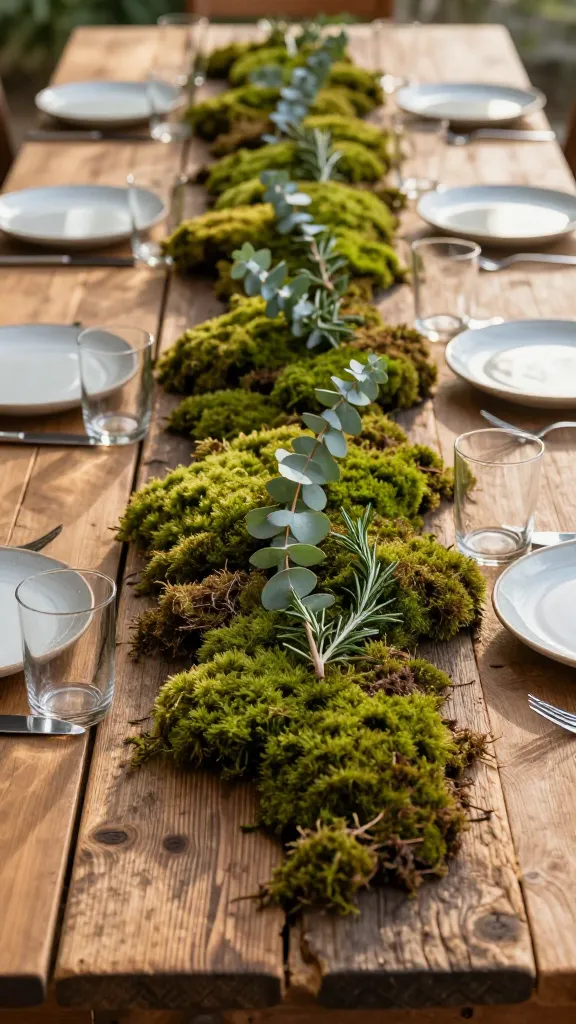
Natural textures run through the whole event. A simple runner made from reclaimed wood, a strip of moss, and a few sprigs of greens creates a tactile path from entrance to table.
Signs to Watch For
- Tablescape looks flat or crowded
- Moss dries and flakes off during the evening
- Wood stain damages the table finish under heat or moisture
How to Fix It
- Place a thin liner under moss to prevent moisture transfer
- Keep heat sources away from wood and moss
- Use a simple trio of greens to avoid visual clutter
What to Use Instead
- Coordinating runner pieces and small pots in the same color family
Takeaway: A rustic runner grounds the table and provides a visual cue that the garden directly influences the menu.
7. Herb-Infused Oils at the Ready: DIY Oils for Drizzling
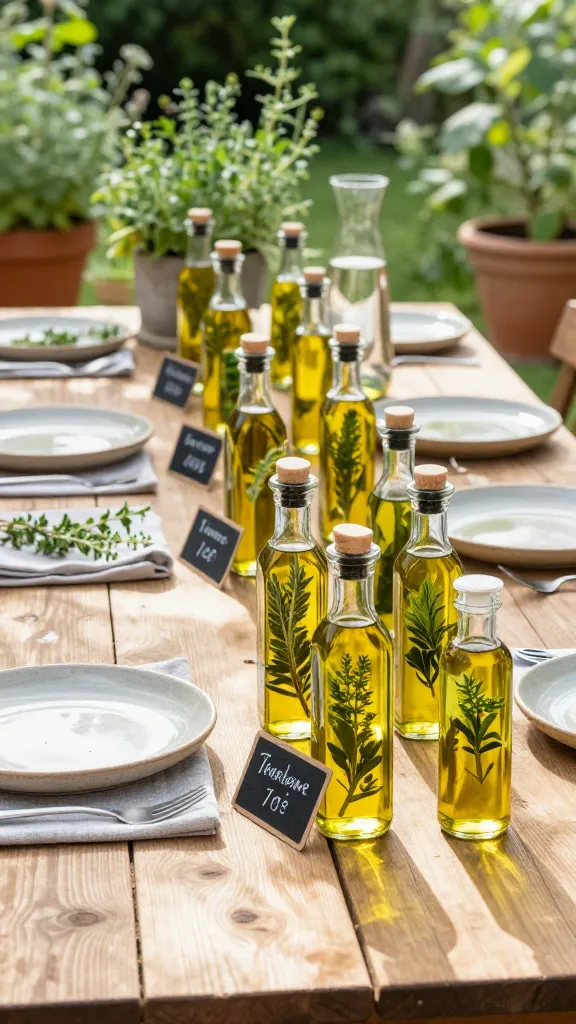
Small bottles of herb-infused oil placed at each setting or near the drinks station create an interactive, sensory experience that ties food to garden flavors.
Signs to Watch For
- Oil oxidizes or aromas fade quickly
- Bottles become cloudy or discolored
- Glasses and plates remain untouched due to dull flavors
How to Fix It
- Use a clean bottle, and replace herbs every 2–3 days if it sits on the table
- Keep infused oils away from direct heat and sunlight
- Label with the herb name and date for quick reference
What to Use Instead
- Herb sprigs and a small spoon to drizzle in at the table
Takeaway: Infused oils are small, practical touches that heighten flavor without demanding kitchen time during the event.
8. Compost-Friendly Waste Station: A Simple Green Exit
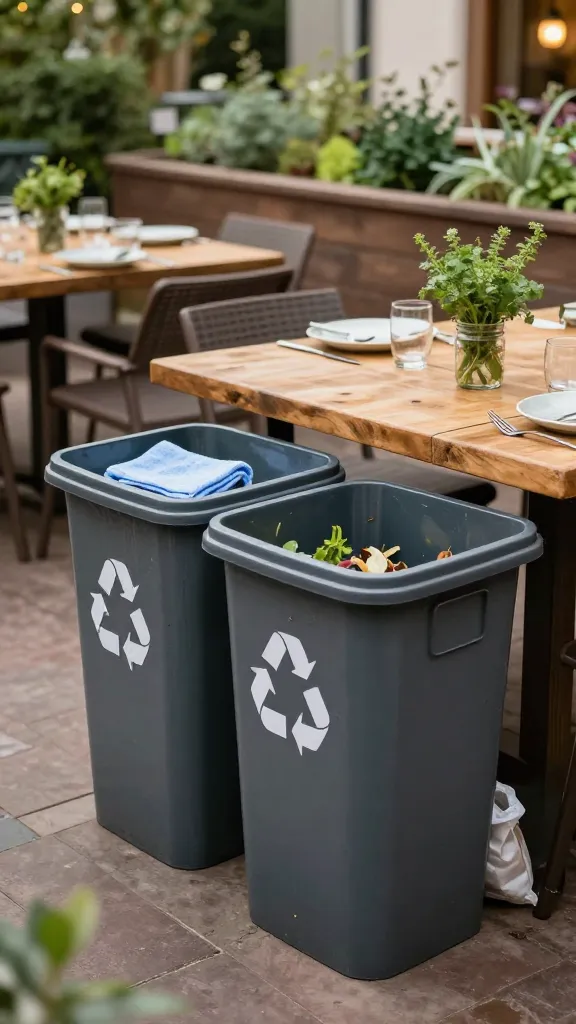
Guests feel better when waste is handled responsibly. Create a small, clearly marked compost-friendly station near the table to collect plant scraps and organics.
Signs to Watch For
- Overflow of waste bins leading to mixed material contamination
- Strong odors near the dining area
- Inconsistent disposal habits among guests
How to Fix It
- Provide separate bins for compost and recyclables, clearly labeled
- Keep a damp cloth nearby to wipe spills and keep the area tidy
- Place a small bag under the compost bin for easy transfer later
What to Use Instead
- A compact, lidded compost bin and a dedicated bin for recyclables
Takeaway: A simple waste station reinforces your garden-to-table ethos and keeps the space clean and inviting.
9. Mini Harvest Table: Quick Harvests for Immediate Cooking Wins
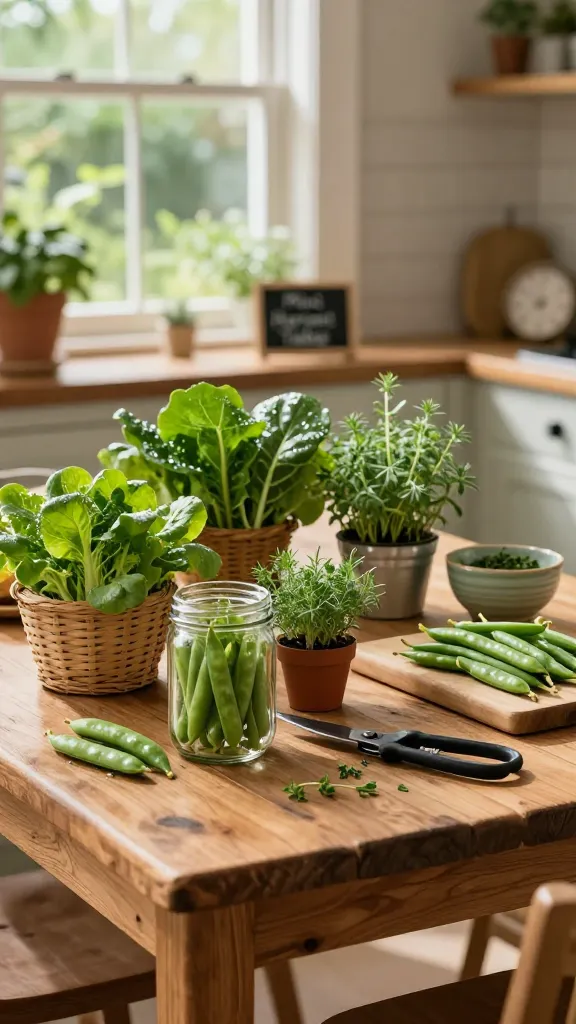
Offer guests a mini harvest table with quick-edible greens you’ve cut during the event. This practical feature demonstrates the garden’s direct connection to the meal and creates a scent-filled moment of kitchen-to-table activity.
Signs to Watch For
- Greens on the harvest table wilting or browning too quickly
- Leaves and stems becoming slimy or detaching from pots
- Table clutter making it hard to reach utensils and ingredients
How to Fix It
- Harvest only what you can use within the hour; store remaining greens in a damp cloth
- Provide a small knife and a cutting board for guests who want to participate
- Refresh the display every 30–45 minutes with new harvests
What to Use Instead
- A dedicated tray of ready-to-use herbs and greens
Takeaway: A live harvesting moment reinforces the garden-to-table narrative and adds an interactive, memorable element to the meal.
Frequently Asked Questions
What plants are best for edible table decor?
Choose herbs that look good and taste good, like thyme, rosemary, and mint. Include microgreens for a pop of color. Avoid plants with strong aromas that overwhelm food or scents that clash with your menu.
How can I keep greens fresh without fridges or coolers?
Use a damp cloth to wrap greens and store them in a cool, shaded area. If possible, keep a small cooler bag with ice packs for longer events. Refresh moisture every few hours.
How do I balance rustic and modern on the same table?
Limit the palette to three natural tones and mix textures—wood, terracotta, and linen—so the space feels cohesive rather than cluttered. Place a single, modern vase element to anchor the look.
What is the best way to prepare herbs for serving?
Wash quickly, pat dry with a towel, and trim the stems just before serving. For the board, tear larger leaves for a more natural, garden-picked appearance. Keep delicate greens separate to prevent wilting.
How can I ensure this style suits a small apartment?
Use vertical space for planters near a window, and choose compact varieties. A small tray with herbs can act as a stand-in centerpiece. Keep surfaces clear and use multi-functional pieces like a small cutting board that doubles as a serving tray.
Is it okay to mix fresh edible flowers with herbs?
Yes, but choose flowers with mild flavors and no risk of pollen allergies for guests. Ensure there are no toxic flowers among the options. Use edible blooms sparingly for color rather than flavor intensity.
Conclusion
By embracing garden-to-table styling, you create a warm, earthy entertaining experience that feels effortless and personal. Start with one or two ideas, then expand as you gather more seasonal greens and textures—it becomes easier with practice, and your guests will notice the difference.
Leave a Reply