12 Cozy Farmhouse Bedroom Ideas with an Earthy Twist
· thehazelcottage@mail.com
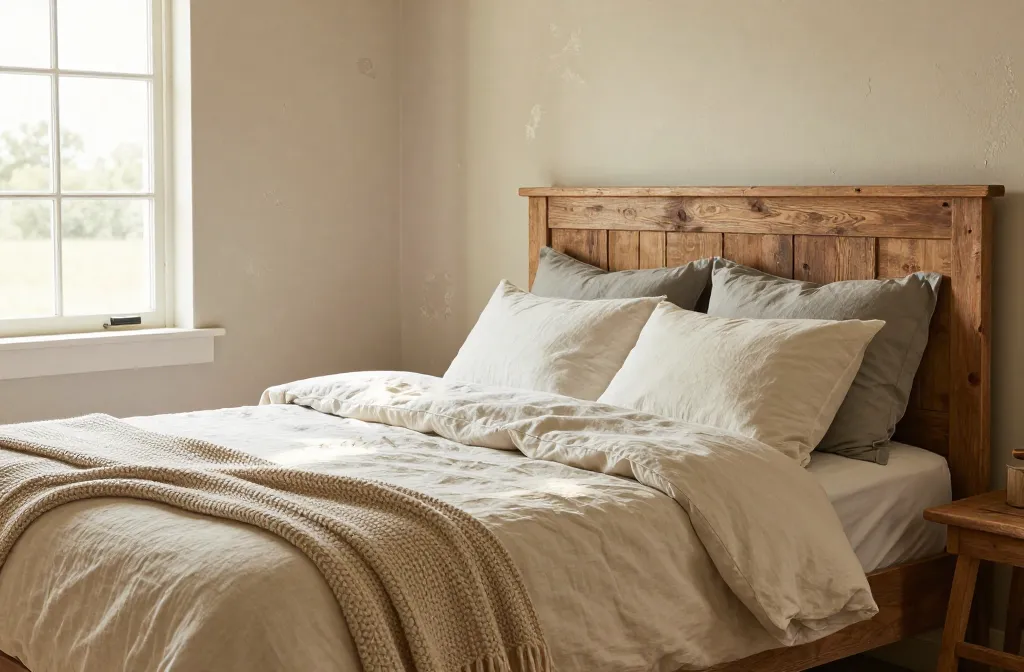
Twelve small things, done properly, beat one expensive thing every time. That is the whole argument of this list. None of these ideas is dramatic on its own, and none needs a renovation budget, but together they decide whether a bedroom looks styled or actually feels like somewhere you want to fall asleep.
1. How Does Layered Linen Bedding Transform a Bedroom?
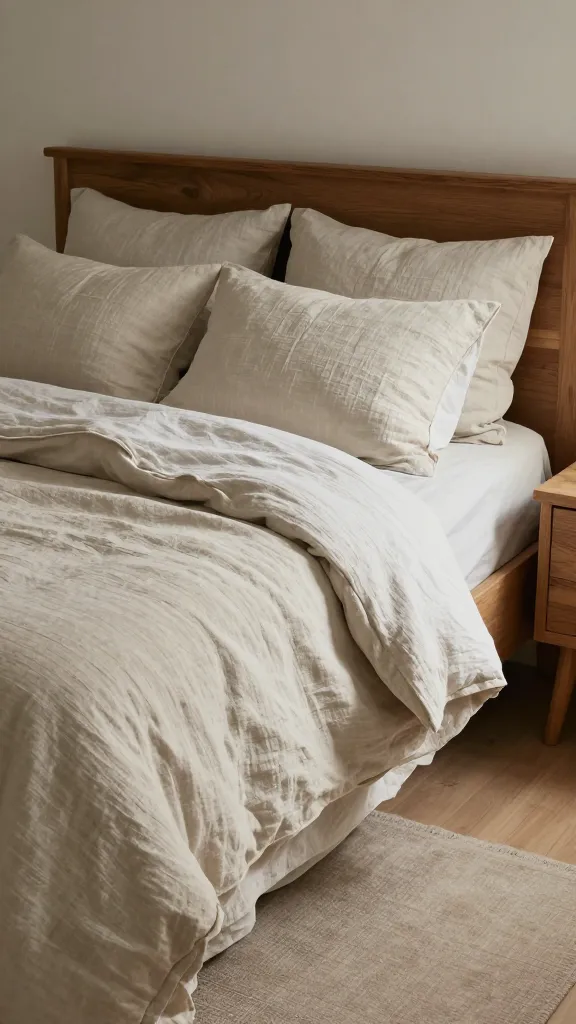
Swap synthetic bedding for linen or cotton in ivory or oatmeal, then put one or two raw wood pieces nearby: a bedside tray, a headboard panel, a bench at the foot of the bed. Synthetic fabric never holds a crease, so it never quite looks lived in.
Linen breathes and softens with use. Systematic sleep research finds it outperforms cotton in warm conditions, and the wrinkles are the point. A rumpled linen duvet reads as intentional. A knit throw over the top finishes it.
We moved country every three or four years, and bedding was the thing I stopped replacing. Polyester sets arrived cheap, came in every colour, and looked tired by the second house. The linen went into its fourth move looking better than it started. That is not a decorating opinion. It is just what survived the boxes.
Takeaway: Linen bedding. Raw wood accent. Knit throw. One textile, one wood.
2. Why Do Earth-Toned Walls Work Better Than Bright White?
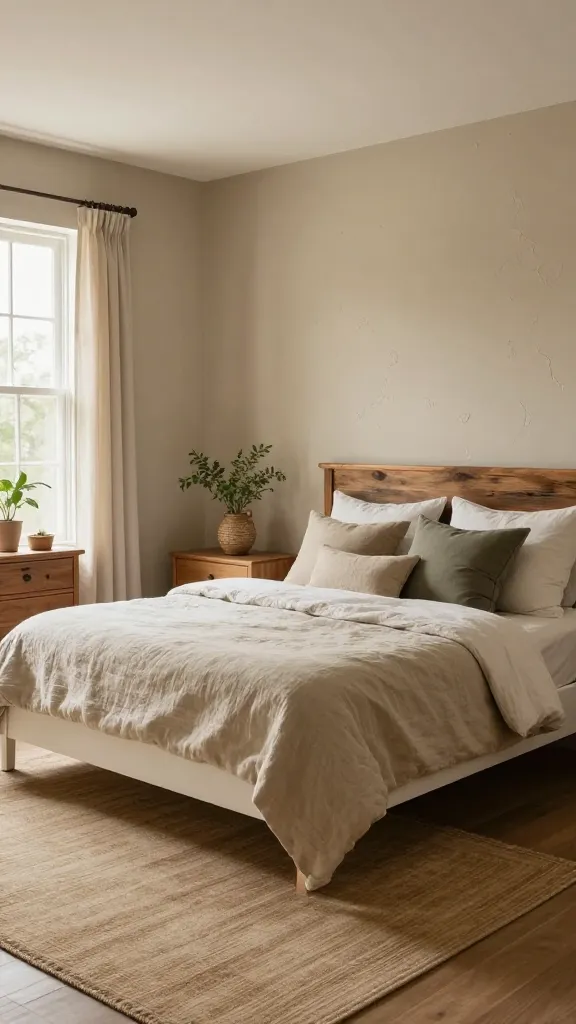
Warm beige, sage, or soft taupe gives the wood and linen a backdrop to sit against. A systematic review of colour and emotion research finds warm, muted tones read as restful, while stark white tends to read clinical no matter what you put in front of it.
Renting? A textured grasscloth-effect removable wallpaper in a warm earth tone gets most of the way there with none of the commitment.
We once stayed in a farmhouse in Provence where the walls were a warm ochre that caught the afternoon light and held it. The whole house glowed from the inside. I came home and painted our bedroom sage, and the walls stopped competing with everything else in the room.
Takeaway: Warm beige, sage, or taupe. Matte finish. Let the walls support, not compete.
3. What Size Rug Actually Anchors a Bedroom?
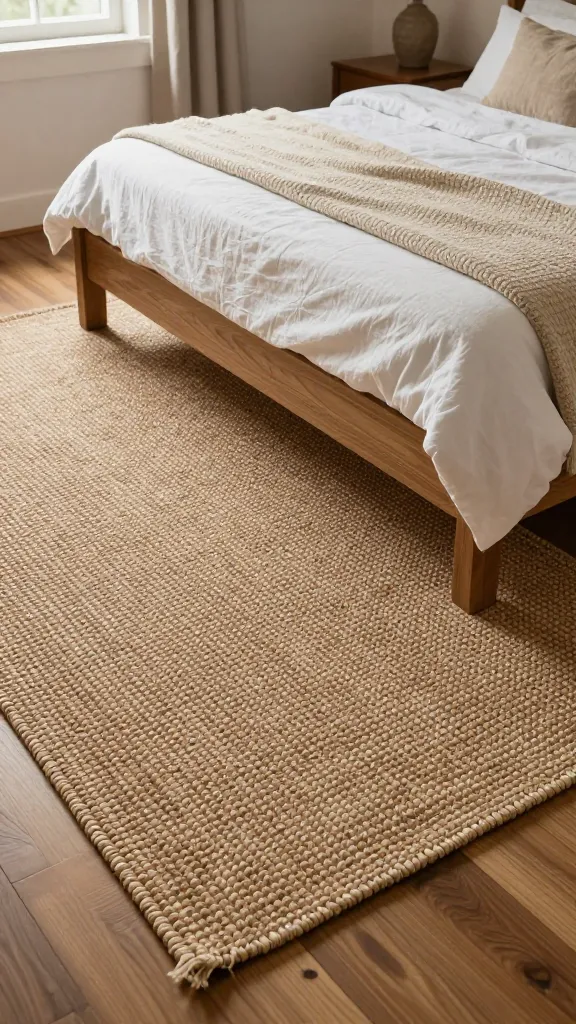
Buy a jute, sisal, or flatwoven rug that extends past the bed on at least two sides. Six by nine feet, minimum. Anything smaller floats under the bed and reads as an afterthought, which is the most common farmhouse-bedroom mistake there is.
My parents converted an old piggery in France into two apartments, and the floors were hard everywhere. You heard every footstep twice. A big rug went down in the bedroom and the echo simply stopped, which nobody had thought to mention as a reason to buy one. Acoustics are half of what a rug does. Nobody photographs that.
| Jute | Sisal | Cotton Flatweave | Synthetic | |
|---|---|---|---|---|
| Texture | Rough, nubby, visible weave | Tighter weave, smoother | Soft, flat | Uniform, can feel plastic |
| Durability | High, lasts decades | Very high, toughest natural fibre | Moderate, wears faster | Varies, often pills |
| Comfort underfoot | Textured, not soft | Smoother than jute | Soft, warm | Depends on quality |
| Best for | Layering, grounding | High-traffic areas | Bedrooms, bare feet | Budget, easy clean |
| Farmhouse look | Excellent, rustic and natural | Good, structured | Good, soft and casual | Poor, reads modern |
Takeaway: Six-by-nine feet or larger. Jute or sisal. Extends past the bed. Let it anchor.
4. Why Must a Farmhouse Headboard Be Real Wood?
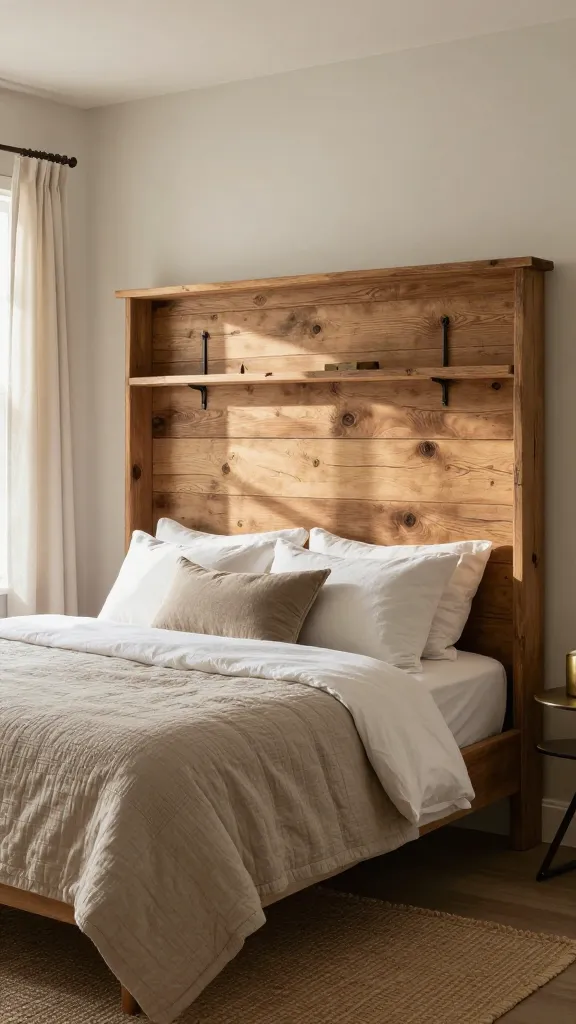
A salvaged panel, a wide leaning shelf, or an old door reworked into a headboard all do the job. Texture and history are the point, not polish. Finish it with a light wax or clear varnish that protects the grain without hiding it.
The wellbeing research here is real but softer than decor blogs usually admit. A 2021 systematic review of randomised trials on visual exposure to wood found measurable calming effects on physiological arousal, alongside inconsistent results across studies and mostly short observation windows. Wood appears to help. It is not a dose of medicine, and anyone quoting you an exact percentage is quoting a vendor.
The piggery had a bare metal balcony guardrail when my parents bought it. They clad it in wood, and the family started calling the place the Heidi-house within about a fortnight. One material change, and the entire building read differently. That is the effect you are buying with a headboard, and it is why the headboard is the one structural change worth making if you only make one.
Takeaway: Reclaimed wood. Salvaged panel or old door. Light wax. Let it anchor the room.
5. How Does Warm, Layered Lighting Decide the Mood?
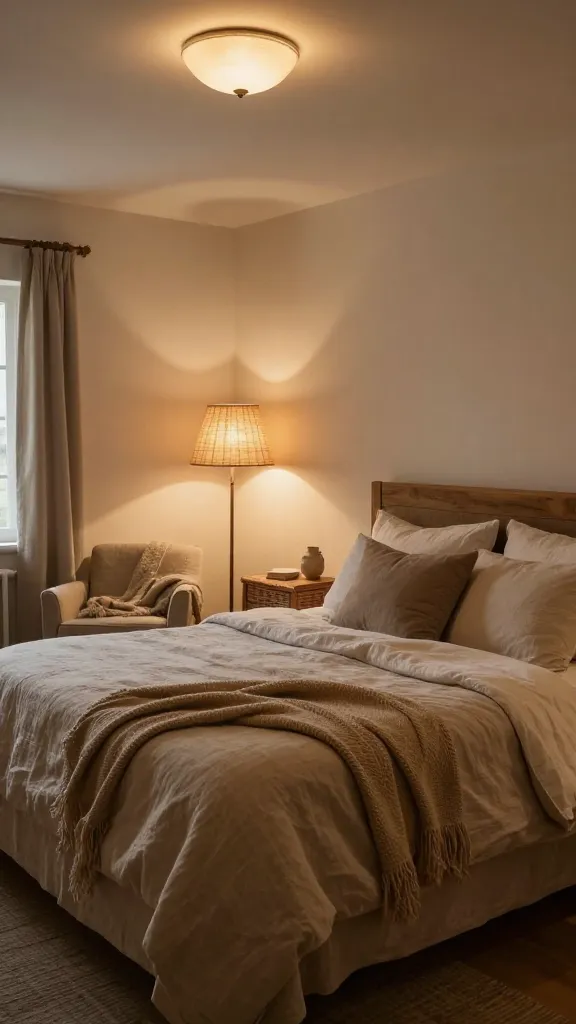
Cold white bulbs wash out every texture you have just paid for. Use warm-toned bulbs at 2700 to 3000K, and aim for two or three separate sources instead of one overhead fixture: a bedside lamp, a floor lamp in the corner, a fabric or wicker shade to soften the glow.
Research on lighting and circadian rhythms shows warm evening light supports melatonin production and better sleep. A bedroom should signal rest, not alertness, and lighting is the easiest thing on this list to get badly wrong.
Our New York apartment had cold white ceiling light in every room. Sitting under it in the evening felt like waiting in a dentist’s chair, and I could not work out why a perfectly nice flat felt so unrestful until I changed the bulbs. Same furniture, same walls. Entirely different room.
Takeaway: Warm bulbs. Two to three sources. Fabric or wicker shades. Pockets of warmth.
6. Why Do Plants in Rustic Pots Matter More Than Decorative Objects?
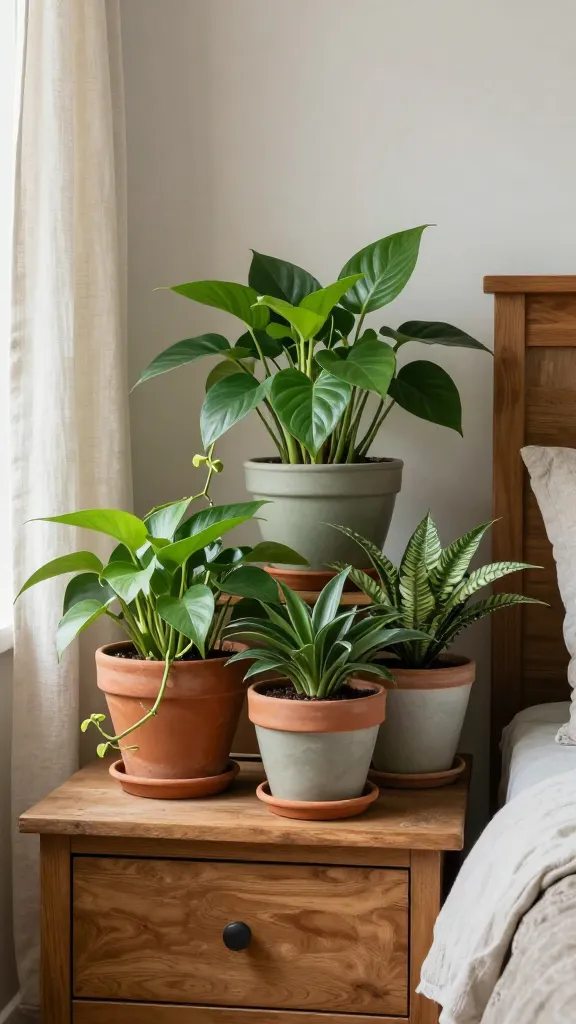
Two or three low-maintenance plants do more for a farmhouse bedroom than a dozen decorative objects, provided the containers are right. A pothos, a ZZ plant, a philodendron. Terracotta or muted ceramic reads farmhouse, and plastic undoes the effect on sight.
A living thing changes a room in a way an ornament cannot, and caring for one is a daily reason to look at your bedroom properly. My husband grew up around his father’s florist and green-grocer, and he still remediates soil by hand before anything goes into a pot. Watching that taught me plants are a practice, not decor. Keep saucers underneath to protect the wood, and stop at three. A crowded windowsill starts to look neglected rather than lived in.
Do bedroom plants actually clean the air?
No, and nearly every article in this category will tell you otherwise. The claim traces back to a 1989 NASA study run in small sealed chambers. In 2019, Michael Waring and Bryan Cummings at Drexel University reanalysed twelve of those chamber studies, converting 196 results into clean air delivery rates, and published the answer in the Journal of Exposure Science and Environmental Epidemiology: plants remove volatile compounds orders of magnitude slower than ordinary ventilation does. Waring’s own summary puts the requirement at roughly ten plants per square metre to compete with opening a window. Buy the pothos for how the room feels. Open a window for the air.
Takeaway: Two or three plants. Terracotta, not plastic. Keep them for the ritual. Open a window for the air.
7. How Do Floor-Length Curtains Soften Light and Stretch the Room?
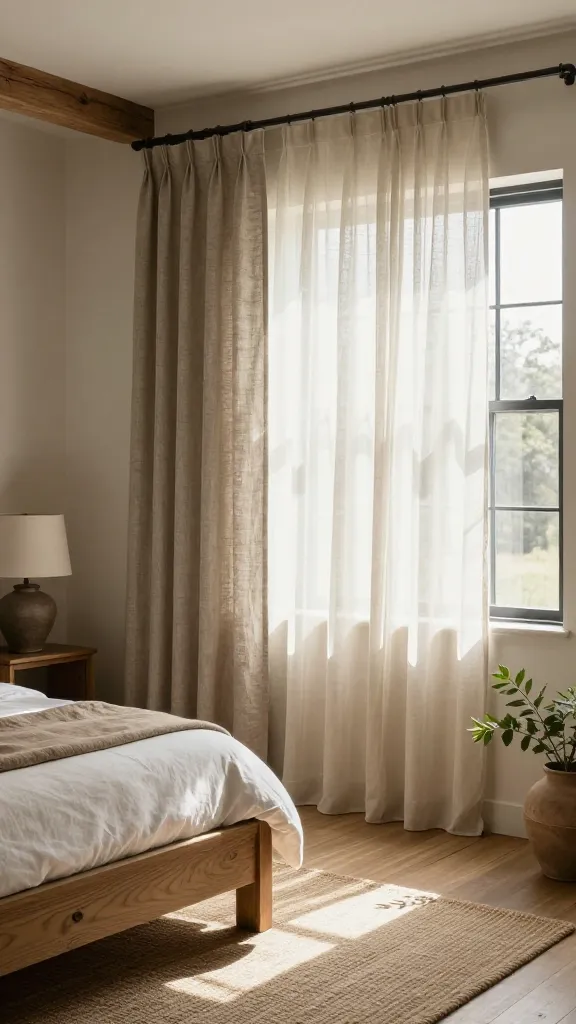
Blinds alone read sterile. Heavy blackout curtains dull a room that is trying to feel warm. Linen or cotton drapes in taupe or sand, layered over simple blinds and dropped the full length of the wall, do both jobs at once: they filter the light and they pull the eye upward, so the ceiling feels higher than it is.
My grandmother kept panes of glass by her balcony door and set them out by hand on blustery afternoons, then took them in again when the wind dropped. She never built a permanent windbreak. Layering curtains over blinds is the same instinct, thirty years later and indoors. Two adjustable layers beat one fixed solution, because the weather changes and a fixed solution cannot.
Takeaway: Linen or cotton. Taupe or sand. Floor-length. Layer over blinds.
8. Why Does One Vintage Piece Beat a Collection?
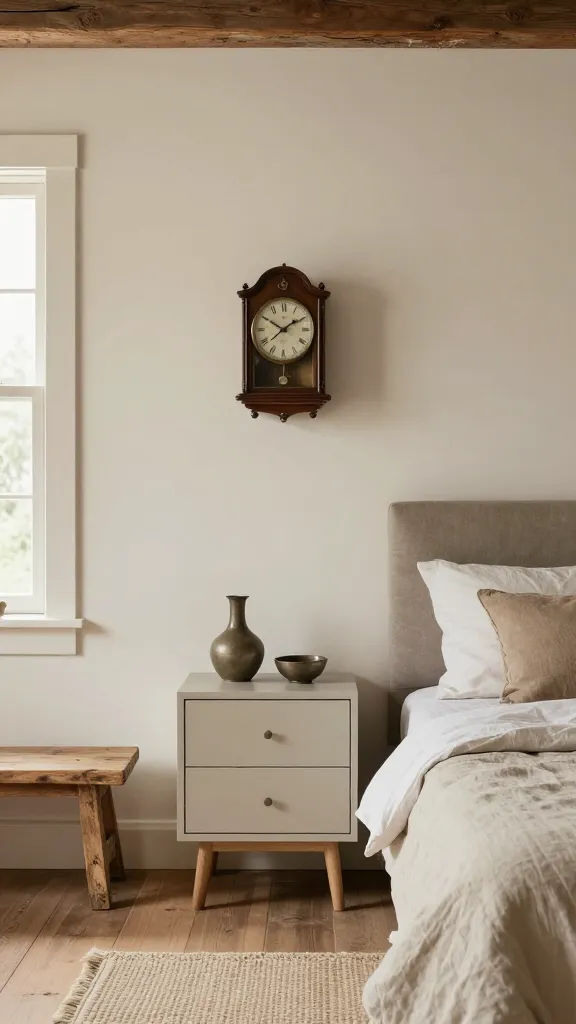
One imperfect vintage find gives a room history in a way nothing new can manage. An old mirror, a small cabinet, a worn clock. The mistake is reaching for a second and a third, because a room with an antique on every surface stops reading as curated and starts reading as a shop.
My grandfather carved a small wooden figure that sits in our bedroom now, and it is the only old thing in there. It gets noticed by everyone who comes in, which would not happen if it had six companions. Pick the piece you would grab in a fire. Give it space, and let it do the talking.
Takeaway: One or two vintage pieces. Give them space. Let them tell a story.
9. How Does Open, Shallow Storage Prevent Clutter?
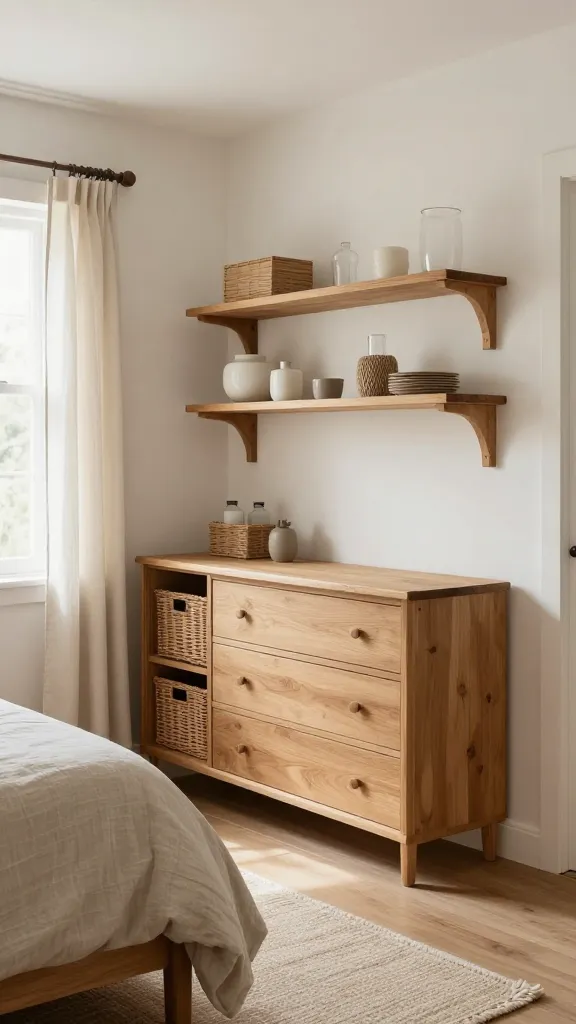
Clutter undoes everything else on this list faster than any other single factor. Use shallow open shelves for everyday items, a low wood chest instead of a tall dresser, and a couple of wicker baskets to catch what is left over.
The evidence is better than the usual “tidy home, tidy mind” line suggests. In a 2010 UCLA study of sixty dual-income couples, women who described their homes in cluttered, unfinished language showed flatter daily cortisol slopes, a pattern linked to worse health outcomes, and the effect held after controlling for marital satisfaction. Notably, the same association was weaker in the men studied. Your home does not just reflect your stress. For some people it feeds it.
Deep drawers were my mistake for years, and teenagers exposed it completely. Clothes went in by the armful on the way out of the door, the bottom two thirds were archaeology, and nothing was ever findable. Shallow shelves force the issue, because you cannot bury anything on a shelf.
Takeaway: Shallow shelves. Low chest. Wicker baskets. Keep it calm, keep it visible.
10. What Happens When You Layer Scent and Texture Together?
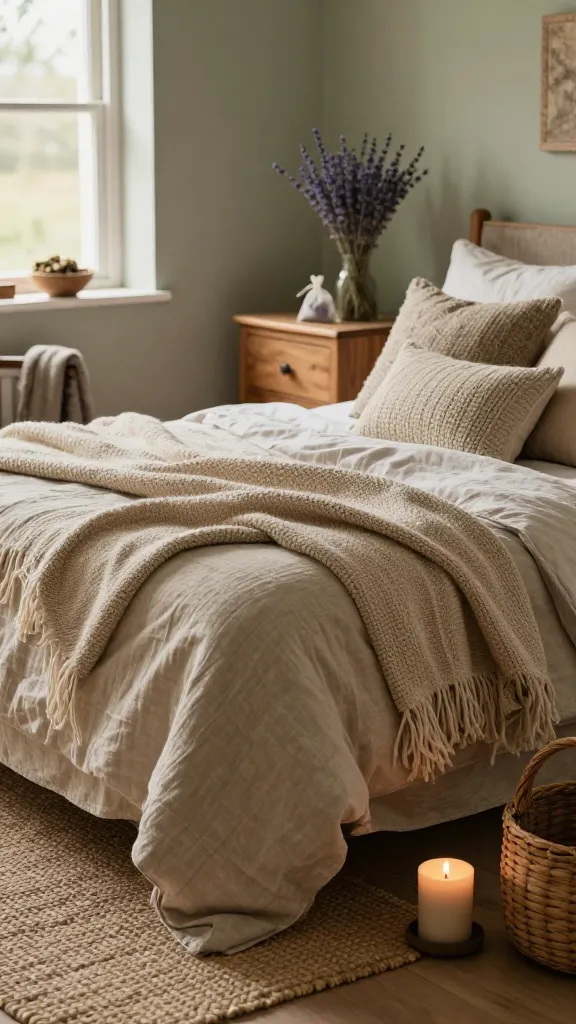
A room can look right and still feel unfinished if it does not smell like anything. Tuck a few sachets of dried lavender or rosemary out of sight, add a wool throw, a couple of knit cushions, a jute rug. Most people skip this step entirely, and it is the one that separates a considered room from an assembled one.
Neuroscience research on olfaction shows smell bypasses the brain’s rational centres and connects straight to the limbic system, the seat of emotion and memory. That is the whole mechanism. Scent is a shortcut nothing visual can take.
My mother simmered dried citrus peel on the stove and baked with nutmeg and cloves, and I could tell from the hallway what kind of afternoon it was going to be. I still make a spiced cocoa with star anise, cinnamon bark, cloves, nutmeg and cardamom, mostly for the smell. The lavender in the bedroom drawers is the same trick, aimed at a different hour of the day.
Takeaway: Dried lavender sachets. Wool throw. Knit cushions. Layer scent and texture.
11. How Do You Keep a Nightstand From Collecting Clutter?
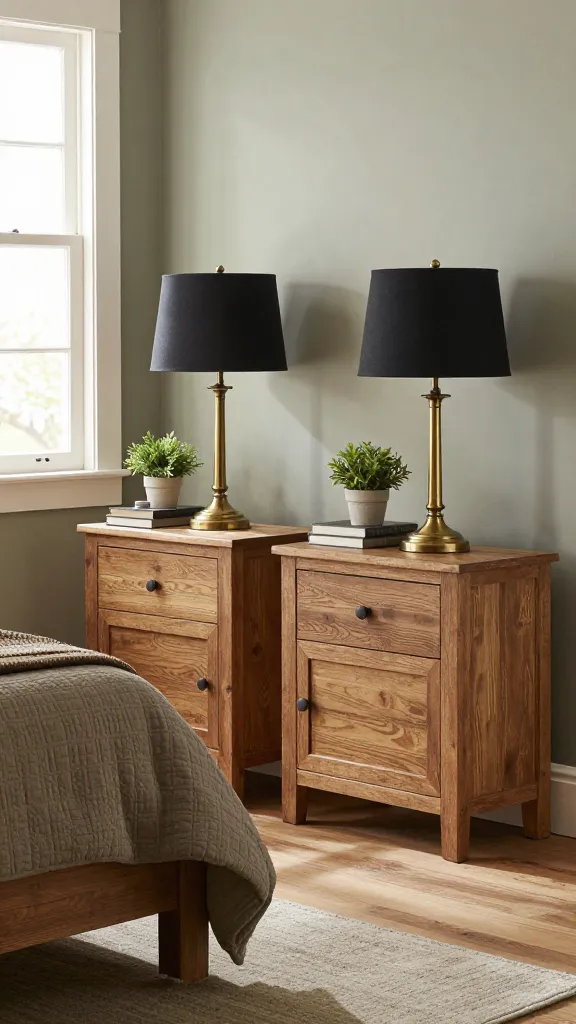
Match both lamps in finish and height. Antique brass or matte black, either works, but mismatched lamps undo a room faster than almost anything. Then hold each side to two or three items: the lamp, a small plant, one book. A single tray corrals the rest and keeps the surface looking deliberate even in a bad week.
Clutter creep happens on flat surfaces, not inside storage. That is the rule worth remembering.
My husband and I both read in bed, which is exactly how a nightstand turns into a pile. Two books each, then chargers, then a glass, then whatever came out of a pocket. The tray fixed it, not by adding storage but by drawing a visible edge. Anything outside the tray is obviously in the wrong place, and you put it away without deciding to.
Takeaway: Matching lamps. Two to three items per side. Single tray. Keep it intentional.
12. Why Does a Pale Ceiling and Quiet Corner Complete the Room?
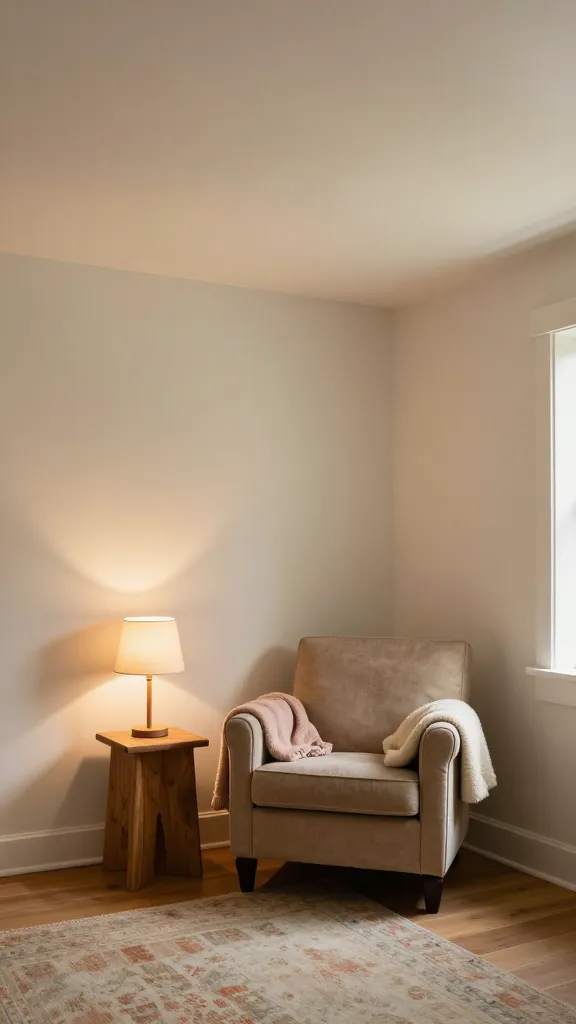
Everyone forgets the ceiling. A stark white one makes a warm room feel disconnected from itself, so use a soft pale tone with a warm undertone. Oat, not true white. The whole room then reads as one space rather than four walls and a lid.
If there is floor left over, put a single chair, a small side table and a warm floor lamp in one corner. Unused square footage becomes the place you actually sit.
My parents furnished the piggery from a broccante down the road, and the bistro set they dragged home was weathered grey and slightly wobbly. It looked as though it had always been there, which nothing bought new ever does in the first year. That is what a corner chair should feel like. Not staged. Just already yours. The same logic applies room by room if you want to make your home feel more intentional.
Takeaway: Pale oat ceiling. Warm undertone. Single chair in corner. Complete the room.
Frequently Asked Questions
What’s the fastest way to get this look without redoing the whole room?
Start with the bedding, the wall colour, and one wood element behind the bed, because that combination alone gets you most of the way there. Add the rug and warm lighting next, and the room reads as farmhouse before you have touched anything else on this list.
Which plants actually survive in a bedroom with low light?
Pothos, snake plant, and ZZ plant are the most forgiving options, and any of them work in a small terracotta pot on a shelf or windowsill. Water only when the top inch of soil is dry.
Is linen bedding worth the extra cost over cotton?
Over a single season, no, and cotton in a warm neutral gets you a similar look for less. Over five or six years it usually is, because linen softens rather than pilling and tends to outlast two or three cotton sets bought in the same period.
How many vintage pieces is too many?
More than one or two per room usually tips from curated into cluttered. Pick a favourite and give it room to be noticed rather than spreading several smaller pieces around.
Will floor-length curtains make a small bedroom feel darker?
Not if you keep them in a light linen or cotton and layer them over sheer blinds rather than blackout fabric. Fabric weight and layering decide the darkness, not length.
What’s the easiest way to keep a farmhouse bedroom from feeling cluttered?
Shallow open shelving instead of deep dressers, and a hard limit of two or three items per nightstand. Clutter creep happens on flat surfaces, not in storage.
Get the bedding, the wall colour, and one piece of real wood right, and the rest of the room follows on behind them. Fewer things, chosen properly. If you want the same approach in a tighter space, my cozy bedroom guide covers fifteen ideas that work at any size, and my small bedroom ideas deal with genuinely small rooms.
Leave a Reply