12 Ways to Make Your Home Feel More Intentional Without Spending Money
· thehazelcottage@mail.com
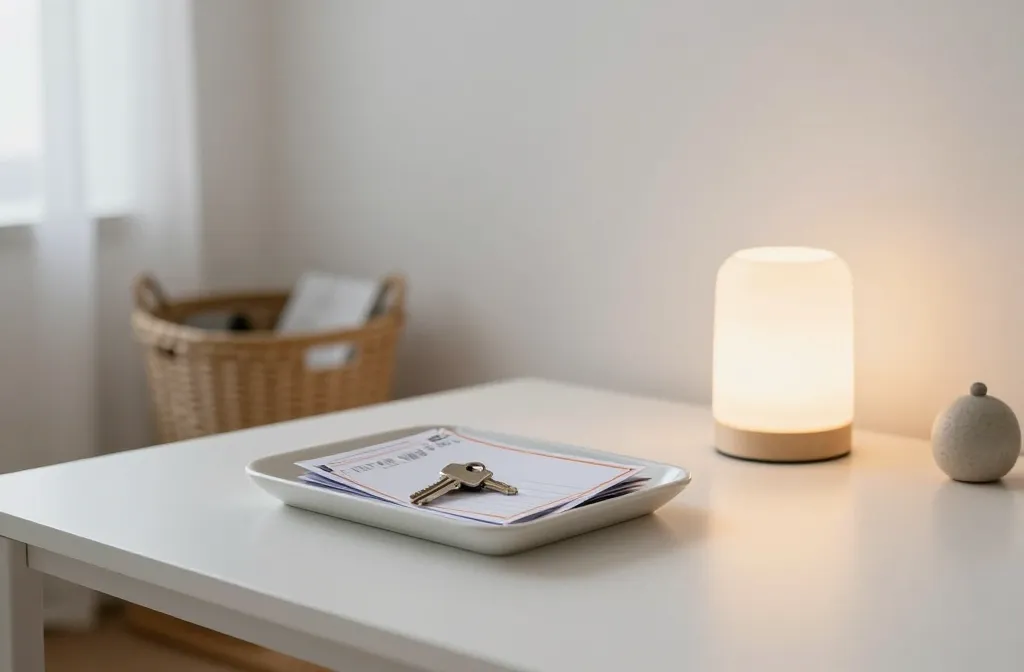
I’ve rearranged my apartment multiple times and watched how small, deliberate changes shift my entire day. Moving countries every three or four years taught me that you can’t control everything, but you can control what stays and what goes. You don’t need a budget to cultivate a space that feels purposeful. Every single change below cost me nothing — just attention, intention, and a willingness to look at what I already owned differently.
Here are twelve practical ways to make your home feel more intentional without spending a single dollar. They work whether you live in a studio, a shared apartment, or a house with rooms to spare.
1. How Does Clearing One Surface Change the Feel of a Room?
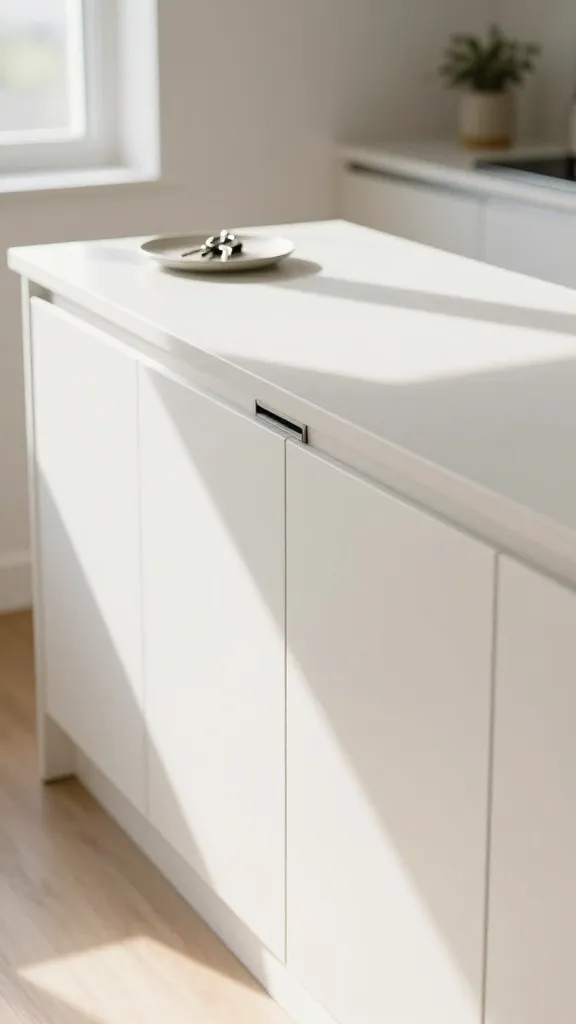
A cluttered surface signals busyness and distraction; a clean, intentional surface invites focus and calm. When your eyes land on a tidy table, you feel more in control and ready to act.
The first time I cleared my kitchen counter completely — everything into drawers, cabinets, a basket — I stood back and felt something I hadn’t felt in months: space to breathe. The American Psychological Association notes that cluttered environments increase cortisol and make it harder to focus or relax. It’s not just aesthetic — it’s physiological.
You don’t need to clear everything. Pick one surface — the kitchen counter, your nightstand, the entryway table — and clear it completely. Assign a small tray for keys and mail. Put everything else away. That one clear surface becomes an anchor of calm that the rest of the room organises around.
Takeaway: Clear one surface today. Keep it clear for a week and notice how the room changes around it.
2. How Can You Reset Your Mood With Lighting Alone?
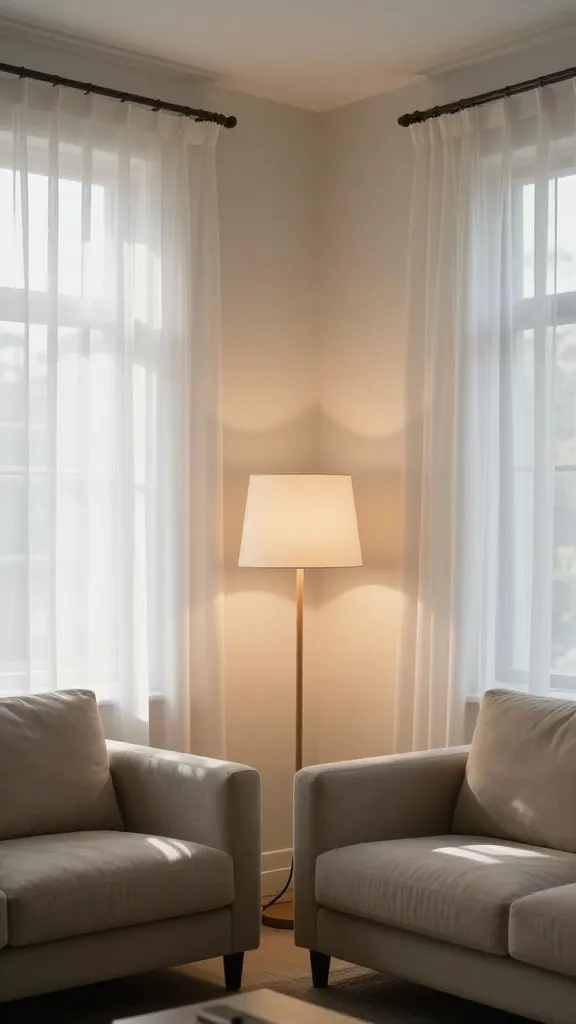
Open curtains during daylight hours, switch to a single warm lamp in the evening, and turn off lights in unused rooms. These three moves transform a flat, forgettable space into one that shifts with the rhythm of the day.
I left every ceiling light on all day for years, and my apartment felt like a dentist’s waiting room — bright, harsh, and somehow impersonal. Then I started a simple rule: natural light during the day, one warm lamp in the evening. The difference was immediate. Evenings felt calmer. Mornings felt brighter because I was actually using the windows instead of competing with them.
WHO research on environmental wellbeing confirms that exposure to natural light during the day improves mood, sleep quality, and focus. You don’t need expensive lamps or smart bulbs. You just need to open the curtains, turn off the overheads, and let one warm lamp do the work in the evening.
Takeaway: Tomorrow, leave the overhead lights off. Open every curtain. Use one warm lamp after sunset.
3. What Does a Five-Minute Evening Reset Actually Do?
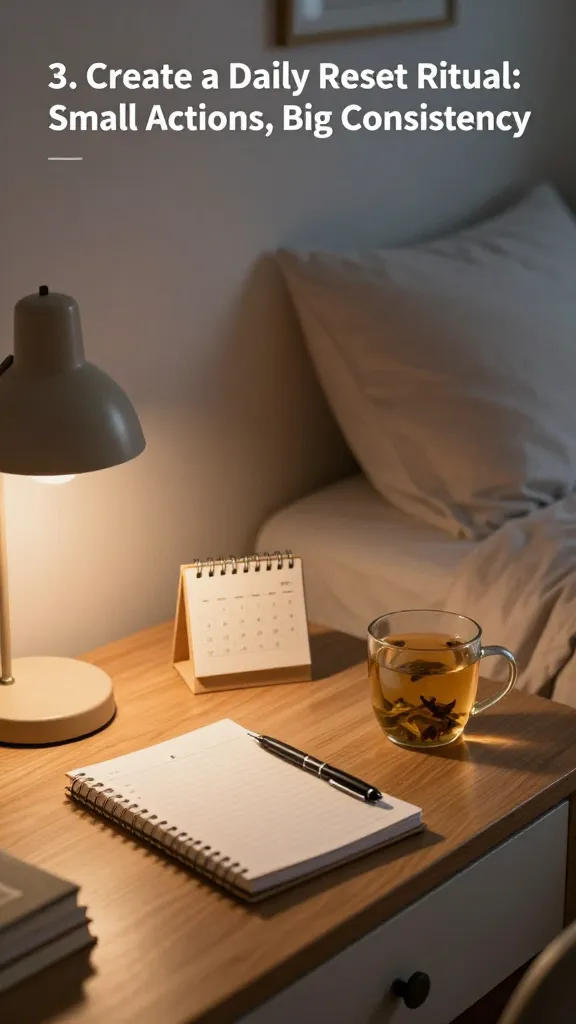
Spend five minutes tidying, write tomorrow’s three priorities, and turn off screens thirty minutes before bed. This small ritual closes the day with clarity instead of chaos.
My evenings used to unravel. Dishes in the sink, mail on the table, laptop still open — I’d collapse onto the couch feeling like the day had happened to me rather than through me. Then I started a five-minute reset: put things back, wipe the counter, write three things for tomorrow. It takes less time than scrolling one feed, and it changes everything about how I wake up.
Harvard Business Review research on rituals shows that intentional evening practices reduce anxiety and improve sleep onset by signalling to the brain that the day is complete. The key isn’t the specific actions — it’s the consistency. Five minutes, every evening, at roughly the same time.
Takeaway: Tonight, set a timer for five minutes. Tidy one surface. Write three things for tomorrow. Close the laptop.
4. How Do You Create a Cohesive Look Using Only What You Own?
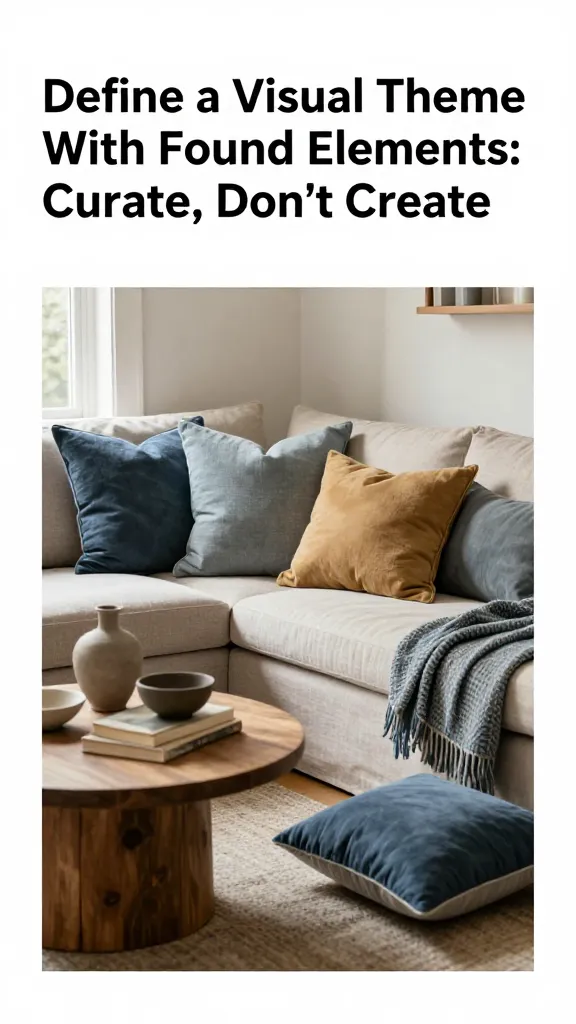
Pick two to three core colours and two textures you love, then group what you already own around that palette. A cohesive look comes from curation, not shopping.
I thought I needed to buy matching sets to make a room look intentional. Then I noticed something: the rooms I loved most in magazines didn’t have matching furniture — they had cohesion. Everything spoke the same visual language, even when the pieces came from different decades.
So I picked a palette: warm wood, natural linen, terracotta. Then I went through every room and moved items that didn’t fit that palette into storage or other rooms. I didn’t buy a single thing. But suddenly the apartment looked like it had a plan. Cushions I already owned suddenly worked. A wooden bowl from the kitchen suddenly belonged on the shelf. The only change was selection, not spending.
Takeaway: Choose a two-colour, two-texture palette from what you own. Rearrange room by room.
5. How Do You Create a Workspace That Actually Supports Focus?
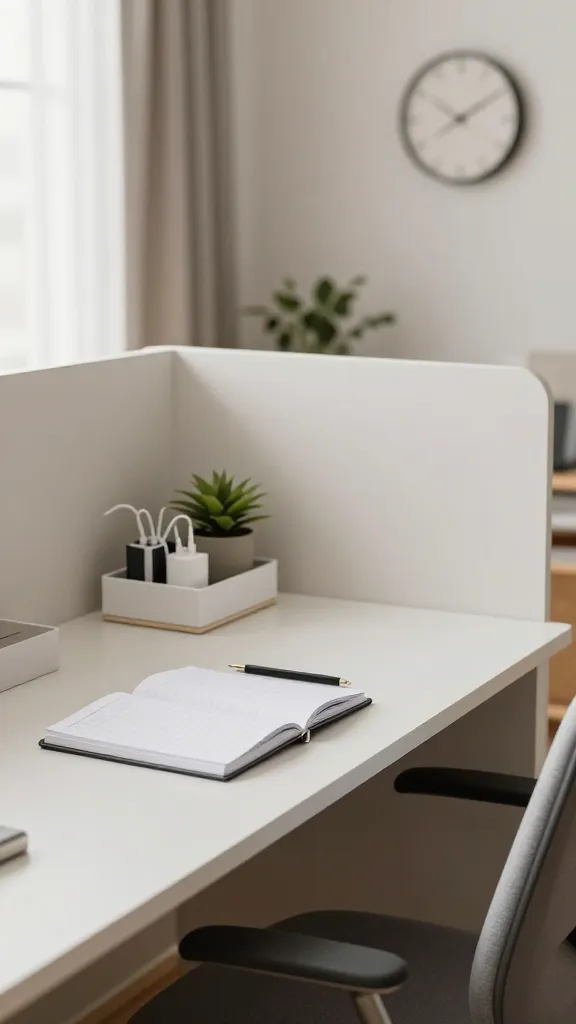
Remove non-work items from your desk, put cords in a tray, and end each day with a clean surface. A defined workspace creates a mental boundary between work and rest.
My productivity jumped the week I stopped treating my desk as a dumping ground. Before, it held mail, half-read books, charging cables, a mug from yesterday. After I cleared everything except a notebook and a pen, something shifted: sitting down at that desk started to feel like starting work instead of sorting through life.
The boundary matters. When your workspace looks like the rest of your life — cluttered, undefined, overlapping — your brain can’t tell when work starts and rest begins. A clean desk surface is a signal: this is where focus happens.
Takeaway: Clear your desk of everything except one work tool. End each day the same way.
6. How Can You Reorganise Your Wardrobe to Save Time Every Morning?

Separate clothes by how you wear them — everyday, work, seasonal — instead of by colour. Hang frequently worn items at eye level and store the rest. You’ll navigate your wardrobe in seconds instead of minutes.
My closet felt chaotic until I stopped organising by colour and started organising by use. My everyday clothes — the ones I actually reach for — moved to the middle shelf at eye level. Work clothes went on one side. Off-season items went into a bin on the top shelf. Suddenly I wasn’t pushing through winter scarves in July to find a t-shirt.
The principle is simple: the things you use most should be the easiest to reach. Everything else can live one shelf up, one shelf down, or in a bin. You don’t need a fancy organiser — you just need to move your most-used items to where your hand naturally goes.
Takeaway: Move your five most-worn items to eye level today. Store the rest by season.
7. What Happens When You Create a No-Phone Zone?
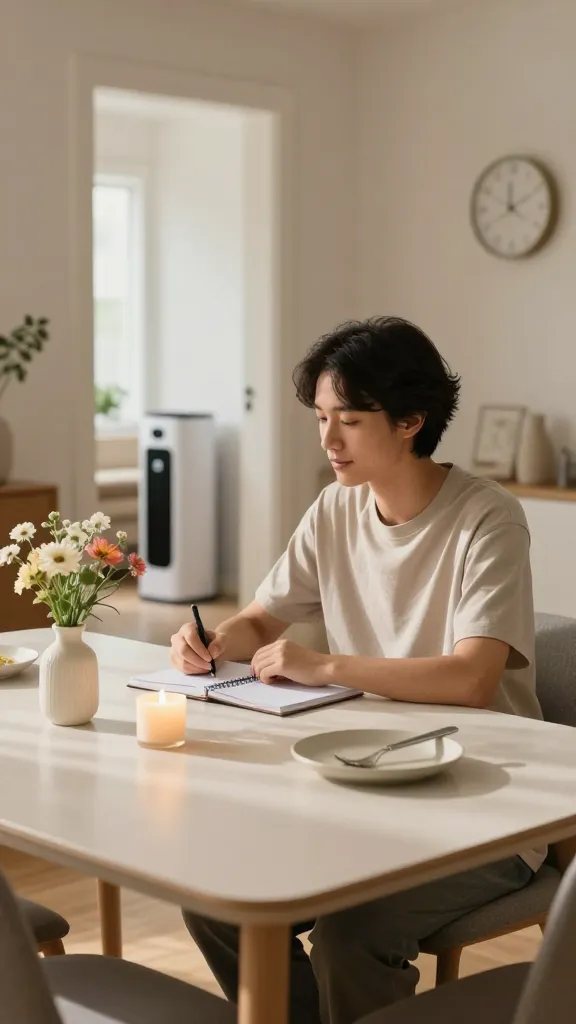
Choose one room or one surface — the dining table, the bedroom, the couch — where phones don’t go. Leave them charging in another room. Notice how your attention changes.
I noticed a clear shift in focus the week I made the dining table a no-phone zone. Meals lasted longer. Conversations went deeper. I actually tasted my food instead of scrolling through it. Research on screen time and stress confirms that constant phone checking fragments attention and increases cortisol — and that even brief periods of disconnection restore cognitive capacity and mood.
You don’t need to go cold turkey. Start with one zone — the dining table during meals, or the bedroom after 9pm — and protect it daily. The rest of the house can stay connected. But that one zone becomes a pocket of presence.
Takeaway: Choose one zone today. Charge your phone in another room when you’re in it.
8. How Can Natural Scents Transform a Room Without Buying Anything?
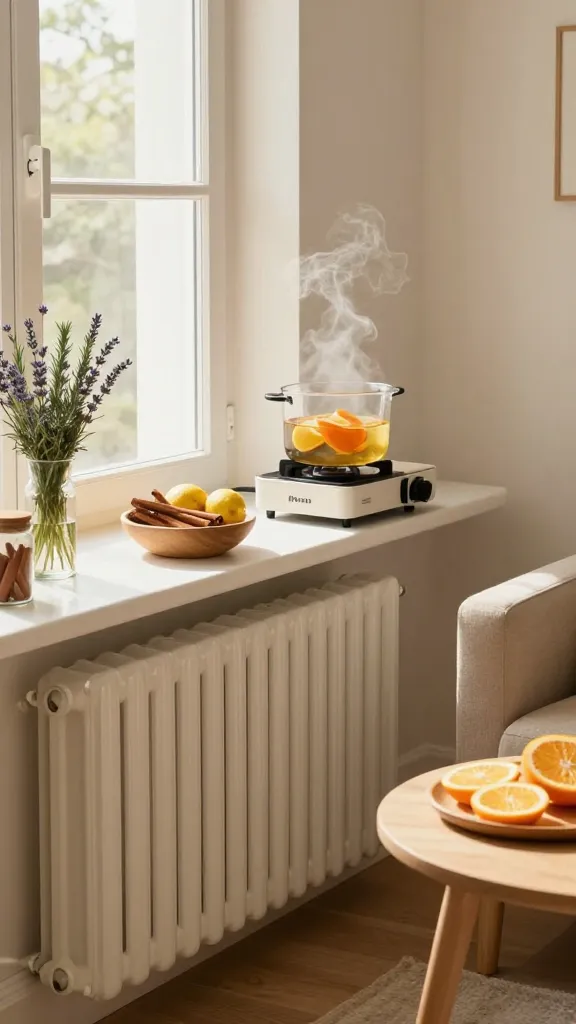
Simmer citrus peels, place cinnamon sticks on a warm shelf, or set out fresh herbs from your windowsill. These natural scents anchor a room in warmth and memory without spending a cent.
Scent is the most direct pathway to memory and emotion. Neuroscience research on olfaction shows that smell bypasses the brain’s rational centres and connects directly to the limbic system — the seat of emotion and memory. That’s why the smell of citrus peels simmering on the stove can make your whole apartment feel like home in seconds.
My mother would put out bowls of dried citrus that scented the house, and she’d bake warm-spice cookies with nutmeg and cloves. I still make a cocoa using star anise, cinnamon bark, cloves, nutmeg, and cardamom — the scent fills the kitchen and drifts through the house. You don’t need expensive candles or diffusers. After you eat an orange, save the peels. Simmer them in a pot of water on low heat. These are free, natural, and more powerful than anything in a plastic spray.
Takeaway: Save your next citrus peels. Simmer them in water on low heat. Notice what happens to the room.
9. How Do You Give Every Room a Single, Clear Purpose?
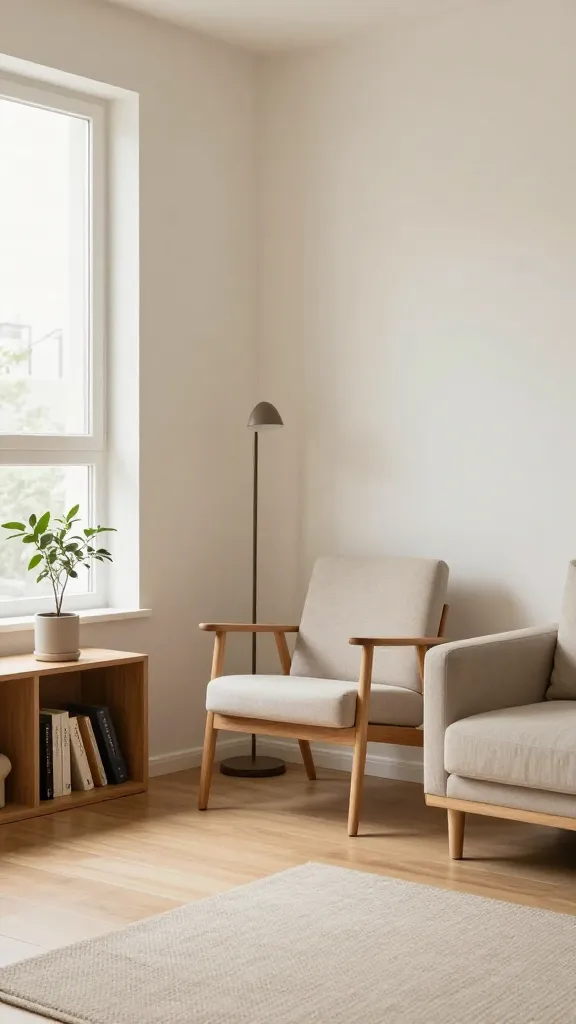
Choose one primary function per room — rest, dining, work, reading — then arrange everything to support that purpose. A room with a plan feels intentional; a room without one feels like a storage unit.
I let my living room be everything at once for years: dining area, workspace, lounge, storage overflow. It failed at all of them. Then I made a decision: the living room is for rest and reading. Everything else moved elsewhere. The dining table went to the kitchen. The laptop went to the desk. Suddenly, walking into the living room felt like entering a room with a job — and it did that job beautifully.
This doesn’t mean you can’t use a room for multiple things. It means you choose the primary purpose and let that guide what stays. A guest room that’s primarily for sleep can also hold a suitcase, but it shouldn’t also be your office, gym, and craft room.
Takeaway: Name the primary purpose of each room. Remove what doesn’t serve it.
10. How Does Knowing What You Own Change What You Want to Buy?
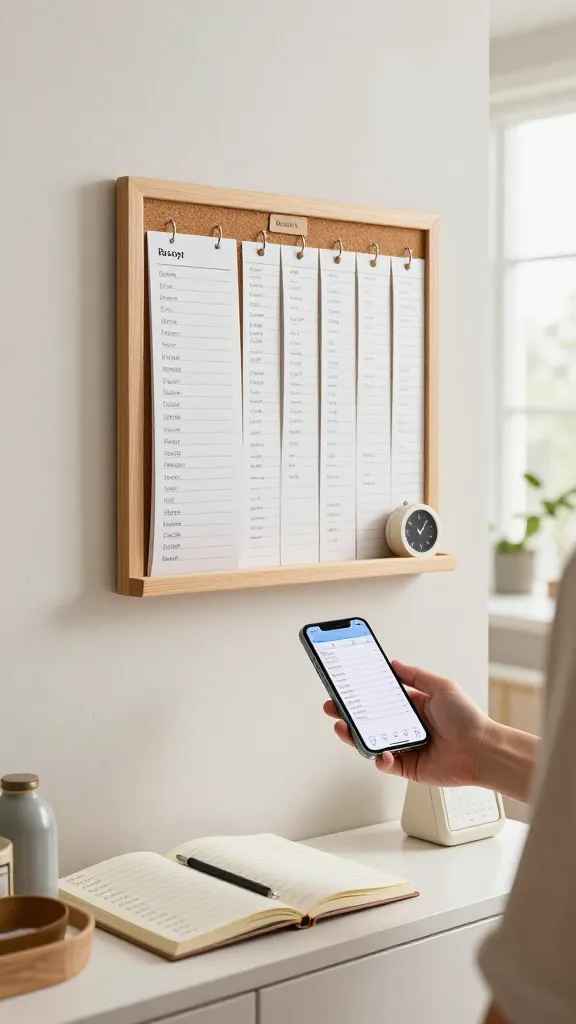
Keep a simple list of what you own, organised by room. Before buying anything, check the list first. Most impulse purchases disappear when you realise you already have something similar.
I started a “receipt locker” — not for receipts, but for awareness. A simple notebook page listing what I own in each room: kitchen (four pots, two pans, six plates, four mugs), living room (two lamps, one rug, four cushions). Before buying anything, I check the list. Half the time, I already own something that does the job. The other half, I realise the purchase isn’t urgent.
This isn’t about deprivation. It’s about intention. When you know what you have, you stop buying duplicates. You stop forgetting about things buried in the back of a cupboard. You start using what you own instead of accumulating more.
Takeaway: Spend ten minutes listing what you own in one room. You’ll be surprised how much you already have.
11. How Do You Create Zones in an Open-Plan Space Without Building Walls?
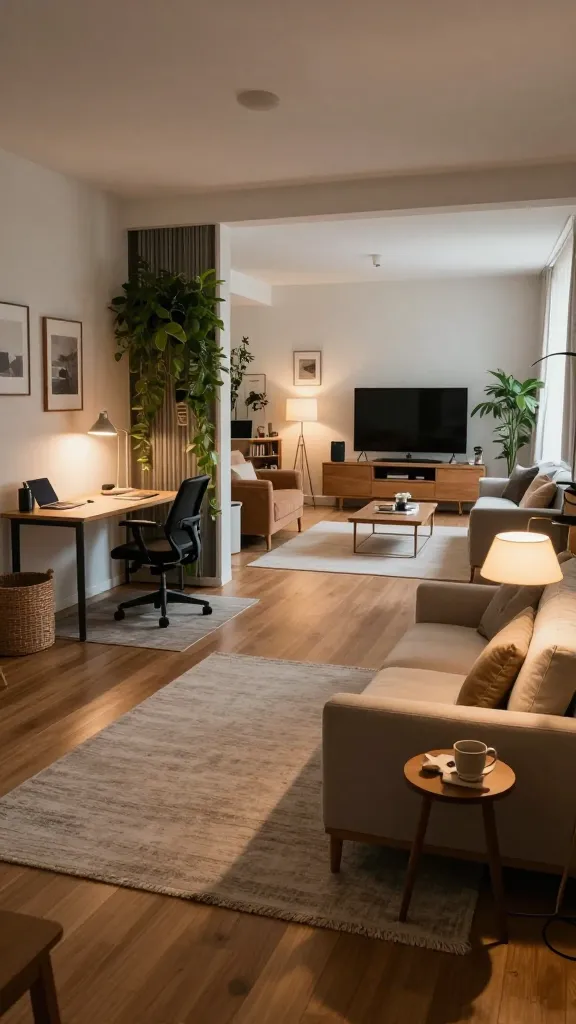
Use rugs, furniture placement, and lighting cues to define different areas — a reading corner, a dining zone, a workspace — without walls or renovation.
Living in an open-plan space can feel endless and undifferentiated. Everything bleeds into everything else. The fix isn’t building walls — it’s creating visual boundaries with what you already own.
A rug defines a living area. A bookshelf placed perpendicular to a wall separates a workspace from the rest of the room. A lamp on a side table creates a reading corner even in the middle of a large space. The key is intention: each zone should have a clear function and a visual anchor — something that says this area is for this.
I rearranged my open-plan living space by placing my existing rug under the seating area, moving a bookshelf to create a work nook, and adding a small table lamp to define a reading corner. No construction. No spending. Just furniture in different positions, and suddenly the space had rooms within it.
Takeaway: Walk through your open space and name the zones. Move one piece of furniture to create a boundary.
12. How Do You Make a Room Feel Like Yours Without Buying Decor?
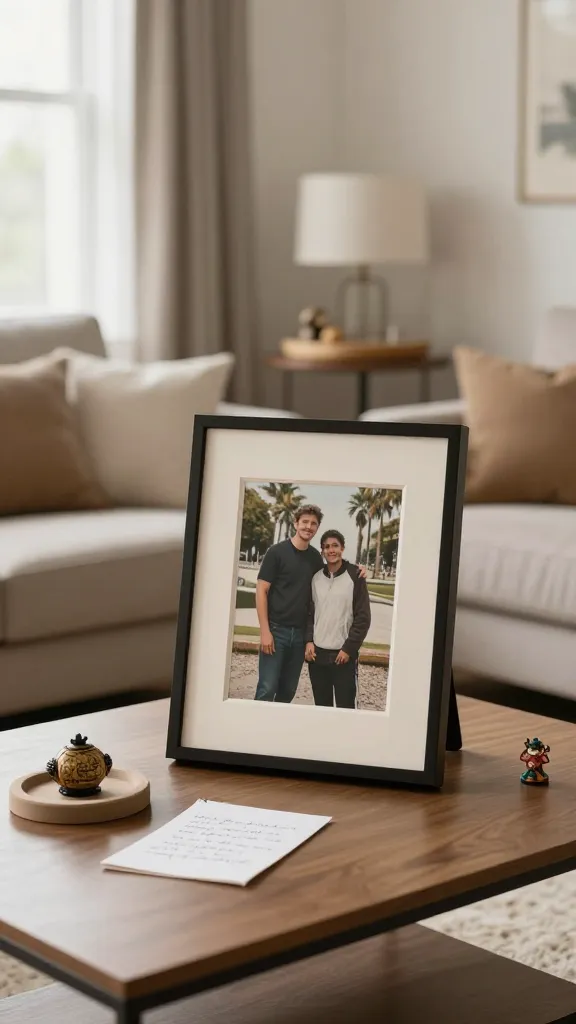
Choose one meaningful item per room — a photo, a souvenir, an heirloom — and display it simply. Spaces feel purposeful when they tell a story only you can tell.
The rooms that feel most like home aren’t the ones with the most decor — they’re the ones with the most meaning. A single framed photo from a trip you loved. A bowl your grandmother made. A stone you picked up on a walk. These objects anchor a room in your story, not in a catalogue’s.
I went through my apartment looking for one meaningful object per room. In the living room: a small wooden figure my grandfather carved. In the bedroom: a postcard from a city I loved. In the kitchen: a ceramic mug from a market in another country. I placed each one where I’d see it daily. The rooms didn’t look different to anyone else — but they felt different to me. They told my story.
Takeaway: Find one meaningful object. Place it where you’ll see it every day. Let it anchor the room.
Intentional Home Strategies Compared
| Strategy | Time Required | Impact Level | Best For |
|---|---|---|---|
| Clear one surface | 10 minutes | High — reduces cortisol | Immediate visual calm |
| Shift lighting (natural + warm lamp) | 2 minutes | High — mood + circadian | Atmosphere + sleep quality |
| Five-minute evening reset | 5 minutes | High — closes day with clarity | Reducing morning chaos |
| Cohesive palette from existing items | 30 minutes | Medium — visual cohesion | Room harmony without spending |
| No-phone zone | Ongoing | High — restores attention | Presence + deeper conversations |
| Natural scents (citrus, herbs) | 5 minutes | Medium — emotional anchor | Memory + warmth without cost |
Frequently Asked Questions
How can I start making my home feel more intentional today?
Begin with one surface — clear it and keep it clear for a week. Then extend the habit to one room at a time. Small, consistent changes compound into a meaningful shift within days.
What if I don’t have time to reorganise everything?
Focus on high-impact areas first: the entryway, the living room, and your workspace. Spend fifteen minutes a day on one area until it feels settled. Momentum matters more than perfection.
How do I keep these changes without buying new stuff?
Use what you already own. Group items by function and visual harmony. Rotate one meaningful object per month to keep things feeling fresh. Intentional living is about selection, not accumulation.
How long does it take to see results from these changes?
Most people notice a calmer mood and smoother routines within a week. After a month, the space begins to feel genuinely intentional and easier to maintain because every item has a reason for being there.
Conclusion
Intentional living doesn’t require more money — it requires more attention. Clear one surface. Shift one lamp. Name one room’s purpose. Place one meaningful object where you’ll see it daily. These small, free changes accumulate into a home that feels calmer, more focused, and unmistakably yours.
If you want to extend this intentionality throughout your week, my guides on morning rituals for a slow start, seasonal home transitions, and Sunday rituals for a grounded home show how to weave purpose and calm into every part of your life.
Leave a Reply