Cozy Bedroom Ideas: 15 Ways to Create a Warm, Natural Sleep Space
· thehazelcottage@mail.com
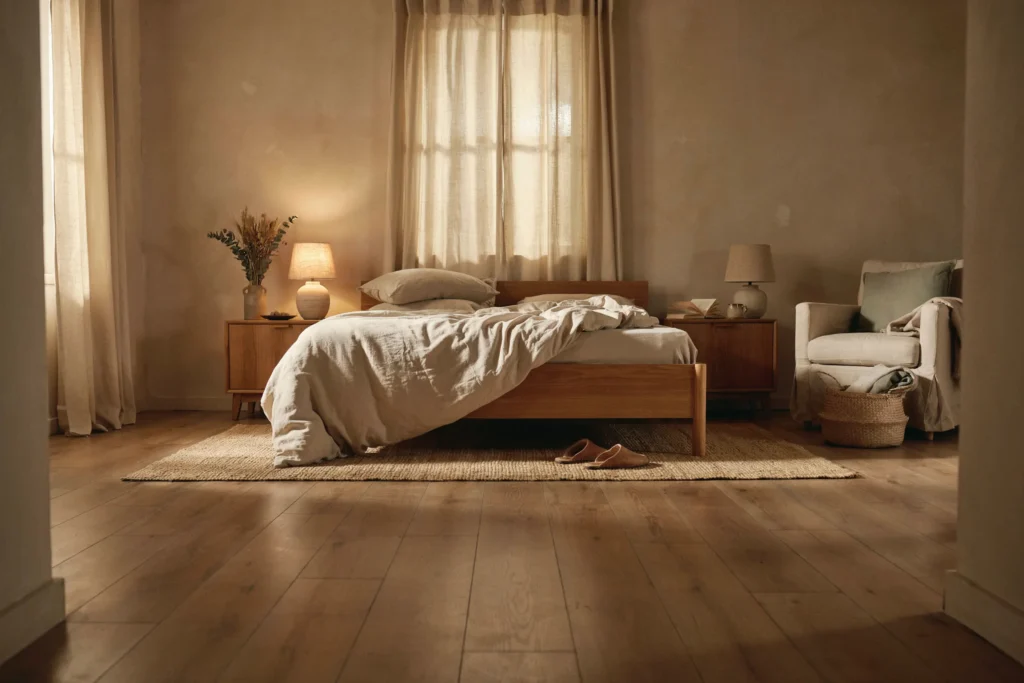
A cozy bedroom isn’t built from a string of fairy lights and a throw pillow. It’s built the slow way — one warm wall colour, one good linen sheet, one piece of real wood — until the room feels less like a showroom and more like somewhere you actually want to close the door on the world.
That’s the version of “cozy” I’m sharing here: earthy, grounded, a little imperfect. It works in a rental with three command strips and a weekend, and it works in a full renovation with a moodboard six months deep. Either way, the room is built from the same four ingredients — colour, texture, lighting, and a handful of well-chosen pieces.
But here’s the thing most cozy bedroom guides miss: coziness isn’t just about looks. A room that’s truly cozy should also help you sleep better. Research on lighting and sleep shows that your bedroom environment directly affects melatonin production and sleep quality. Below are fifteen ways to get there — ideas that make the room feel good and help you actually rest.

1. What Are the Best Bedroom Colours for Sleep?
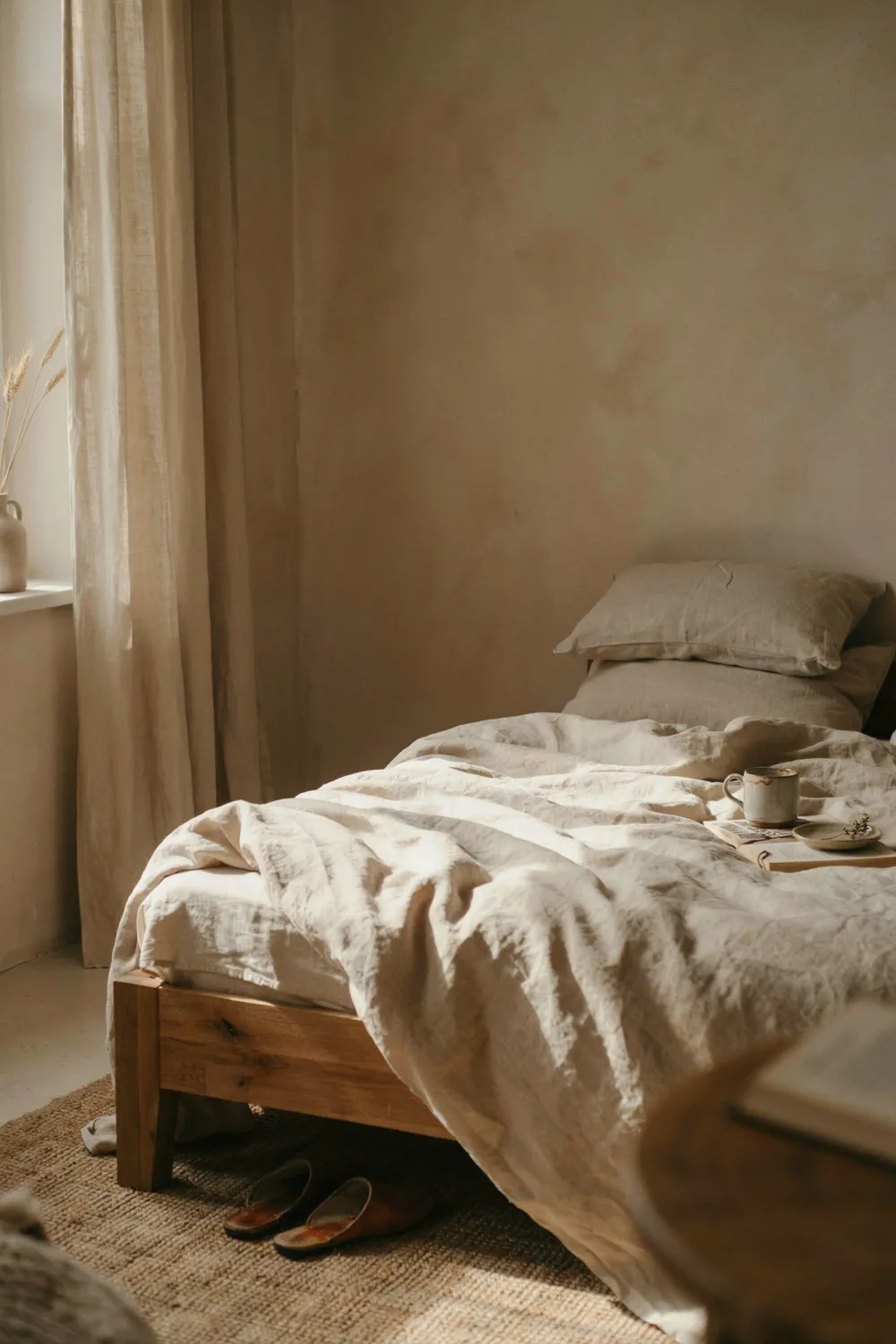
Warm neutrals — mushroom, taupe, clay, soft brown — signal safety and rest to your nervous system. Cool-toned walls stimulate alertness; warm walls tell your body it’s time to settle.
Beige, mushroom, greige, taupe, clay, and soft brown all do the same job: they make a room feel calm without going flat. Skip anything icy or blue-leaning — even a “warm white” can read cold under the wrong bulb. The walls are the backdrop; they should support everything else, not compete with it.
Here’s what warm walls actually do for your sleep: cool-toned walls stimulate alertness. Research on environmental psychology shows that warm, muted colours signal safety and rest to your nervous system, while colour and mood studies confirm that bedroom wall colour directly influences how you feel when you walk in. When you enter a warm-toned bedroom at night, your body gets the message: it’s time to settle. In a north-facing room with cool light, lean heavier on the warm tones — a mushroom that looks perfect in a south-facing room will read grey in cool light.
We’d watch travel channels and home shows — Mexican and Hispanic houses where the rooms are always bright with bold colours. We’d see the same echoes in Gabrielle Solis’s house on Desperate Housewives — vibrant, saturated, alive. When we discussed redecorating, we knew that was too much for us. My husband loves bold colours, but even for him, it was overwhelming.
So we ended up in our study with a warm grey, and on one wall, he painted a darker grey/dark green strip about 1.5 meters wide with a thin 60cm orange segment sitting mainly behind an open bookshelf. You see pops of colour from behind the books, but they’re random, broken by the shelves and the spines. It’s our compromise — bold enough to feel alive, restrained enough to feel restful.
Before you commit to a gallon, tape a sample on the wall and watch it through a full day. Morning light, midday light, and evening lamp light can turn the same swatch three different colours.
Takeaway: Warm neutrals. Test samples. Let walls signal rest.
2. How Many Accent Colours Should a Bedroom Have?
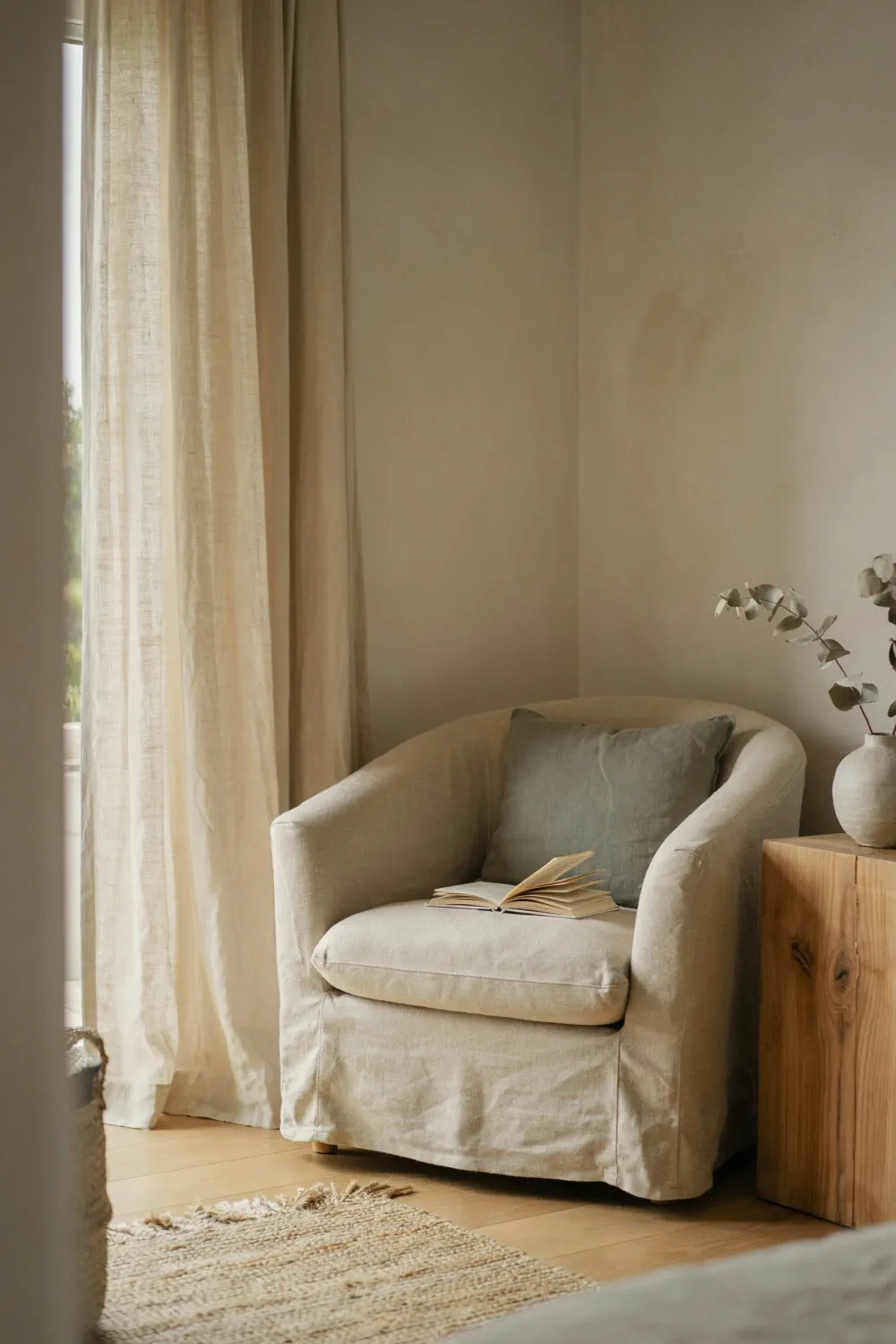
One. Pick a single earthy accent — sage, terracotta, rust, olive — and repeat it through a throw, a cushion, and one piece of art. Five competing colours feel stimulating, not calming.
Carry it through the room rather than introducing five different “earthy” shades that end up competing. Restraint is what keeps the room restful instead of busy.
Here’s why one accent matters for sleep: visual clutter keeps your brain scanning. A room with five competing colours feels stimulating, not calming. When your eye has one colour to follow — sage cushions echoing a sage plant in the corner — the room reads as unified, and your brain stops working. It’s the difference between a room that energises you and one that lets you exhale.
Takeaway: One accent colour. Repeat it. Less visual noise = easier wind-down.
3. Is Linen Bedding Worth It for Better Sleep?
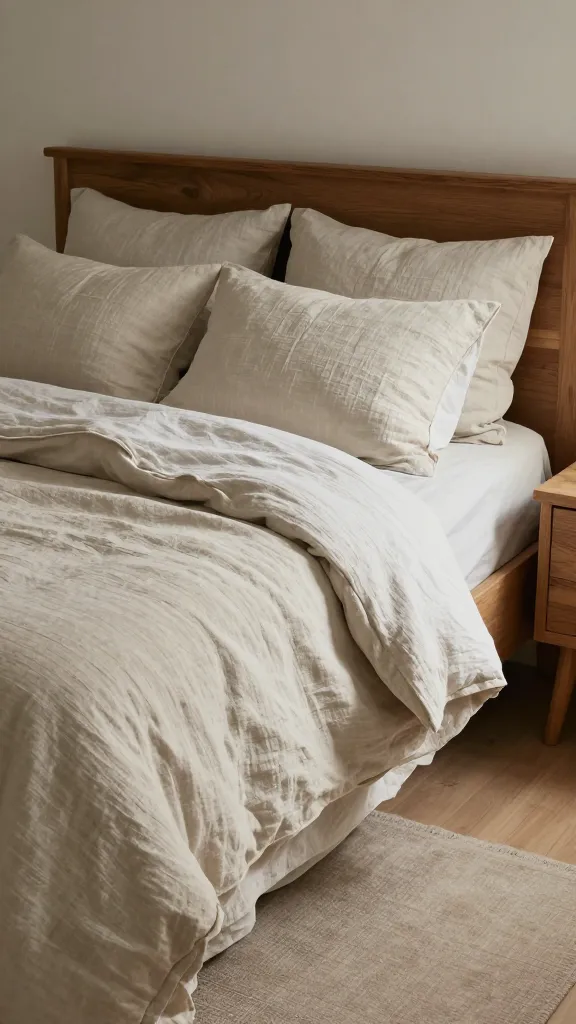
Linen breathes, wrinkles well, and softens with use — and systematic sleep research shows it promotes better sleep than cotton in warm conditions. The wrinkles are a feature, not a flaw.
Linen is doing a lot of the work in this whole aesthetic. It’s breathable, it has built-in texture, and the wrinkles mean you don’t have to make the bed perfectly every morning — a rumpled linen duvet looks intentional, not messy. Oatmeal, flax, stone, and soft olive are the easiest colours to build a palette around.
Here’s what linen actually does for your sleep: it breathes, so you don’t wake up sweaty at 3am. Your body temperature drops naturally as you fall asleep, and polyester traps heat — linen lets it escape. In a hot climate, linen is almost mandatory. In a cold climate, layer it over a cotton sheet so you get the texture without the chill. And the flax-to-linen process, documented by European linen producers, preserves the natural fibres that make linen so breathable.
| Linen | Cotton | Polyester | |
|---|---|---|---|
| Breathability | Excellent — highest air permeability | Good — varies by weave | Poor — traps heat |
| Moisture-wicking | Superior — absorbs 20% of weight without feeling damp | Moderate | Limited — sleeps clammy |
| Texture | Visible weave, softens with every wash | Smooth, can pill over time | Flat, synthetic feel |
| Durability | Decades — gets better with age | Moderate wear | Degrades, pills quickly |
| Sleep quality | Better than cotton in warm conditions (PMC11596996) | Good all-round | Disrupts sleep — traps heat |
| Best climate | Hot & humid (also layers well in cold) | All-round | Avoid for sleep |
Takeaway: Linen breathes. No 3am sweat. Wrinkles welcome. Climate-aware layering.
4. Why Does Real Wood Make a Bedroom Feel Calmer?
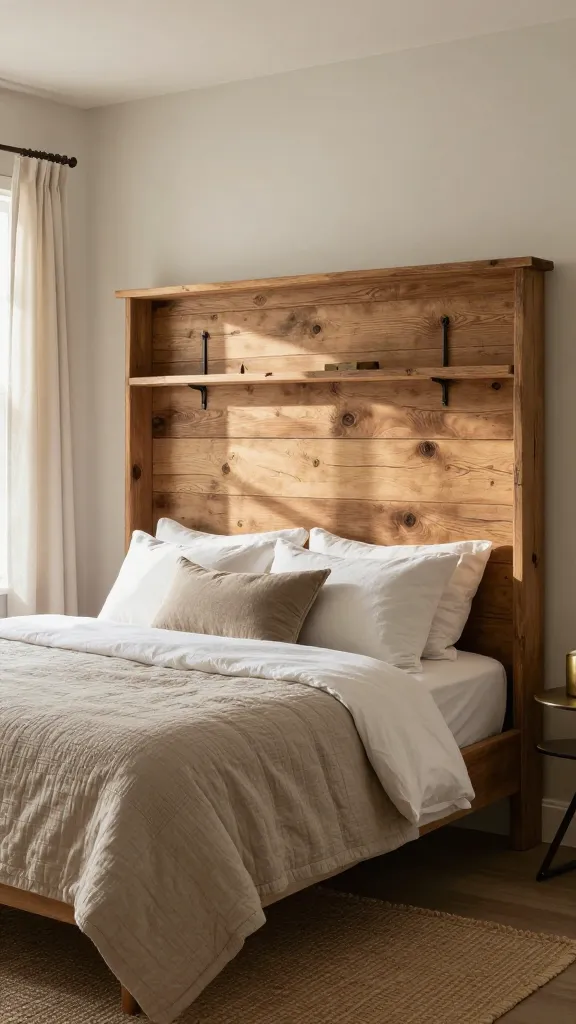
Visible grain, warm finish, natural imperfections — wood reads as organic in a way painted furniture never does. Biophilic research shows natural materials lower cortisol and heart rate.
A wood bed frame, nightstand, bench, or picture ledge grounds the whole room. You don’t need every wood tone to match. Mixing one or two finishes (say, a honey-toned frame with a darker walnut tray) feels collected rather than showroom-matched.
Here’s what wood actually does for you: biophilic design research shows that natural materials like wood reduce cortisol and heart rate. Your hand on a real wood nightstand registers as “nature” — even if you’re in a high-rise. The grain, the knots, the slight variations in tone — these are the details your nervous system recognises as safe and familiar. In a room full of synthetic surfaces, wood is the one thing that reads as alive.
Takeaway: Real wood. Visible grain. Biophilic effect. Mixed tones feel collected.
5. How Do You Layer Textures in a Bedroom?

Smooth base, woven layer, soft top — combine linen, jute, wool, and rattan for tactile richness without colour noise. Your nervous system recognises natural textures as safe and familiar.
Texture is what makes a neutral room feel rich instead of sparse. A smooth base, a woven layer, and a soft layer on top — bedding, a jute rug, and a boucle throw is that formula in its simplest form.
Here’s what texture actually does for sleep: your hand brushes the linen pillowcase and your brain registers something soft and natural — not cold, not synthetic. Research on biophilic design shows that natural textures reduce stress and improve wellbeing. In a room with flat, smooth surfaces everywhere, your nervous system gets no tactile feedback. Layered textures give your hands and feet something to register — the jute underfoot, the wool throw, the linen sheet — and each contact point signals comfort.
Takeaway: Smooth base. Woven layer. Soft top. Tactile feedback = comfort.
6. What’s the Best Plant for a Bedroom?
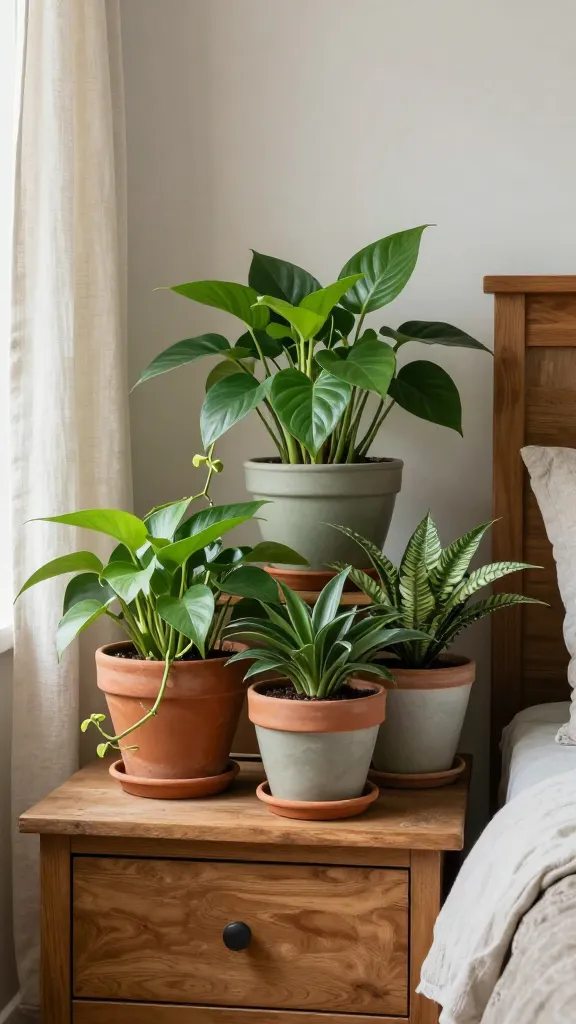
One plant in a terracotta pot, placed where it catches morning light. You see green first thing, which WHO research confirms reduces stress and restores attention.
One large plant, a pair of smaller ones, or a botanical print if your light is too low for the real thing — greenery is what keeps an earthy room from feeling like a furniture catalogue. Dried stems, olive branches, and preserved grasses are the low-maintenance route, and they fit the palette without a watering schedule.
Here’s what a plant on your nightstand actually does: you see green first thing in the morning, and your brain gets the signal — it’s morning, time to wake up. The plant cues your body’s natural rhythm. At night, it’s just a quiet presence. In a low-light room, swap the pothos for a snake plant — it tolerates shade and still gives you that morning green.
Takeaway: One plant near the bed. Morning green cue. Restraint is intentional.
7. What Lighting Is Best for a Cozy Bedroom?
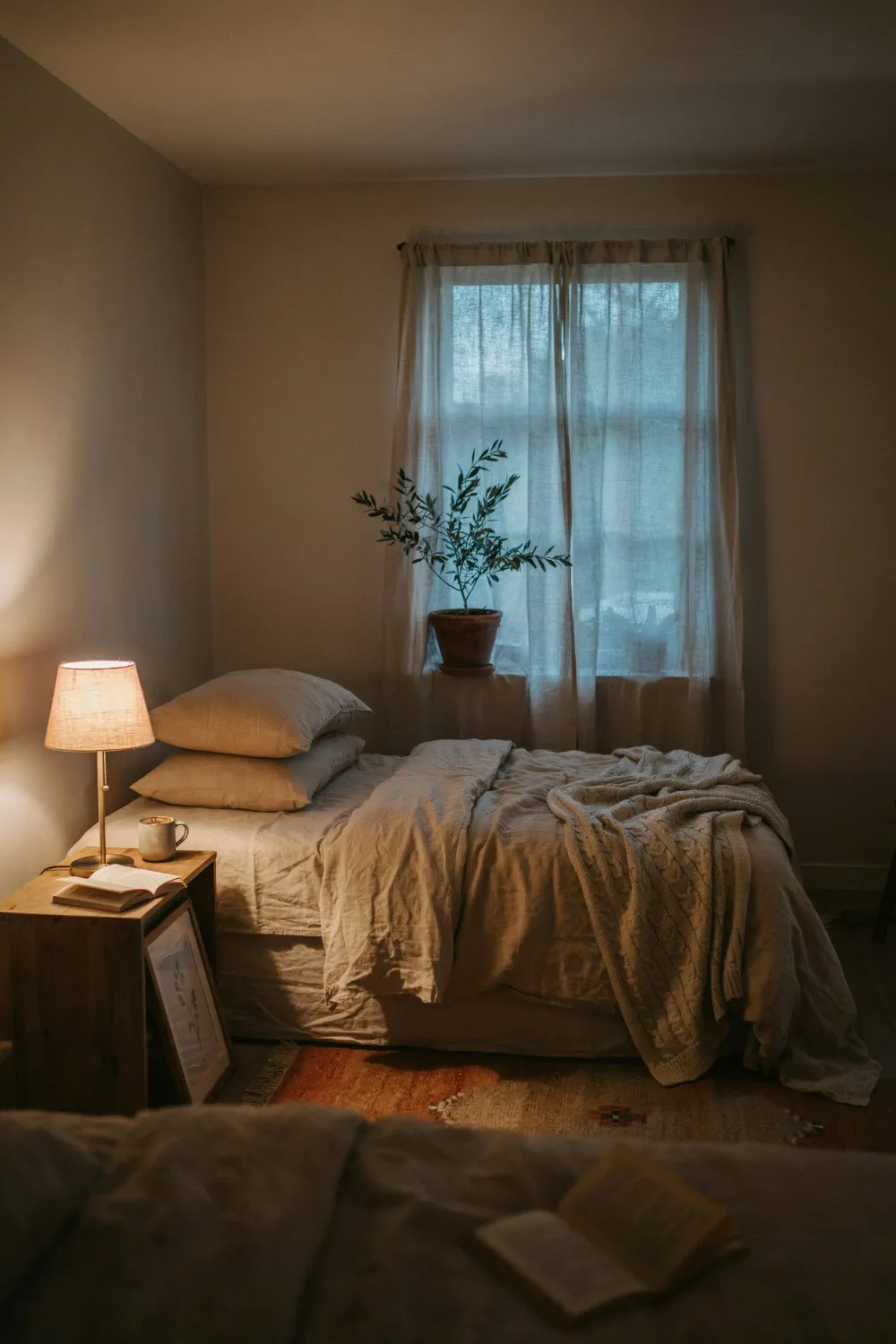
Swap cool-white bulbs for warm (2700-3000K), add bedside lamps, let overheads take a back seat in the evenings. Warm light supports melatonin; cool light suppresses it.
This is the fastest, cheapest fix on this entire list, and it’s the one people skip. Layered, low light — not a single bright source — is what makes a room feel intimate after dark. Skip the fairy lights; a couple of well-placed lamps does more for the mood and looks far less like a dorm room.
Here’s what warm lighting actually does for your sleep: research on lighting and circadian rhythms shows that warm-toned light in the evening supports melatonin production and improves sleep quality. Cool-white bulbs suppress melatonin — they signal “daytime” to your brain. A bedside lamp with a warm bulb lets you read at 10pm without wrecking your sleep cycle. The fabric shade softens the glow further, so the light feels like a retreat, not a clinic.
We had an apartment in New York City with very cold white light. With the walls being more white, the whole space felt sterile — ironically, more like sitting in a dentist’s chair, with the bright light above the chair. When we switched to warm-toned bedside lamps and a floor lamp in the corner, the whole atmosphere changed. The light is soft, warm, inviting. It creates pockets of warmth, not a flat overhead wash.
Takeaway: 2700-3000K bulbs. Bedside lamp for reading. Fabric shades. Let light signal rest.
8. What Size Rug Should Go Under a Bed?
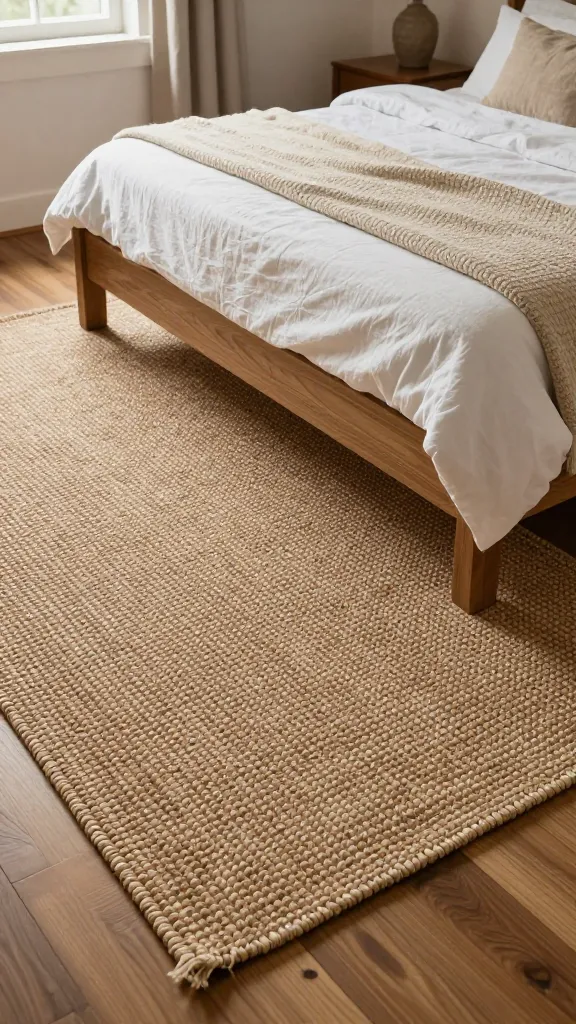
Large enough to extend past the bed on two sides — a rug that only peeks out looks like an afterthought. Jute or wool grounds the room and warms your feet at 6am.
A jute or wool rug grounds the bed visually the same way it grounds the room physically. Let it extend far enough beyond the bed that it reads as a deliberate choice, and in colder climates, consider layering a smaller textured rug on top for extra softness underfoot.
Here’s what a rug by the bed actually does: your bare feet hit warm jute at 6am instead of cold floorboards. In a cold climate, that rug is a thermal buffer — you can lower the thermostat by a degree or two because the floor isn’t stealing heat from your feet. In a hot climate, swap the jute for a thin cotton rug. Same tactile comfort, less thermal weight. And the rug absorbs sound — the room stops echoing, which makes it feel quieter and more private.
Takeaway: Large rug. Extends past the bed. Warm feet at 6am. Climate-appropriate material.
9. What Curtains Are Best for a Bedroom?
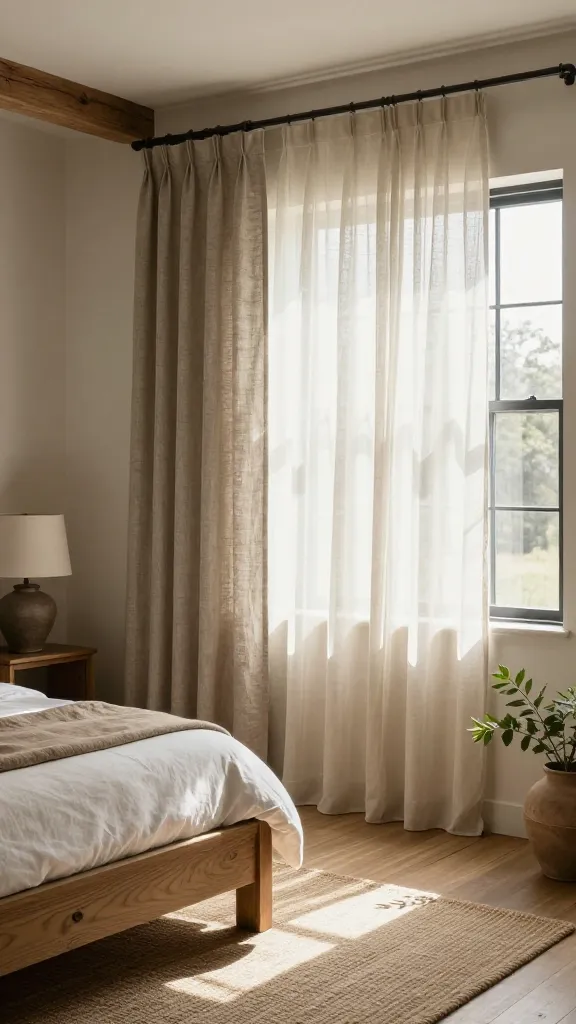
Linen-look, floor-length, light-filtering. They block streetlight but let morning light filter through gently — your body wakes with the sun, not an alarm.
Linen-look curtains or cotton drapes do for your windows what linen bedding does for your bed — instant softness, instant texture. Stiff, formal fabric works against the relaxed feel you’re building everywhere else. Choose light-filtering over blackout where you can.
Here’s what curtains actually do for your sleep: they block the streetlight that wakes you at 5am, but linen curtains let the first morning light filter through gently — not the harsh blast of a blackout curtain being pulled back. Your body wakes up with the sun, not an alarm. In a hot climate, linen curtains also block some solar heat gain, so the room stays cooler. And the floor-length drop visually stretches the room taller, making the ceilings feel higher.
Takeaway: Linen curtains. Light-filtering. Morning light cue. Floor-length for height.
10. What Headboard Is Best for a Cozy Bedroom?
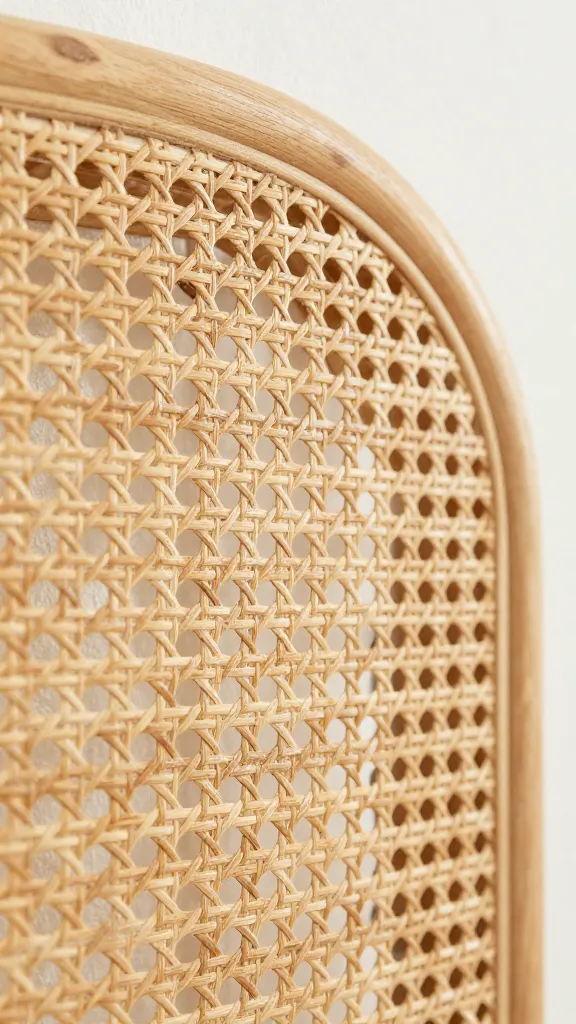
Simple silhouette, warm to the touch — rattan, wood, or cane. It draws the eye upward, leans comfortably for reading, and stays inside the earthy palette.
Upholstered, wooden, or cane — the headboard becomes the visual anchor of the whole room, so it’s worth choosing with intention. Keep the silhouette simple. An elaborately carved or heavily tufted headboard fights the calm, natural feel you’re working toward everywhere else in the room.
Here’s what a good headboard actually does: you can lean against it when reading in bed, and it doesn’t feel cold on your back like a padded headboard can after years of use. A rattan or wooden headboard is warm to the touch — your back hits something natural, not synthetic. If you read in bed most nights, this is the one piece worth investing in. It’s the thing you interact with every single evening.
The same principle I leaned on in my farmhouse bedroom ideas, only scaled for any room size.
Takeaway: Simple silhouette. Warm to the touch. Reading surface. One furniture investment.
11. How Do You Make a Bedroom Feel Collected, Not Bought?
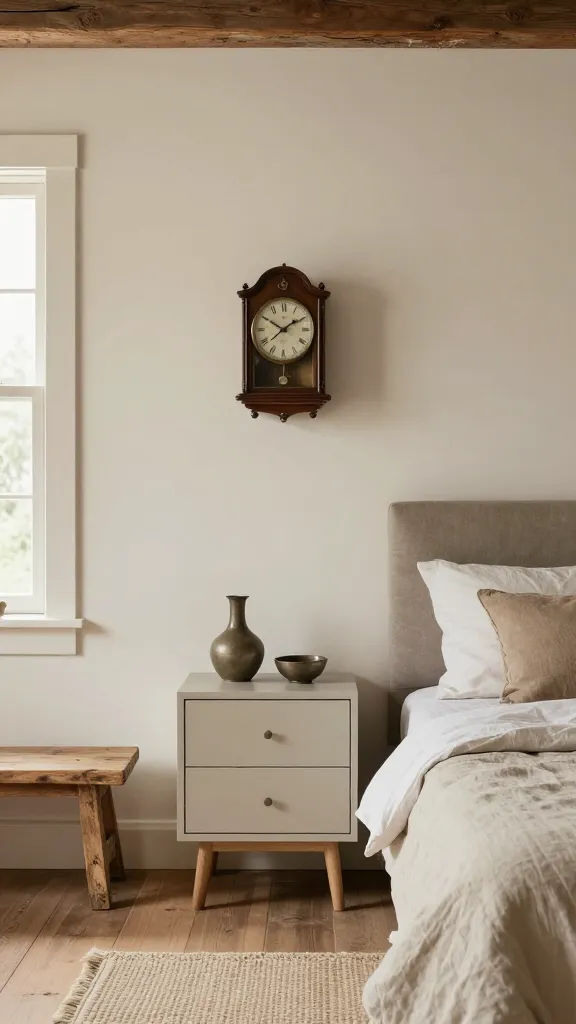
One or two imperfect handmade pieces — a clay vase, a vintage mirror — give the room character. Six small objects read as clutter; one good piece reads as considered.
Ceramics, clay vases, woven trays, and pieces with an imperfect glaze make a room feel collected over time rather than bought in one trip. Edit your surfaces as you go — a nightstand with one good ceramic piece reads as considered; a nightstand with six small objects reads as clutter.
Here’s what handmade decor actually does for you: a clay vase with an imperfect glaze gives your eye something to rest on — not a mass-produced perfect object, but something with character. When everything in the room is new and matching, it feels like a showroom. When one or two pieces look handmade, the room feels like yours. In a rental, these are the pieces you take with you — they travel better than furniture.
Takeaway: One or two handmade pieces. Imperfections welcome. Room feels like yours.
12. What Art Works Best Above a Bed?

Botanicals, landscapes, soft abstracts — one oversized piece feels calmer than a gallery wall. It’s the last thing you see before sleep; make it restful, not busy.
Botanicals, landscapes, line drawings, and soft abstract prints all support the palette without fighting it — just keep the colour range limited so the art reinforces the room instead of competing with it.
Here’s what nature art actually does for your sleep: research on biophilic design shows that even images of nature reduce stress and improve mood. A botanical print above the bed is the last thing you see before sleep and the first thing you see in the morning — make it something calming, not busy. One oversized piece feels like a window; six small frames feel like a gallery. The difference is restfulness versus stimulation.
Takeaway: Nature themes. One oversized piece. Last thing you see before sleep.
13. Does Clutter Affect Your Sleep?
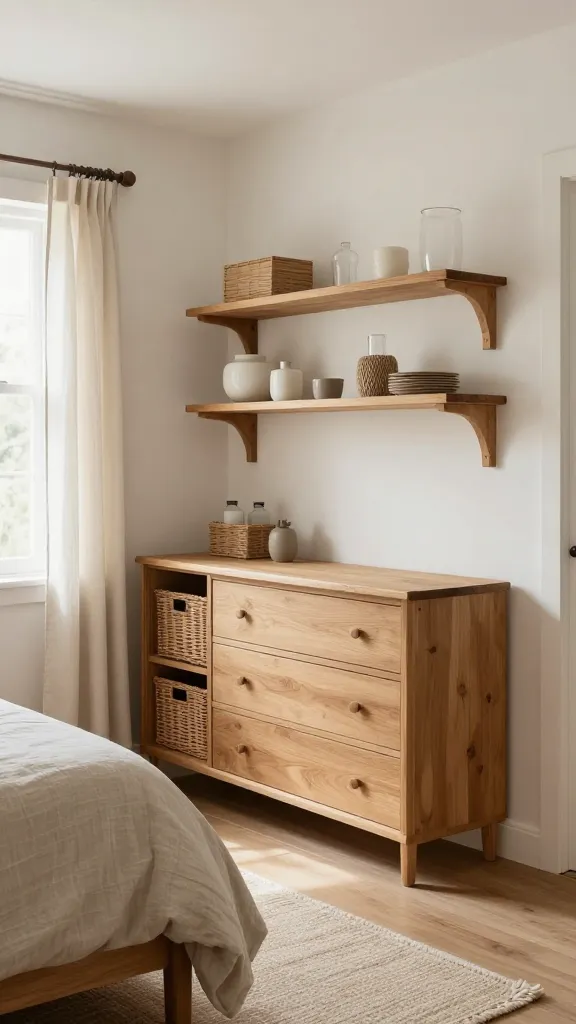
Visual calm depends on what you don’t see. UCLA research on sixty dual-income couples found that women who described their homes as cluttered or unfinished showed flatter daily cortisol patterns, a profile linked to worse health outcomes. A woven basket that swallows your clutter is one less thing your brain processes at bedtime.
Woven baskets, lidded boxes, and under-bed storage matter more than they get credit for. Visual calm in a sleep space depends as much on what you don’t see as what you do — keeping everyday clutter out of sight is half of what makes a “styled” bedroom feel effortless.
Here’s what hidden storage actually does for your sleep: clutter triggers low-grade anxiety. Research shows that visual clutter elevates cortisol, which makes it harder to fall asleep. A woven basket that swallows your phone charger, your book, your glasses — that’s one less thing your brain has to process when you’re trying to wind down.
The tendency with deep drawers is to dump clothes in when you’re in a hurry — the top looks like a great space to park a shirt or two that you’re using but not yet ready to wash. The problem is that you end up digging through the deep drawers, and they don’t always close properly, while the tops end up as jumbles of clothes. Especially when you have young teenagers on the move.
In a small room, storage isn’t optional; it’s the difference between calm and chaos. Clear surfaces also free up space for a small reading nook — a chair, a lamp, and a surface that stays clear becomes the place you actually want to sit at night.
Takeaway: Baskets for clutter. Visual calm = lower cortisol. Everything has a home.
14. How Should You Layer a Cozy Bed?
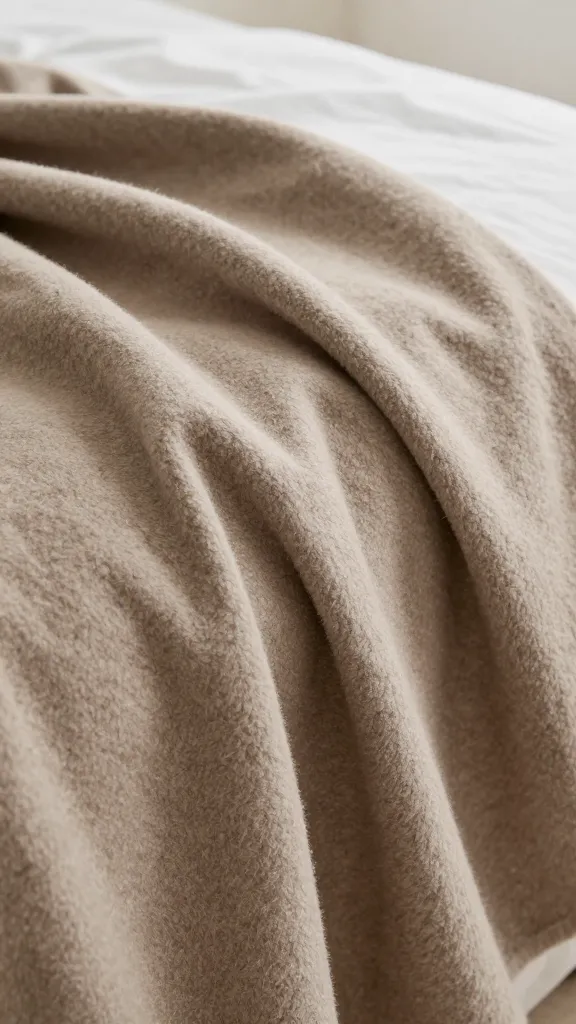
Fitted sheet, duvet, one throw draped off-centre. Resist six decorative cushions you’ll move every night. Mix textures, not colours — the bed should look inviting, not like a project.
A fitted sheet, duvet, throw, and one or two accent pillows is genuinely enough. Mix textures rather than colours here: a smooth sheet, a textured duvet, a chunky-knit throw. The bed should look inviting, not like a styling project you have to dismantle to actually sleep in it.
Here’s what a simple bed actually does for you: you can get into bed without dismantling a display. A throw draped off-centre means you can grab it at 2am without undoing a perfect fold. Wool research shows it regulates temperature — warm in winter, cool in summer — so it’s a year-round layer. In a hot climate, swap the wool for a lightweight cotton blanket. Same drape, less weight. The bed should feel like an invitation, not a chore.
Takeaway: Sheet, duvet, throw. Draped, not folded. Grab at 2am without undoing a display.
15. Does Scent Help You Sleep?
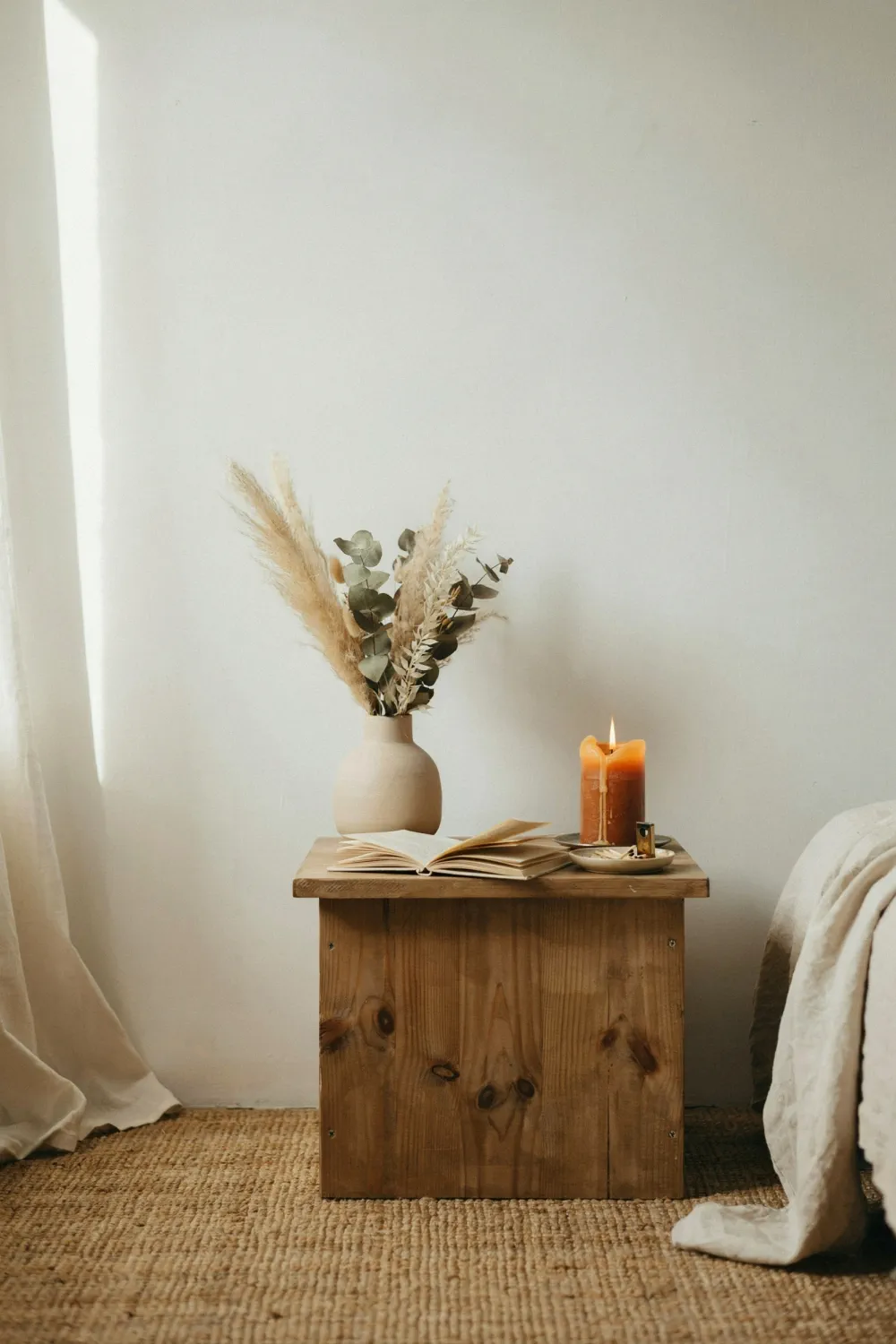
Use the same scent every night for two weeks and it becomes a sleep cue — lavender, cedar, sandalwood. Smell bypasses rational thought and connects directly to the limbic system.
Candles, an essential oil diffuser, or a linen spray are the last 5% — the detail that makes a room feel finished rather than just decorated. Tie the scent to the same natural theme: lavender, cedar, sandalwood, eucalyptus. Keep it subtle.
Here’s what scent actually does for your sleep: neuroscience research on olfaction shows that smell bypasses the brain’s rational centres and connects directly to the limbic system — the seat of emotion and memory. That’s why lavender in the bedroom signals rest; your brain learns the association. Use the same scent every night for two weeks, and it becomes a sleep cue. In a hot climate, skip the candle and use a linen spray — same scent, no heat. Keep it subtle; the goal is a whisper, not a shout.
Takeaway: Same scent nightly = sleep cue. Lavender, cedar, sandalwood. Subtle, not overwhelming.
Frequently Asked Questions
What colours make a bedroom feel cozy and restful?
Warm neutrals like beige, mushroom, taupe, and clay, paired with one earthy accent such as sage, terracotta, or rust. Environmental psychology research shows warm, muted colours signal safety to your nervous system.
What bedding works best for a natural bedroom look?
Linen is the easiest starting point — it’s breathable, textured, and looks intentionally relaxed even when wrinkled. Systematic sleep research confirms linen promotes better sleep than cotton in warm conditions.
How do I make a bedroom feel warm without clutter?
Focus on texture and lighting rather than adding more objects. Layered natural materials (linen, jute, wood) and warm bulbs do more for the mood than extra decor, and UCLA research shows visual clutter elevates cortisol.
Which items have the biggest impact on a cozy bedroom makeover?
Start with a linen duvet cover, warm LED bulbs (2700-3000K), and a jute rug — those three changes affect colour, texture, and lighting all at once. Add plants and art next, then layer in scent as a sleep cue.
How can I make a neutral room feel more interesting?
Layer textures rather than adding colour — linen, jute, wool, and wood all in the mix reads as rich and considered, never flat. One dark accent — a throw, a rug, a headboard — adds depth without overwhelming.
Conclusion
You don’t need to do all fifteen of these at once. Pick one or two — the bedding and the lighting are the fastest wins — and let the rest build in over time. A cozy, earthy bedroom is never really finished; it’s layered in, slowly, the way a room is supposed to be.
The ideas here work because they’re not just about looks. Each one does something for your actual life — warm feet at 6am, easier wind-down, better sleep. Fewer, better choices, done properly, rather than more of everything. Your bedroom will feel calmer, more grounded, and unmistakably yours. If you want to take the same approach beyond the bedroom, my small bedroom guide shows how to apply these principles in tight spaces, and my farmhouse bedroom ideas cover the same earthy aesthetic for larger rooms.
[…] restraint like this is starting to sound familiar, it’s basically the same principle behind our cozy bedroom ideas guide — fewer, better choices, done properly, rather than more of […]
[…] actually have, get those right, and the rest follows naturally. It’s the same instinct behind our cozy bedroom ideas guide — fewer, better, genuinely natural choices, done […]