10 Balcony Ideas for Earthy Indoor-Outdoor Living in a Small Space
· thehazelcottage@mail.com
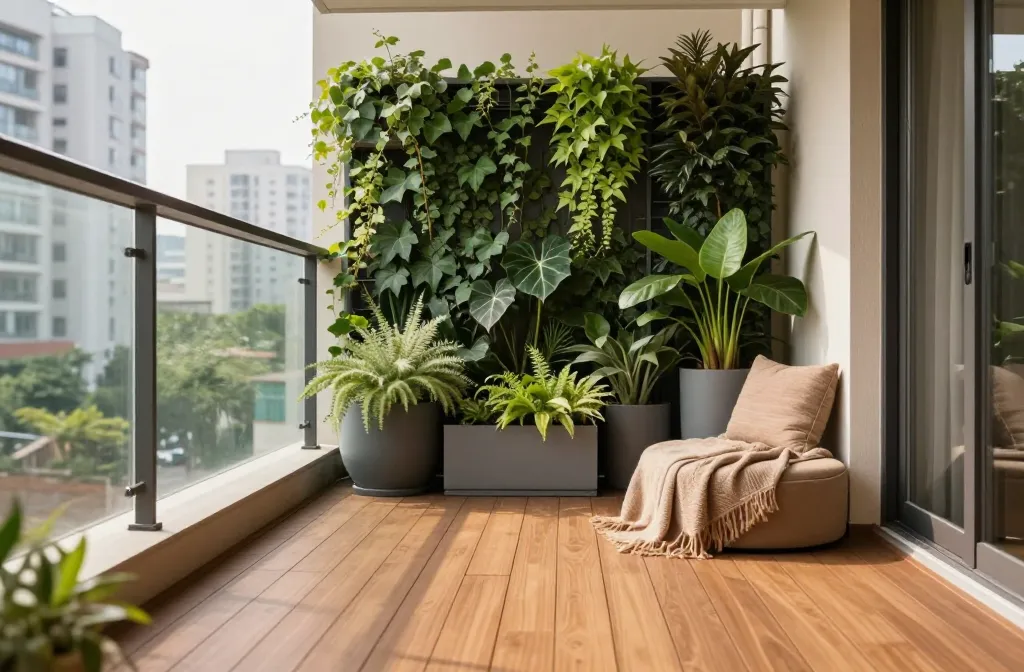
When my grandmother moved from her forest house into a mass-produced apartment, the first thing she noticed was what was missing — the sound of leaves, the damp-earth smell after rain, the feeling of being surrounded by something alive. The interior got vinyl flooring that pretended to be wood. But the balcony, which overlooked a neighbour’s garden, became her project. She added portable glass panes against the wind, a wooden screen for a climbing flowering plant, natural stone tiles that hid soil stains and cleaned easily, and a three-part system of wheels, cloth covers, and straw mulch to protect her pots through the northern European winter. That balcony became the part of her new home that still felt like hers.
If your balcony feels like a bare concrete slab, you can do the same thing with natural textures, a few hardy plants, and smart choices about privacy, shade, and seasonal care. Here are ten practical ideas for turning a small apartment balcony into an earthy indoor-outdoor retreat — whether you own or rent.
1. How Do You Ground a Small Balcony with Natural Flooring?
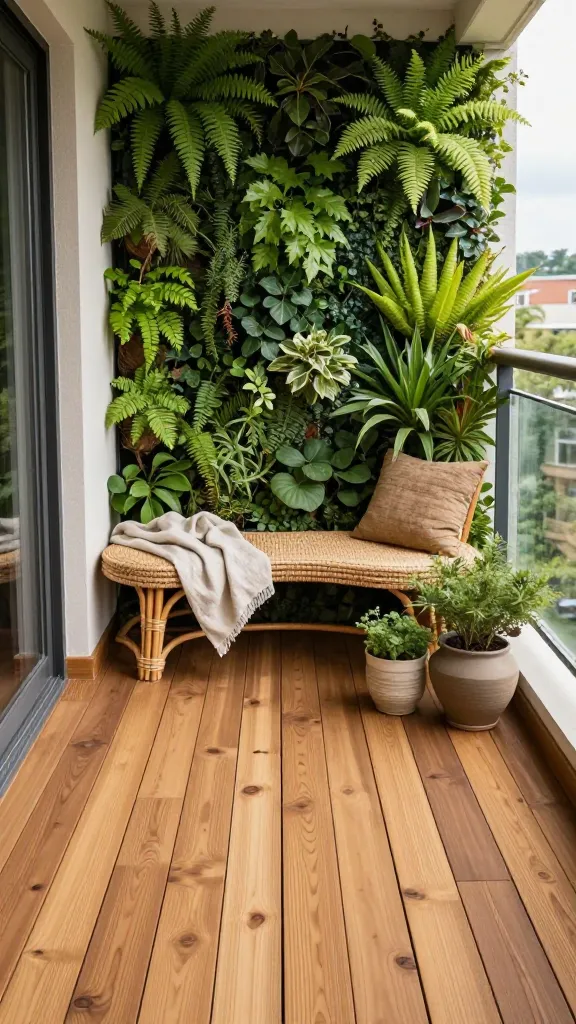
Interlocking composite deck tiles and a vertical planter grid turn a bare concrete slab into a defined, earthy retreat — in an afternoon. Snap the tiles together without adhesive, then hang lightweight planters in a grid to build a living wall that softens the walls and adds greenery at eye level.
My grandmother chose natural stone tiles for her balcony because soil stains vanished into the pattern and a quick sweep brought them back. That practical instinct is the right one. Container gardening basics from Penn State Extension note that balcony flooring should handle moisture, soil spills, and foot traffic without warping — which is exactly what composite tiles and natural stone do. The New York Botanical Garden’s balcony guide also reminds renters to check weight limits before adding heavy planters or furniture — most balconies can handle 40-50 pounds per square foot, but it’s worth confirming with your building manager.
If you’re renting, interlocking deck tiles are the answer. They lift out in minutes when you move, and they come in teak, acacia, and composite finishes that read as warm and natural. Pair the flooring with a vertical planter — even a simple lattice with ivy or trailing pothos — and the balcony stops feeling like an afterthought.
Takeaway: Lay down snap-together tiles and one vertical planter to anchor the space in a single afternoon.
2. What Are the Best Earthy Textures for a Small Balcony?
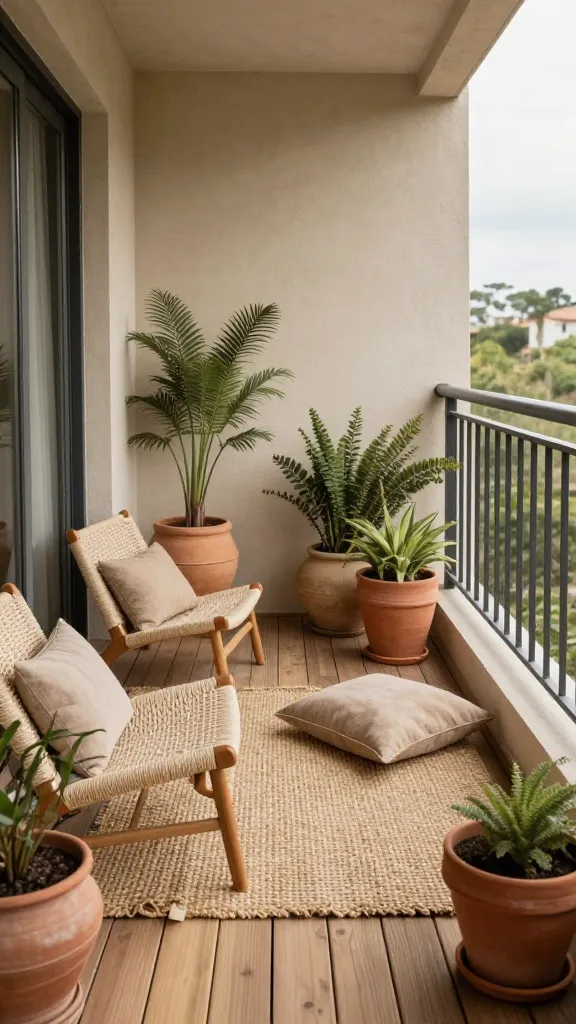
Layer three textures — one soft, one rough, one warm — and a concrete balcony starts to feel like an extension of your living room. Stick to earth tones: sand, clay, sage, stone, and warm wood.
Inside my grandmother’s apartment, the vinyl floors never quite lost their synthetic feel. But the balcony — with its stone tiles, wooden screen, and terracotta pots — was different. It had the texture of the forest she’d left behind. That contrast is the point. The World Health Organization’s research on urban green spaces found that even small, accessible natural areas reduce stress and improve mental wellbeing. The texture matters — bare feet on a jute rug feel different from cold concrete, and that difference is the whole point of the earthy balcony.
My parents once had a balcony in France — an old piggery converted into two apartments, one on top of the other. The balcony was tiny, with a boring metal wire guardrail that didn’t match the stone house at all. They replaced it with a wooden-slat guardrail and added wooden shutters, turning it into what we called a Heidi-house. The wood changed everything — suddenly the balcony felt like part of the house, not an add-on.
Start with an outdoor-rated jute or sisal rug for softness underfoot. Add terracotta or unglazed ceramic pots for roughness. Then bring in a woven chair or a teak bench for warmth. Three textures is the sweet spot — more than that, and a small balcony starts to feel cluttered.
Takeaway: Introduce three earthy textures today — one underfoot, one in your pots, one in your seating.
3. How Do You Add Privacy to an Apartment Balcony?
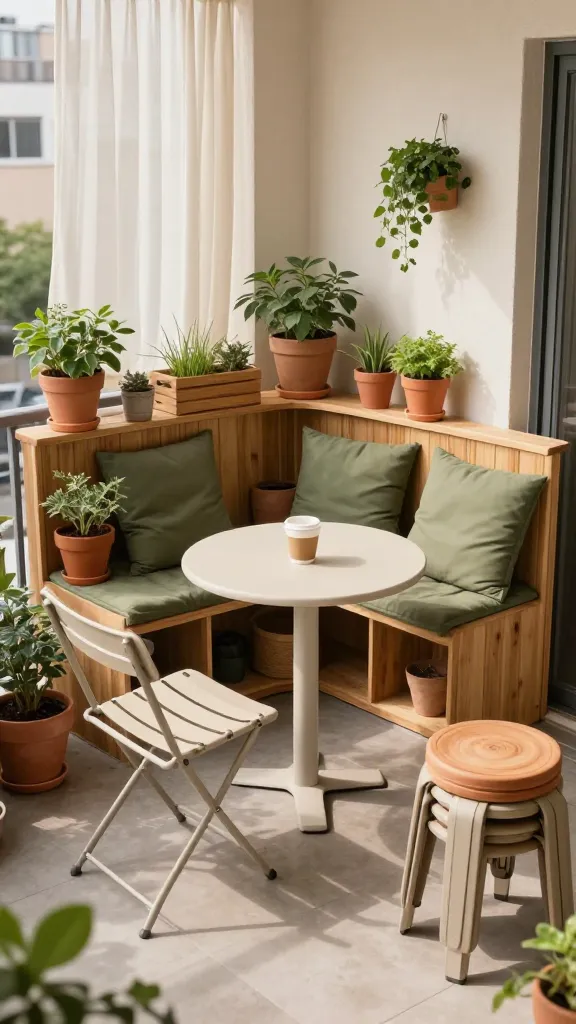
A bamboo privacy screen, trailing plants on railing hooks, or outdoor curtains create separation from neighbours without blocking light. The most renter-friendly option is a tension-mounted bamboo screen — no drilling required, and it stores flat when not in use.
My grandmother’s wooden screen did double duty: it blocked the view from the building next door and gave her climbing jasmine something to grow on. By mid-summer, the screen disappeared under flowers, and the balcony felt like a private garden instead of a concrete ledge with an audience. The Royal Horticultural Society’s balcony garden guide recommends trailing plants like ivy, clematis, and jasmine for natural screening that softens hard edges while providing privacy.
If you want instant privacy without waiting for plants to grow, a bamboo roll-out screen clipped to the railing works in minutes. For a softer look, outdoor curtain panels on a tension rod create a fabric wall that billows slightly in the breeze. And for renters who can’t drill into anything, trailing plants in railing-mounted hooks give you a living privacy screen by the end of one growing season.
Takeaway: Add one privacy layer today — a bamboo screen, a curtain panel, or trailing plants on the railing.
4. What Furniture Works Best on a Tiny Balcony?
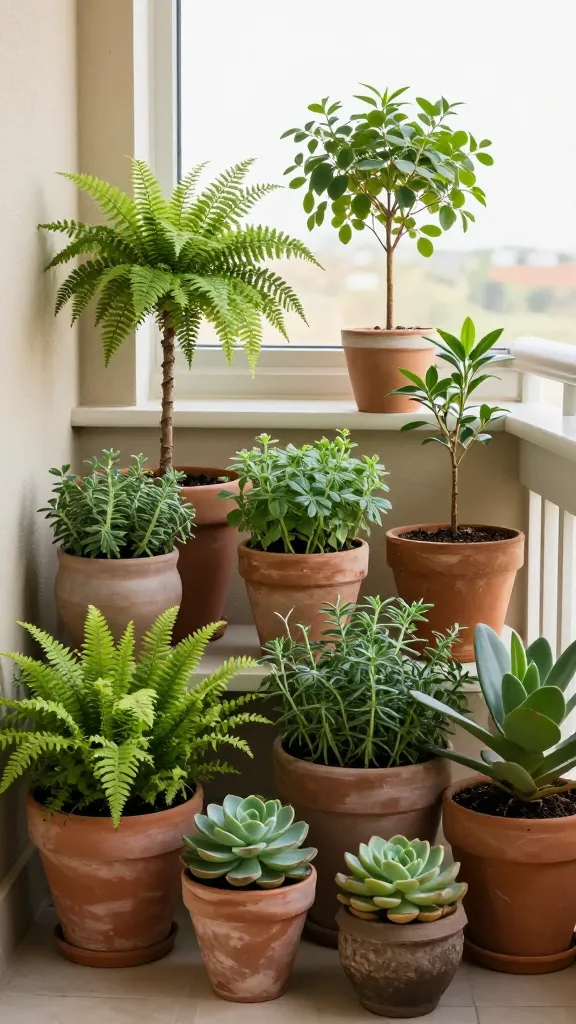
Folding bistro sets and modular loveseats adapt from morning coffee to evening entertaining without crowding a 60-square-foot space. The rule: every piece of furniture should fold flat, stack, or serve two purposes.
A compact balcony needs furniture that earns its footprint. A folding bistro set — two chairs and a small table — covers breakfast, evening wine, and laptop-afternoon use, then folds against the wall when you need floor space. A modular loveseat that separates into two chairs gives you a lounge setup for one or seating for three, depending on the evening.
My parents’ balcony in France was so small it required a bistro-style table and seats that could be folded up and set away in the corner. Because it would be outside all the time, they opted for an older set from a broccante — a secondhand store — which claimed they came from an old farmhouse. The wood was weathered to a soft grey, and the patina made the balcony feel like it had always been there, not like it was decorated last weekend.
For extremely narrow balconies, a railing-mounted fold-down table is the answer. It attaches to the railing with brackets, holds two plates and a glass, and folds flat when not in use. Penn State Extension’s container gardening guide also suggests choosing furniture with open frames — slatted wood or metal — so the space feels less visually cramped than solid pieces. Look for weather-resistant materials: teak, powder-coated steel, or all-weather wicker in earth tones.
Takeaway: Choose one folding or modular seating piece that adapts to two or three different uses.
5. Which Plants Thrive on a Small, Windy Balcony?
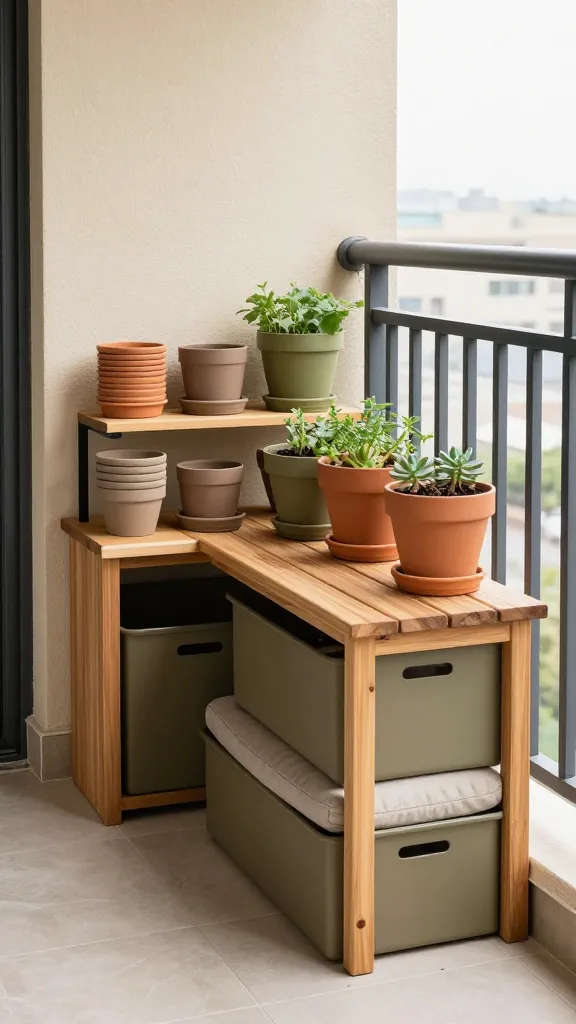
Drought-tolerant herbs like thyme and rosemary, compact ferns, and trailing pothos handle balcony wind and variable light better than delicate flowering plants. Group them by water needs so one watering session covers the entire collection.
Balconies are harsher environments than ground-level gardens. Wind dries soil faster, sun reflects off concrete, and pots heat up on hot days. The University of Minnesota Extension’s container garden planning guide recommends choosing plants that match your balcony’s specific light and wind exposure — a south-facing balcony needs drought-tolerant varieties, while a north-facing one needs shade-tolerant foliage. Research from the University of Guelph found that containers on windy balconies dry out 2.3× faster than identical pots in sheltered courtyards, and even a 10 mph breeze increases transpiration by 30-50%.
My grandmother grouped her pots by water needs: herbs near the kitchen door for easy picking, ferns in the shadiest corner, and succulents in the sunniest spot. That way, one watering round took five minutes instead of fifteen. A NASA study on indoor air quality also found that common houseplants like pothos, spider plants, and peace lilies remove volatile organic compounds from the air — so your balcony garden isn’t just beautiful, it’s actively cleaning the air that drifts inside.
The Royal Horticultural Society recommends trailing plants for railing-mounted planters, compact herbs for windowsill shelves, and dwarf evergreens for structure in corners. Use this table to choose plants that match your balcony’s conditions:
| Plant | Light | Water | Wind Tolerance | Best Pot Size |
|---|---|---|---|---|
| Thyme | Full sun | Low (weekly) | High | 6″ |
| Rosemary | Full sun | Low (10 days) | Medium | 8″ |
| Boston Fern | Indirect light | Medium (2x/week) | Low | 8″ hanging |
| Pothos | Low to indirect | Low (weekly) | Medium | 6″ trailing |
| Lavender | Full sun | Low (biweekly) | High | 8″ |
| Basil | Full sun | Medium (2x/week) | Low | 6″ |
| Sedum | Full sun | Very low | High | 4″ |
| Mint | Partial sun | High (2-3x/week) | Low | 6″ |
Takeaway: Group plants by water needs and match each to your balcony’s light exposure. Use the table above to choose the right plant for each spot.
6. How Do You Create Hidden Storage on a Small Balcony?
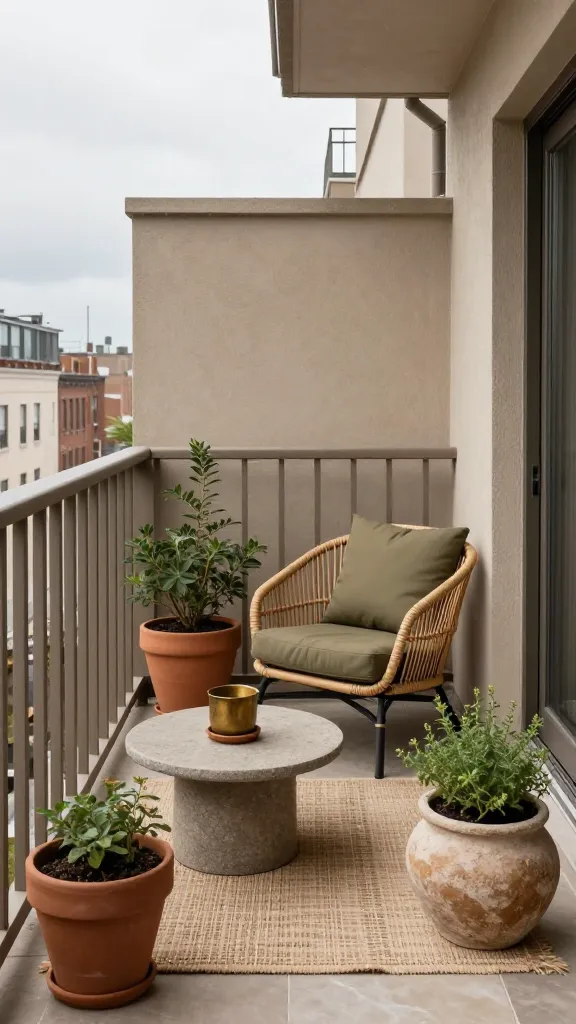
A weatherproof storage bench or stackable resin bins hide garden supplies while doubling as seating. Choose earth-tone wicker-look resin to match the natural palette and resist rain.
A small balcony loses its calm the moment tools, hoses, and empty pots pile up in a corner. The fix is storage that disappears into the design. A slim bench with a lift-up lid holds bags of soil, gloves, and pruning tools, then provides seating for two. Stackable resin bins in terracotta or sage tuck under a bench or along a wall and look like part of the decor.
My grandmother kept a shallow wooden tray under her bench that doubled as a plant drainage catch and a place to set down her watering can. Practical, hidden, and earthy — three problems solved with one piece. The same principle applies to making a home feel more intentional — hidden storage reduces visual noise, which makes the whole space feel more considered.
Takeaway: Add one piece of hidden storage — a bench, a bin, or a tray — that keeps supplies out of sight but within reach.
7. How Do You Add Shade and Wind Protection to a Balcony?
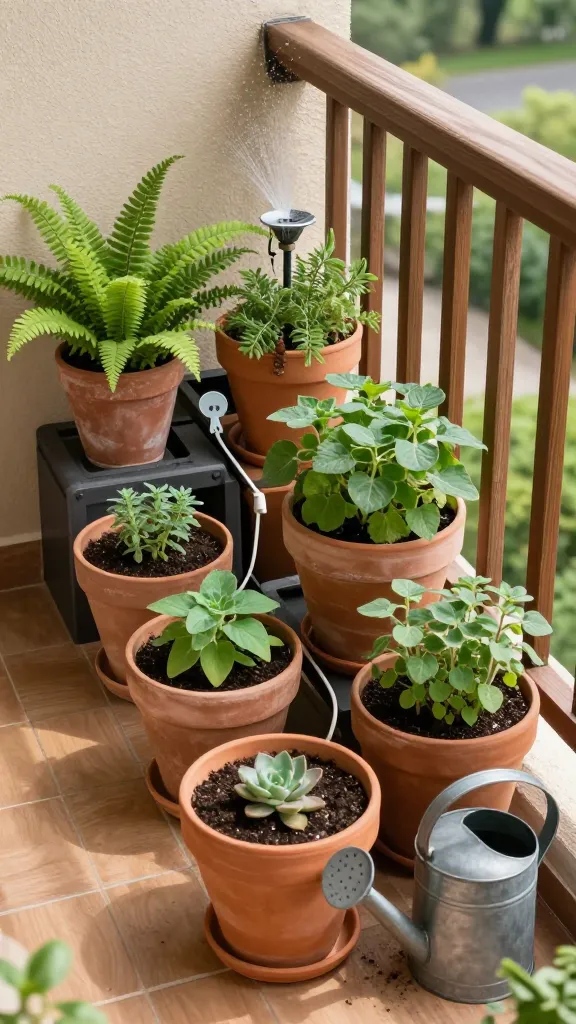
A cantilever umbrella or clip-on awning provides shade without eating floor space — the base sits to one side, and you rotate the canopy as the sun moves. Pair with a furniture cover for rain protection when the balcony isn’t in use.
My grandmother’s portable glass panes were her wind solution — small, movable panels that she positioned on windy days and stored flat when the air was still. They turned an uncomfortable, wind-battered ledge into a sheltered spot where she could sit with a cup of tea even on blustery afternoons. The principle is simple: you don’t need a permanent structure, you need something adjustable.
For shade, a cantilever umbrella is the best small-balcony option. Unlike a centre-post umbrella, the cantilever’s base sits off to one side — you can tuck it under a chair or against a wall, leaving the floor clear. The canopy rotates to follow the sun, so you’re never chasing shade. UMN Extension’s container gardening guide also notes that wind protection matters as much as sun protection — plants on a windy balcony lose moisture twice as fast as sheltered ones, and research shows that even a 10 mph breeze increases plant transpiration by 30-50%.
For renters or anyone who can’t mount a permanent awning, a clip-on privacy screen or a freestanding bamboo panel blocks wind at the railing level, where it matters most. And a simple furniture cover — pulled over the table and chairs when you go inside — keeps everything dry and ready for the next morning.
Takeaway: Add one adjustable shade or wind element — an umbrella, a screen, or a clip-on panel — to make the balcony usable in more conditions.
8. What Lighting Works Best for a Balcony at Night?
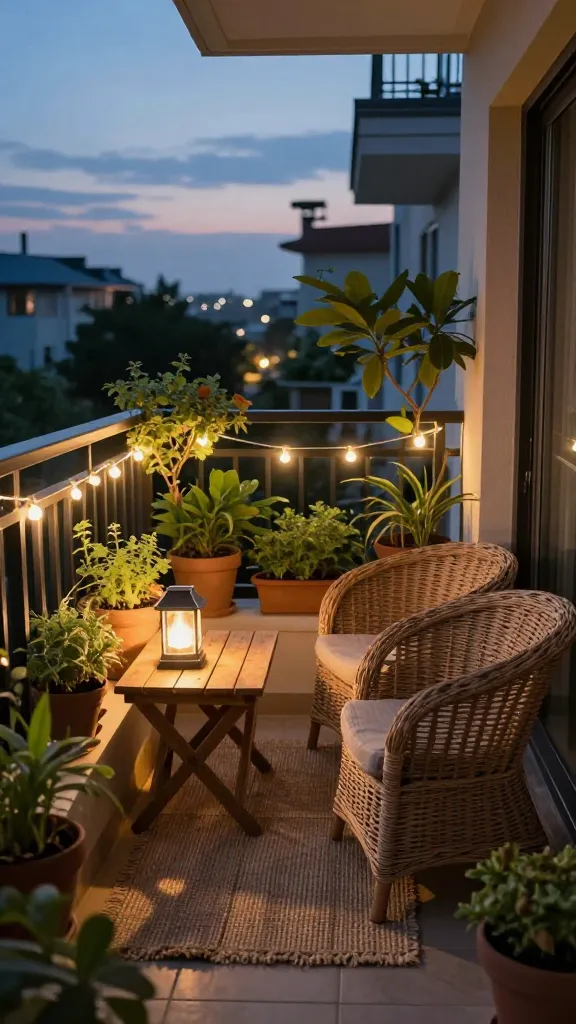
Warm-white LED string lights and solar-powered lanterns extend your balcony’s usable hours without harsh glare or electrical wiring. Wrap string lights along the railing and hang one lantern at seating height for a soft, even glow.
The right lighting transforms a balcony from a daytime afterthought into an evening retreat. Warm-white LEDs (2700K-3000K) create a glow that flatters both the plants and the people sitting among them. Avoid cool-white or daylight bulbs — they make a small balcony feel like a parking lot.
Our neighbours had the top floor of their building, with no balcony above them, so they strung solar lights across the top — large bulbs glowing a low orange wattage, smoky globes with copper wires completing the look. It was a modern, retro vibe, and when the lights came on at dusk, the whole balcony felt like a different room. The light was warm, not harsh, and the plants looked softer in the glow.
Solar-powered lanterns charge during the day and turn on automatically at dusk. Hang one or two at seating height, and you have light without running an extension cord through the window. WHO research on urban green spaces confirms that access to pleasant outdoor areas in the evening contributes to stress recovery and sleep quality — so the balcony lighting isn’t just decorative, it’s part of your daily unwind. If you want to extend that feeling indoors, the same principles apply when creating a cozy rest corner.
For renters, battery-operated LED string lights with a timer are the simplest option. Wrap them along the railing, drape them through a trailing plant, or weave them through a privacy screen. Set the timer for dusk and forget about them.
Takeaway: Install warm-white lighting today — string lights on the railing and one solar lantern at seating height.
9. How Do You Protect Balcony Plants Through Winter?
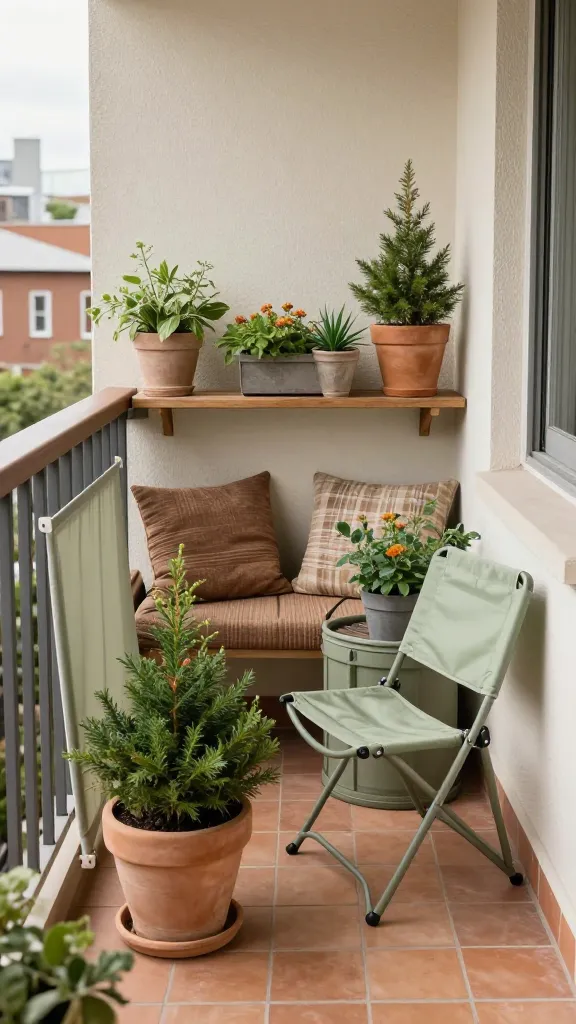
Roll tender plants indoors on wheeled saucers, cover hardy pots with breathable cloth, and mulch the rest with straw — then adjust each layer to match the plant’s cold tolerance. A seasonal swap takes one afternoon and saves everything.
My grandmother’s winter system was precise. Her most tender herbs sat on small wheeled saucers — when the first frost threatened, she rolled them inside to the kitchen window. Pots that could handle a light freeze got a breathable cloth cover that kept snow off without trapping moisture. And the hardiest planters got a thick layer of straw mulch over the soil, which insulated the roots without compacting.
The University of Minnesota Extension’s seasonal container guide explains why this layered approach works: container plants lose cold tolerance faster than ground-planted ones because their roots are exposed on all sides. The three-part system — roll, cover, mulch — matches each plant to its actual cold tolerance instead of treating everything the same way. As a general rule, bring tender plants indoors when nighttime temperatures drop below 10°C (50°F), cover semi-hardy plants when temps hover around freezing, and mulch hardy plants that can survive below-zero temps.
In spring, reverse the process: bring the indoor pots back out gradually over a week so they adjust to direct sun, remove the cloth covers, and refresh the straw mulch. That seasonal rhythm keeps the balcony garden alive year after year instead of starting from scratch each spring. The same seasonal botanical ideas that work indoors can guide your balcony plant swaps.
Takeaway: Sort your plants into three groups — tender (bring in), medium (cover), hardy (mulch) — before the first frost.
10. What’s a Simple Weekly Maintenance Routine for a Balcony?
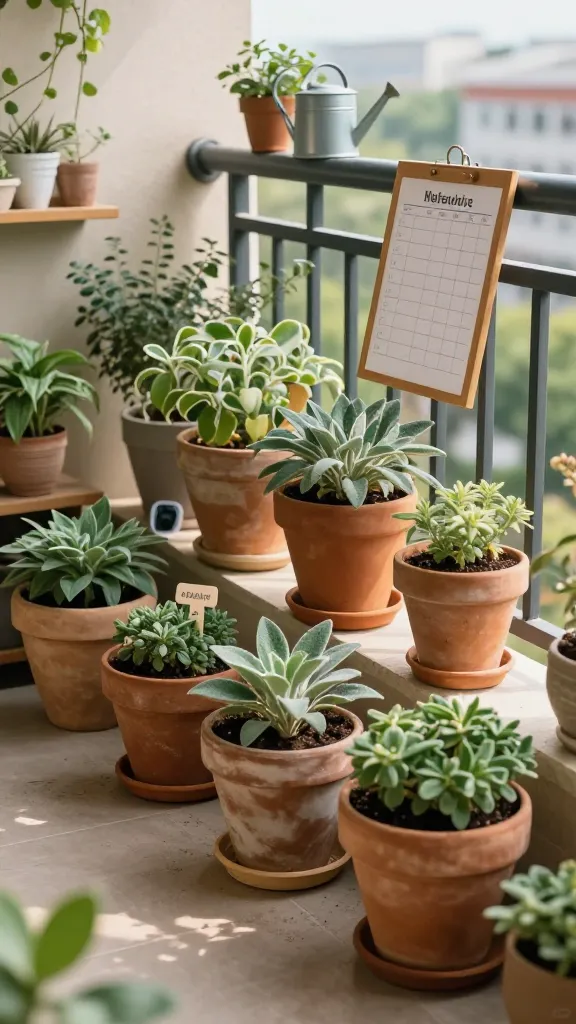
Water when the top inch of soil feels dry, rotate pots monthly for even growth, and spend fifteen minutes each week checking moisture, drainage, and pests. That one routine catches most problems before they spread.
Balcony plants need less maintenance than they seem — if you build a rhythm. The Penn State Extension container gardening guide recommends checking soil moisture with your finger rather than a schedule, because sun exposure and wind vary across a balcony and even across a single railing. Research from Cornell Cooperative Extension found that 73% of container plant losses stem not from drought stress but from chronic low-oxygen conditions caused by poorly timed or poorly delivered water — so the “water when the top inch is dry” rule actually prevents overwatering, not underwatering.
Here’s the fifteen-minute weekly check: First, press your finger into the soil of each pot. Water the dry ones, skip the damp ones. Second, check the drainage holes — if water pools in the saucer, clear the hole with a skewer. Third, glance at the leaves — yellowing means too much water, crispy edges mean too much sun or too little water, and sticky residue means pests. Catch pests early with a spray of water and insecticidal soap; don’t wait until they’ve spread.
Once a month, rotate each pot a quarter turn so the plant grows evenly instead of leaning toward the light. And each season, do a bigger check: refresh the top layer of soil, prune any dead growth, and swap in seasonal plants where needed.
Takeaway: Schedule a fifteen-minute check every Friday — soil, drainage, leaves. That’s the entire routine.
Frequently Asked Questions
How do I decorate a small apartment balcony on a budget?
Start with three affordable changes: snap-together composite deck tiles (under $50), a jute outdoor rug, and railing-mounted planters — the total is usually under $150 and every piece is removable when you move. Add warm lighting with battery-operated string lights for an instant evening retreat.
What plants are best for a small balcony?
Choose drought-tolerant herbs like thyme and rosemary for sunny spots, compact ferns for shaded corners, and trailing pothos for railing planters. Group them by water needs so you can water everything in one pass instead of treating each plant individually.
How do I make a small balcony feel bigger?
Use vertical space with hanging planters and a living wall, keep the floor clear with foldable furniture, and choose a light, cohesive colour palette across pots and textiles. A mirror on the balcony wall reflects greenery and sky, which visually doubles the sense of depth without taking up floor space.
How do I add privacy to my apartment balcony without blocking light?
Trailing plants on railing hooks — ivy, jasmine, or clematis — create a living screen that softens sightlines while letting air and light pass through. For instant privacy, a bamboo roll-out screen clipped to the railing blocks the direct view from neighbouring balconies while still filtering natural light.
Conclusion
A small balcony doesn’t need a complete renovation to feel like a retreat. Start with one defined base — natural flooring and a vertical planter — then build outward with earthy textures, a privacy layer, and plants that match your conditions. Add smart furniture that folds, hidden storage that disappears, and lighting that extends your evenings. My grandmother turned a standardised apartment balcony into her forest substitute with stone tiles, a wooden screen, and a winter plant-care system that worked for decades. My parents transformed a tiny French balcony with a wooden-slat guardrail and a broccante bistro set. The same principles work for any small space — and they start with one Saturday afternoon.
[…] 10 Balcony Ideas for Earthy Indoor-Outdoor Living in a Small Space […]