10 Earthy Harvest Table Ideas for Autumn Cottage Entertaining
· thehazelcottage@mail.com
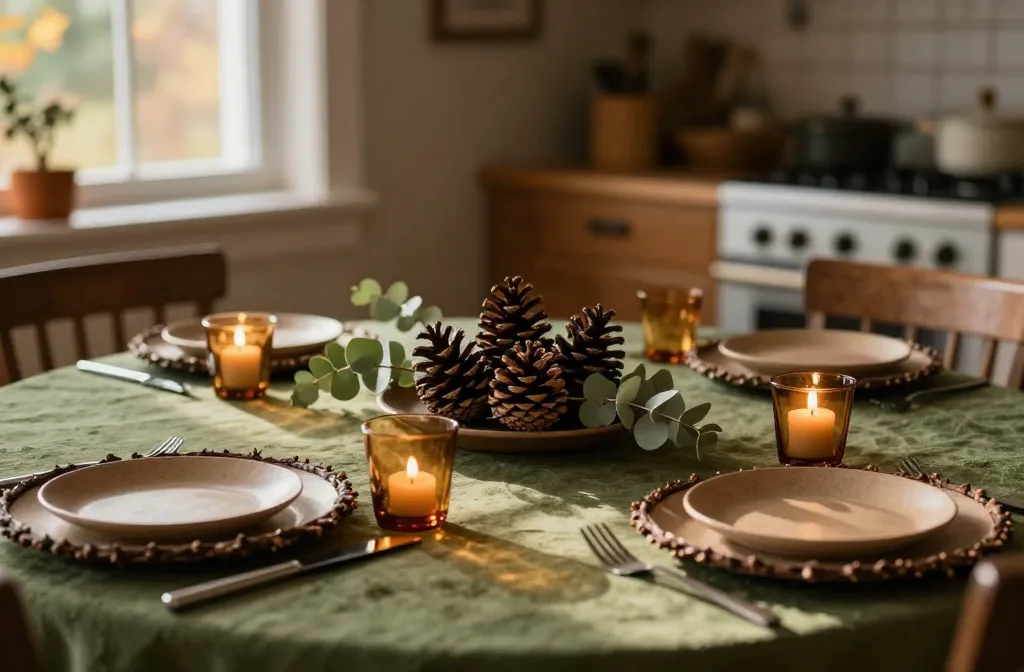
I started hosting autumn gatherings in a tiny cottage kitchen with mismatched dishes and a table that barely fit six people. I didn’t have a professional budget or fancy equipment — just a desire to create something warm and memorable. Over the years, moving from country to country, I learned that the right touches transform a simple meal into something guests remember. You don’t need much. You need intention.
Here are ten earthy, practical harvest table ideas for autumn entertaining. Most use items you already own or can gather from the garden.
1. How Does a Pine Cone Centerpiece Set an Autumn Tone?
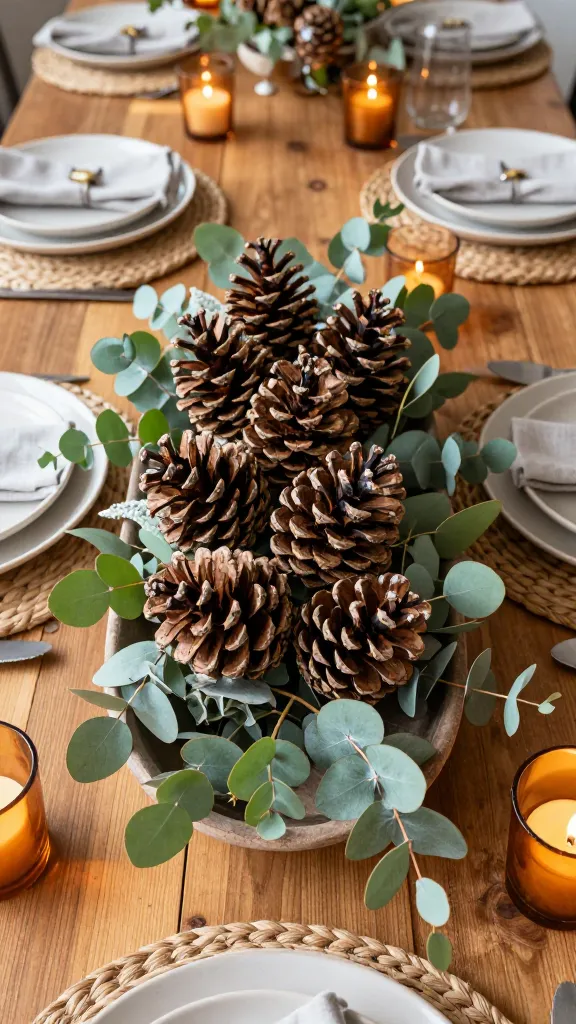
Arrange six to eight pine cones with fresh evergreen sprigs and dried orange slices in a shallow tray. This woodland-inspired centerpiece anchors the table while echoing the harvest theme with natural textures.
Research on biophilic design shows that incorporating natural elements into indoor spaces reduces stress and improves wellbeing. Your guests may not articulate why the table feels welcoming, but their nervous systems register the natural textures and respond.
In every house we lived in, the children would gather pine cones on walks and bring them home. I used to buy elaborate centerpieces that looked store-bought and generic. Then I started foraging with them. A walk through the park or garden centre yields pine cones, twigs, and evergreen sprigs for free. I arrange them in a shallow wooden tray — the kind I use for serving bread — with a few dried orange slices and eucalyptus sprigs for colour contrast. The result feels collected, not manufactured.
Build the arrangement a few hours before guests arrive. Mist the greens lightly with water to keep them fresh. Keep the tray to twelve inches or less so it doesn’t overwhelm the table.
Takeaway: Forage pine cones and greens. Arrange in a shallow tray. Keep it under twelve inches.
2. What Makes Place Settings Feel Rustic Yet Refined?
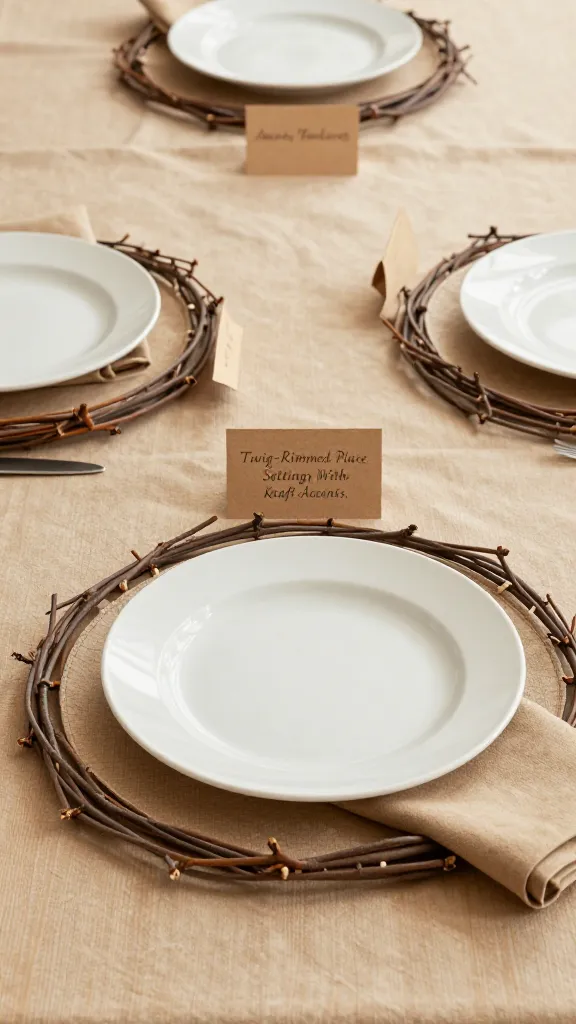
Attach thin twigs to the edges of sturdy placemats with a dot of hot glue. Pair with kraft-coloured napkins and simple white dishes. Add a minimal, handwritten name tag for each guest. The result feels thoughtful without being fussy.
Keep the twig rim light and only on the edges. Use washable placemats so you can reuse them. The goal is rustic elegance, not craft project chaos.
The most memorable meals I’ve attended didn’t have matching anything. They had character. A twig border on a placemat. A handwritten name tag. A kraft napkin instead of white linen. These small touches signal care without requiring perfection. I used to obsess over matching place settings — every plate, every fork, every napkin ring perfectly coordinated. Then I realised that restraint and character matter more than coordination.
Takeaway: Twig borders, kraft napkins, handwritten tags. Keep it simple, keep it reusable.
3. How Do Harvest-Leaf Linens Ground the Table in Season?
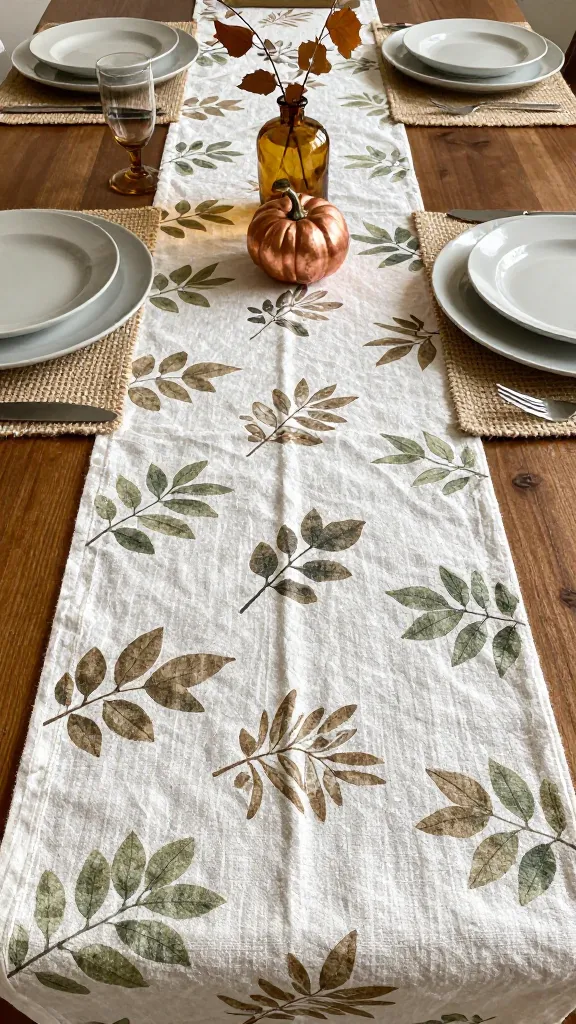
Layer a leaf-printed linen in muted greens and browns over a natural jute runner. The two textures — soft linen and rough jute — create instant depth without overcomplicating the table. Secure the runner with non-slip mats at each end.
Choose patterns in muted tones — sage, mushroom, terracotta — not bright oranges and reds. Line the napkin stack with a matching leaf motif to tie the look together. The result feels intentional, not themed.
I thought table linens had to be pristine white or match the dishes exactly. Then I discovered the power of layering. A leaf-printed linen in muted autumn tones over a jute runner creates warmth and texture that flat, single-layer tablecloths can’t match. The jute adds rustic charm; the linen adds softness. Together, they signal: this table is set for autumn.
Takeaway: Layer linen over jute. Muted tones. Secure the edges. Let texture do the work.
4. Why Does a Living Runner Bring Life to the Table?
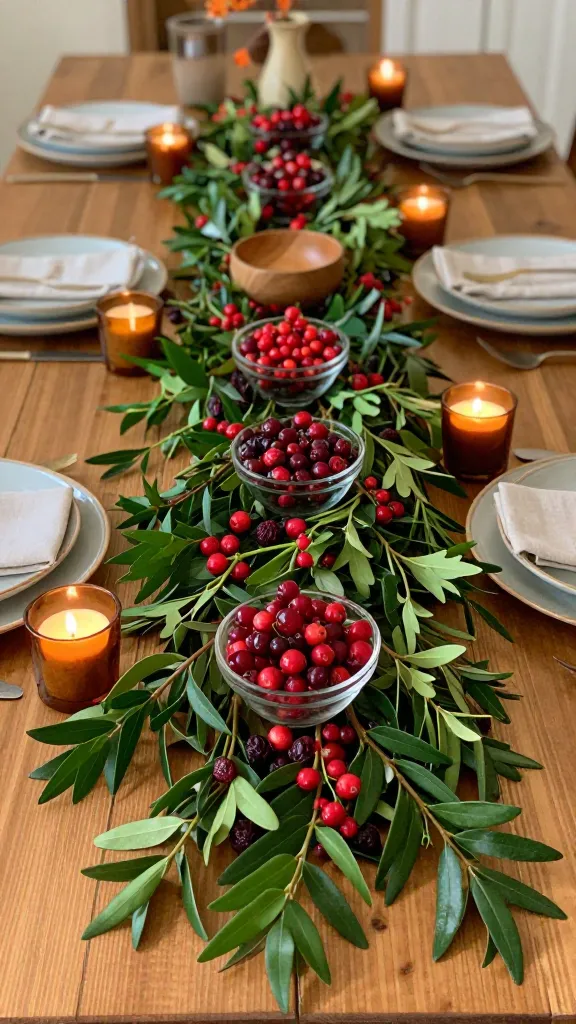
Run preserved boxwood or eucalyptus down the centre of the table, with small glass bowls of cranberries or dried berries nestled among the greenery. A living element brings life and creates a festive, edible-adjacent vibe that guests notice.
The key is placing greenery down the centre, reserving space for plates and glasses on either side. The runner should enhance the meal, not compete with it.
I laid fresh greens down the table for years, and by the time guests arrived, they’d wilted under the warm lights. Then I switched to preserved boxwood — it lasts for hours without water, and it looks just as fresh at dessert as it did at appetisers. I nestle small glass bowls of cranberries among the greenery, keeping them at least six inches from the edge of serving dishes for food safety.
Takeaway: Preserved greens in the centre. Small bowls of berries. Keep food safety in mind.
5. How Does a Curated Cheese Board Communicate Hospitality?
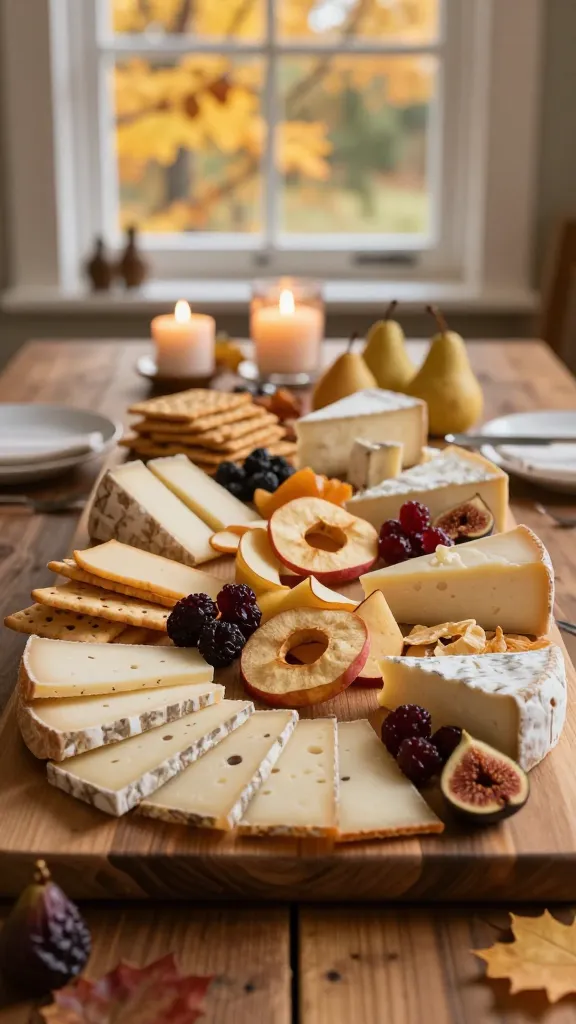
Arrange firm cheeses, dried apple rings, pears, and figs on a wooden board or slate. Add small bowls of nuts for height and dimension. A curated board communicates hospitality without complicated cooking — guests can nibble and mingle at their ease.
Research on shared meals and social bonding shows that eating together strengthens social connections and improves wellbeing. The cheese board isn’t just food — it’s an invitation to linger, to share, to connect.
I spent hours cooking elaborate dishes for gatherings for years, only to watch them go cold while I fretted over timing. Then I discovered the power of the cheese board. Three cheeses — a sharp cheddar, a creamy brie, a crumbly blue — arranged with dried fruit and nuts. That’s it. No cooking, no last-minute prep, no stress. Guests love it, and I get to actually enjoy the evening.
Keep the board in a cool spot to prevent cheese from becoming runny. Slice firm cheeses in advance so guests can help themselves. Layer heights with small bowls of nuts to add dimension and prevent crowding. The board should look abundant, not meticulous.
Takeaway: Three cheeses, dried fruit, nuts. Keep it cool. Let guests help themselves.
6. What Color Palette Feels Autumnal Without Shouting?
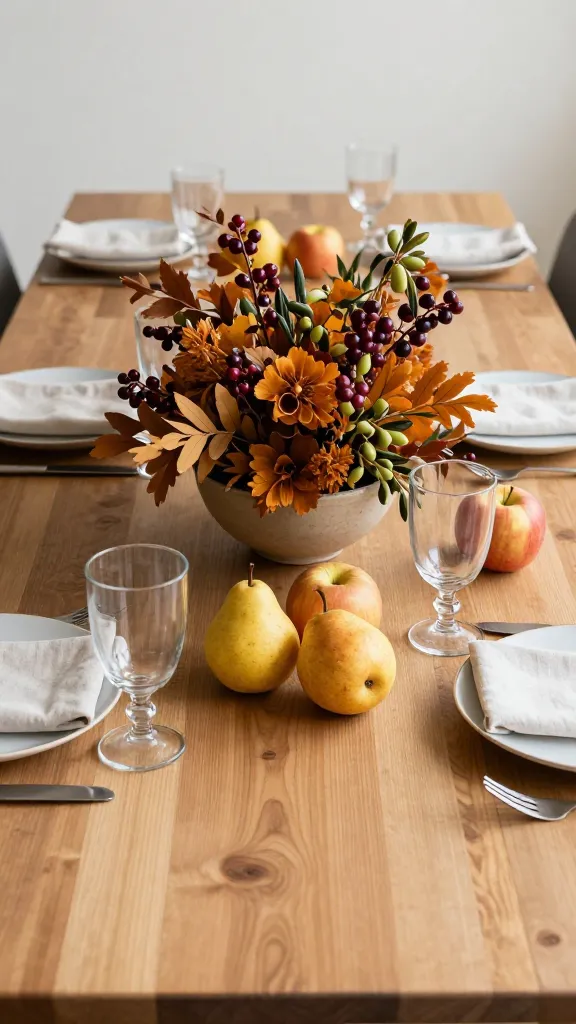
Choose a palette inspired by autumn orchards — amber, cranberry, olive — and repeat it across textiles, dishes, and accents. Pair with clear glassware to keep the look elevated. Limit to three main hues to avoid visual chaos.
Research on colour and mood shows that warm, muted tones reduce stress and create a sense of calm, while bright colours can overwhelm in small spaces. The autumn palette — amber, cranberry, olive — signals warmth without overstimulation.
I thought autumn meant bright orange and red, and my table looked like a Halloween party. Then I shifted to an orchard palette — amber, cranberry, olive — and the whole mood changed. The colours feel grounded, not festive. They pair with clear glassware and white dishes without clashing. The table looks intentional, not themed.
Repeat one accent colour across textiles and dishes for cohesion. A cranberry napkin. An olive-green linen. An amber candle holder. The repetition creates visual harmony without requiring matching sets.
Takeaway: Amber, cranberry, olive. Three hues maximum. Repeat for cohesion.
7. How Do Wooden Chargers Elevate Everyday Dishes?
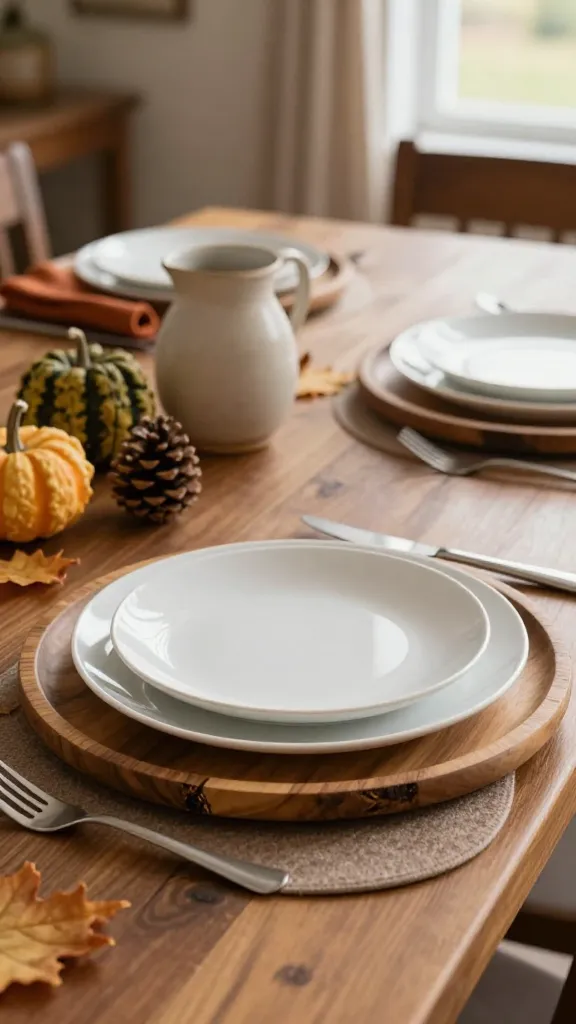
Place everyday white dishes on rustic wooden chargers or cork mats. Even simple plates look intentional when grounded by a natural base. The chargers signal a moment of care without extra effort.
Inspect wooden chargers for splinters and sand lightly if needed. Use a non-slip mat between the charger and dish to prevent slipping. Match the wood tone with other table accents — the centerpiece tray, the twig borders — for unity. Keep chargers simple and uniform to anchor the table visually.
I worried that my white dishes looked too plain for a gathering. Then I added wooden chargers — simple rounds of sealed wood, sanded smooth — and suddenly the table looked pulled together. The chargers add warmth and texture, and they make even everyday plates feel special.
Takeaway: Wooden chargers under white dishes. Sanded smooth. Match the wood tone.
8. What Adds Texture to the Table Without Cluttering It?
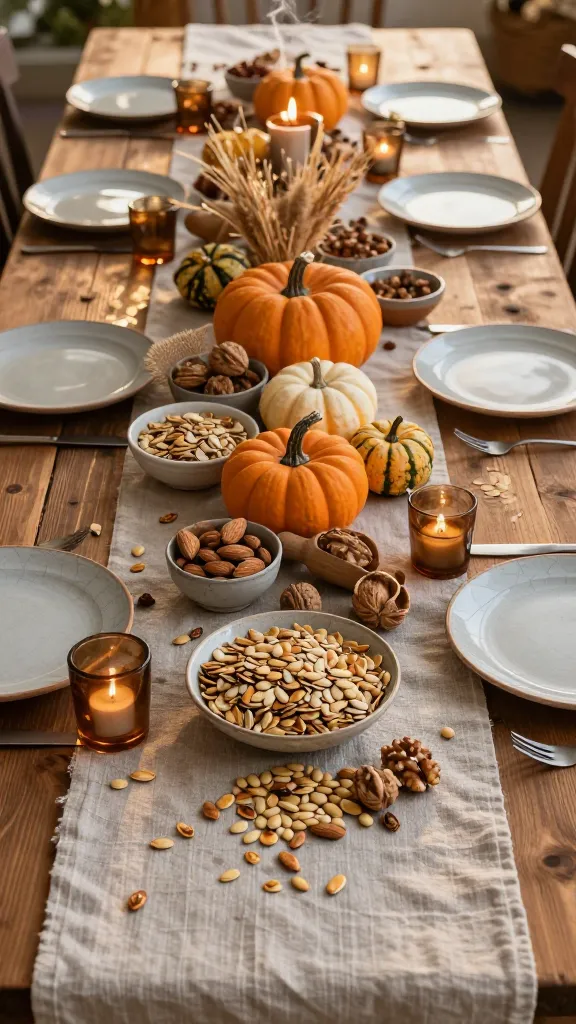
Place small ramekins of toasted pumpkin seeds, walnuts, or pecans at intervals around the table. The nuts add aroma, texture, and a tactile element that invites guests to linger. Keep servings modest to avoid overwhelming plates with crumbs.
Toast nuts and seeds until fragrant, then cool completely before arranging. Keep them in a cool spot to prevent oils from going rancid. The goal is subtle enhancement, not a snack bar.
I scattered nuts directly on the table for years, and they rolled everywhere, got crushed, and made a mess. Then I switched to small ramekins — one at each end of the table, one near the centerpiece. Guests help themselves, and the presentation stays clean. The toasted aroma fills the air, and the texture adds interest without clutter.
Takeaway: Small ramekins of toasted nuts. Place strategically. Keep it modest.
9. How Do Herb Vines Add Fragrance Without Overpowering?
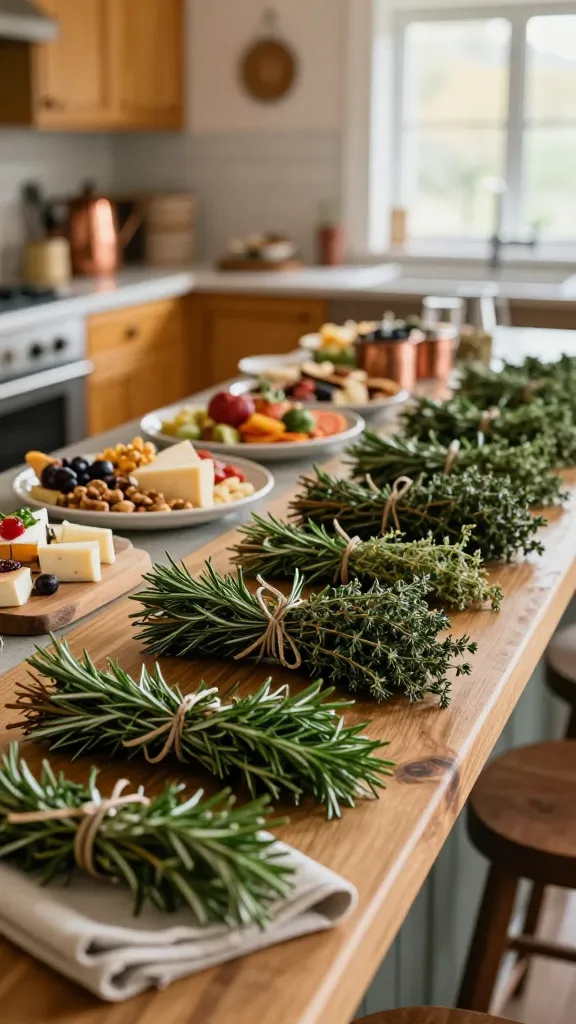
Trim fresh rosemary, thyme, or sage earlier in the day and clip into small bundles. Wrap stems with thin ribbon to keep them tidy. Place bundles near but not directly touching food platters. The herbs add fragrance and a kitchen-to-table vibe that guests notice.
Trim herbs in the morning when they’re most fragrant. Keep bundles compact and elevated so they don’t interfere with serving space. The herbs should enhance the meal, not mask it.
My husband would remediate the soil in our gardens, enriching it where it was basically sea-sand, or lightening it when it was clay. He’d grow herbs alongside the flowers, and I’d use them in cooking. I used to lay herb sprigs directly on the table, and they wilted, shed leaves, and competed with the food’s aroma. Then I started bundling them — small, tied with ribbon, placed at intervals along the table edge. The fragrance is subtle, not overwhelming. The bundles look intentional, not accidental.
Takeaway: Small herb bundles. Tied with ribbon. Placed at the edges. Keep it subtle.
10. Why Does Warm Lighting Shape the Mood More Than Any Other Detail?
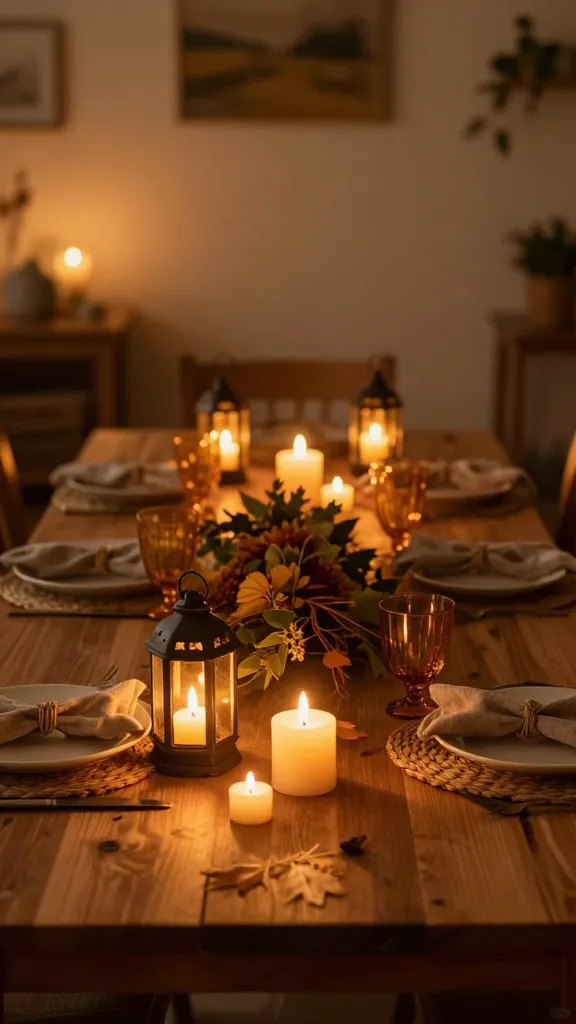
Place small lanterns or warm-toned LED candles at two corners of the table to balance light. Avoid a single bright overhead that creates harsh shadows. Aim for even, low-level warmth across the table rather than one focal light. Lighting shapes mood more than any other detail.
Use flameless LED candles where possible for safety, especially near greens and textiles. If using real candles, keep them twelve inches away from anything flammable. The goal is warmth, not brightness. Let the glow do the work.
Every house we lived in had a favourite room, always brightly lit but not necessarily facing south or north — in tropical countries, you wanted light but not scorching heat. Most of the time, that room was the kitchen, or opened onto it, because that’s where life happened. The children would sit at the kitchen table, sharing tea and cookies, then homework would come out while I got the meal ready. Those rooms were light and airy, with everything in easy reach. I used to rely on the overhead light for gatherings, and they felt like fluorescent-lit cafeterias. Then I switched to lanterns and warm LED candles at either end of the table, and the whole atmosphere shifted. The light was soft, even, inviting. Guests lingered longer. Conversations deepened. The meal felt like an event, not just eating.
Takeaway: Two lanterns or LED candles at the corners. Warm tones. Even light. No harsh shadows.
Autumn Table Elements Compared
| Element | Natural Version | Store-Bought Alternative | Key Difference |
|---|---|---|---|
| Centerpiece | Foraged pine cones, evergreens | Plastic or silk arrangements | Natural has scent and texture; plastic looks fake |
| Linens | Linen over jute, leaf-print | Polyester tablecloths | Natural fibres breathe and drape; synthetic looks cheap |
| Chargers | Wooden rounds, cork mats | Plastic or metal chargers | Wood adds warmth; plastic feels sterile |
| Lighting | LED candles, lanterns | Overhead lighting | Low-level warmth creates intimacy; overhead is harsh |
| Place cards | Handwritten tags on kraft | Printed cards | Handwritten feels personal; printed feels generic |
| Greenery | Preserved boxwood, fresh herbs | Silk garlands | Real greens have fragrance; silk is static |
Frequently Asked Questions
What are the most affordable centerpiece ideas for autumn?
Start with a shallow tray, foraged pine cones, and a few fresh greens from the garden centre. Add dried orange slices or eucalyptus sprigs for colour, keeping the table feeling alive without crowding the dining space or breaking the bank.
How do I avoid the table looking crowded with decor?
Limit to three main elements: a central focal piece, a runner or textiles, and a few small bowls or candles. Leave plenty of space for plates and glasses, using vertical height — stacked books, elevated bowls — rather than spreading decor across the entire surface.
What should I serve without professional kitchen tools?
Offer simple, crowd-pleasing items: a cheese board, seasonal fruit, sliced bread or crackers, and a hot dish kept warm in a slow cooker. Use bowls and platters you already own, as the food doesn’t need to be elaborate — it needs to be shared.
How do I create a cohesive look with inexpensive items?
Choose a unified colour palette and repeat textures. Combine a jute runner, wooden chargers, and matte white dishes. A single, bold centerpiece anchors everything else, and cohesion comes from repetition, not expense.
Conclusion
Autumn cottage entertaining doesn’t require a professional budget or fancy equipment. It requires a few earthy touches — foraged centerpieces, layered textiles, warm lighting, curated food — and the intention to create something memorable. Start with one idea this weekend. Add another next time. Over time, these small touches accumulate into gatherings that feel warm, grounded, and unmistakably yours. Your guests won’t remember the perfect napkin fold or the matching glassware. They’ll remember how the table made them feel: welcomed, unhurried, at home. If you want to extend this earthy approach to the rest of your seasonal decor, my guides on autumn home decor, seasonal home changes, and intentional living show how to keep your home feeling grounded through every season.
Leave a Reply