15 Autumn Home Decor Ideas That Feel Earthy, Not Kitschy
· thehazelcottage@mail.com
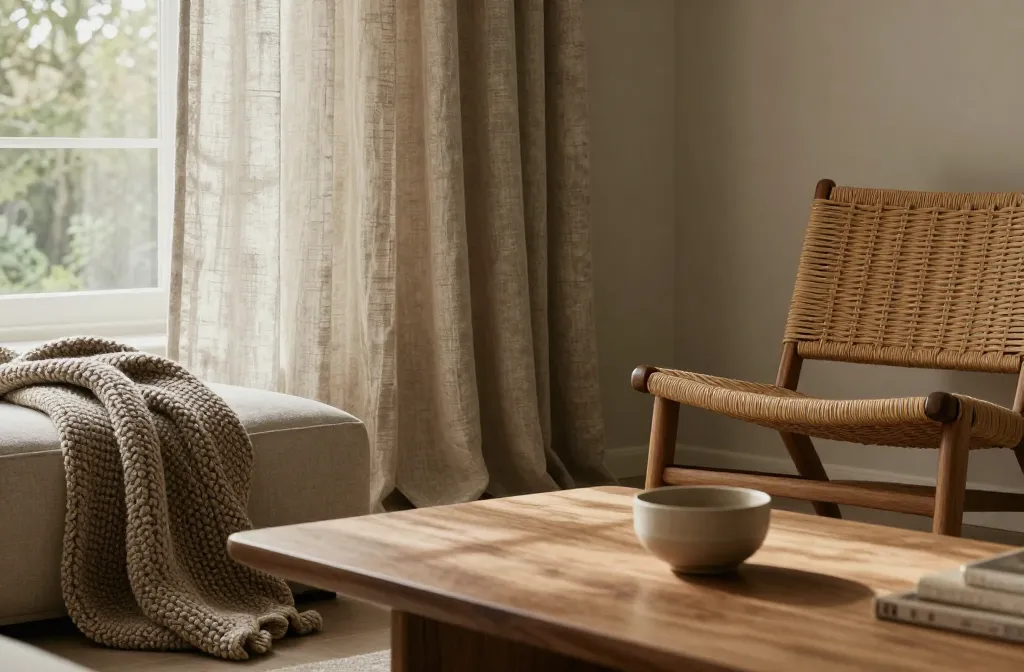
I cringe at the memory of my early autumn decor — plastic pumpkins, neon orange cushions, wreaths that screamed “craft project.” The shift happened slowly, across several homes and several countries. We moved every three or four years, and each move forced me to leave things behind. By the time we settled, I had learned that the rooms I loved most weren’t decorated — they were gathered. Pine cones from a walk. A bowl of citrus on the counter. Linen curtains that had softened with years of washing. The earthy, grounded approach to autumn isn’t about buying more. It’s about choosing fewer, better things that connect to the natural world.
Here are fifteen practical ideas for autumn decor that feels earthy, not kitschy. Most require nothing more than rearranging what you already own or adding a few natural elements from the garden.
1. How Do Layered Textures Create Autumn Warmth?
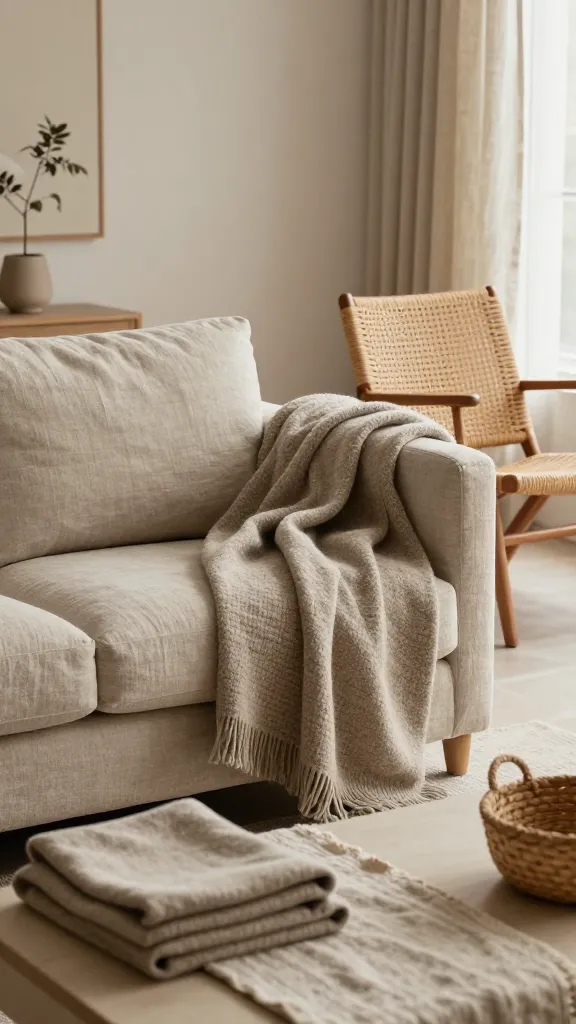
Layer two to three natural textiles — wool, linen, rattan — in neutral tones to add depth without visual noise. Textured fabrics signal warmth and coziness more effectively than colour alone.
Biophilic design research confirms that layering tonal palettes and organic textures creates interiors that respond to the rhythms of the natural world, grounding a home in calm and balance. The rooms I loved most didn’t rely on colour — they relied on texture. A chunky knit throw draped over the couch. Linen curtains in soft stone. A rattan chair in the corner. Each piece adds tactile interest without screaming “seasonal.”
The key is restraint. Two to three textures maximum per room, in a cohesive colour palette. A wool throw in oatmeal. Linen cushions in sage. A woven basket in natural rattan. Together, they create warmth that lasts well beyond October.
Takeaway: Layer two to three natural textiles per room. Keep the palette neutral. Let texture do the work.
2. What Earthy Colours Feel Autumnal Without Being Loud?
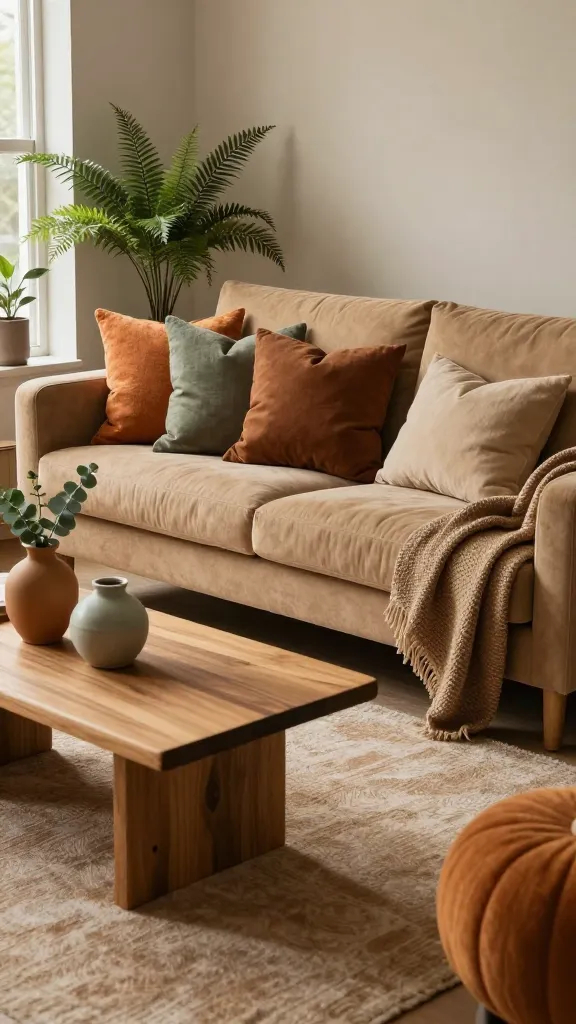
Choose a neutral base (sand, dove grey, oatmeal) and add two to three earthy accents (ochre, sage, cocoa, terracotta). This palette resembles a forest floor — calm, grounded, and timeless rather than trendy.
Bright autumn shades look dated within weeks. I bought a set of neon orange cushions that felt festive in September and ridiculous by November. Now I stick to earthy tones that echo the natural world: terracotta, sage, mushroom, sand. They pair with most existing furniture and transition smoothly into winter.
Research on colour and mood shows that earthy tones — warm browns, muted greens, soft terracotta — evoke feelings of stability and comfort more effectively than saturated brights. Start with a neutral base for large surfaces — walls, sofa, rug — then introduce accent colours through cushions, vases, and small decor. The result feels intentional, not overwhelming.
Takeaway: Neutral base, two to three earthy accents. Test swatches next to wood and greenery before committing.
3. How Does Live Greenery Soften Autumn Decor?
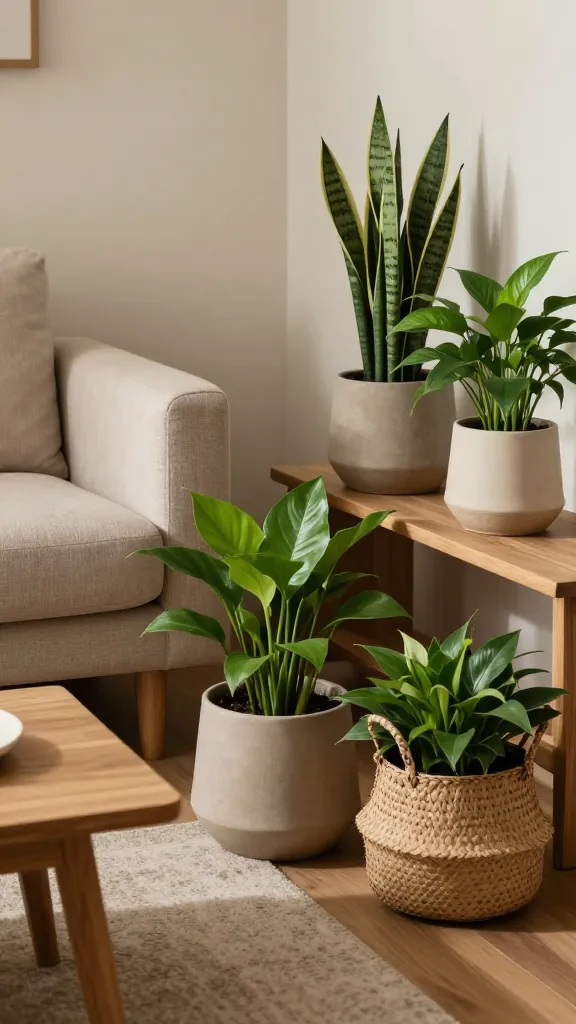
Place three to four robust plants in simple, neutral containers — pothos, zz plant, snake plant — to bring life and soften the space. Plants connect you to the natural world without appearing contrived.
My husband grew up helping his father at the florist and green-grocer, and he carries that gardening instinct everywhere we live. He remediates the soil — enriching sea-sand, lightening clay — and plants herbs alongside flowers, so that by autumn, rosemary and thyme share pots with ornamental grasses. A tall pothos on the bookshelf. A small zz plant on the coffee table. A trailing ivy in a hanging basket. The room comes alive.
Research on biophilic design shows that incorporating natural elements into indoor spaces reduces stress and improves wellbeing. You don’t need a green thumb — just choose robust varieties that tolerate lower light and pair them with understated pots that blend with your palette.
Takeaway: Use three to four well-placed plants in neutral pots. Let them anchor the room.
4. Why Does Natural Wood Feel More Autumnal Than Painted Furniture?
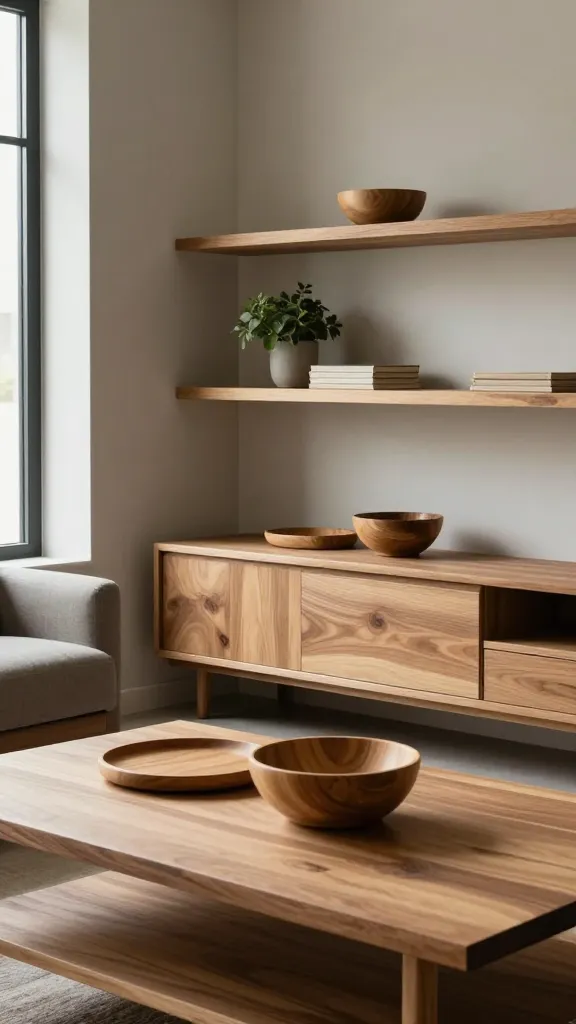
Choose furniture and accents with visible grain and matte finishes — lightly stained wood, reclaimed timber, natural bamboo. Wood brings organic warmth that feels inherently autumnal without being rustic or dated.
Wood furniture felt heavy and old-fashioned to me until I discovered that the right pieces — clean lines, matte finish, warm brown or grey-brown stain — feel grounding and modern. A lightly stained coffee table. Wooden trays on the shelf. A reclaimed timber bench by the door. Each piece adds warmth without shouting.
Research on wood and stress reduction shows that visible wood grain lowers cortisol levels by up to 12 percent compared to environments with no natural materials. Avoid shiny finishes and orange-toned stains that clash with greens. Prefer matte, natural-looking surfaces that let the grain show through. Wood should be the quiet backbone of your autumn decor, not the loud statement piece.
Takeaway: Let natural wood be the foundation. Choose matte finishes, warm tones, visible grain.
5. How Does Warm Lighting Transform an Autumn Room?
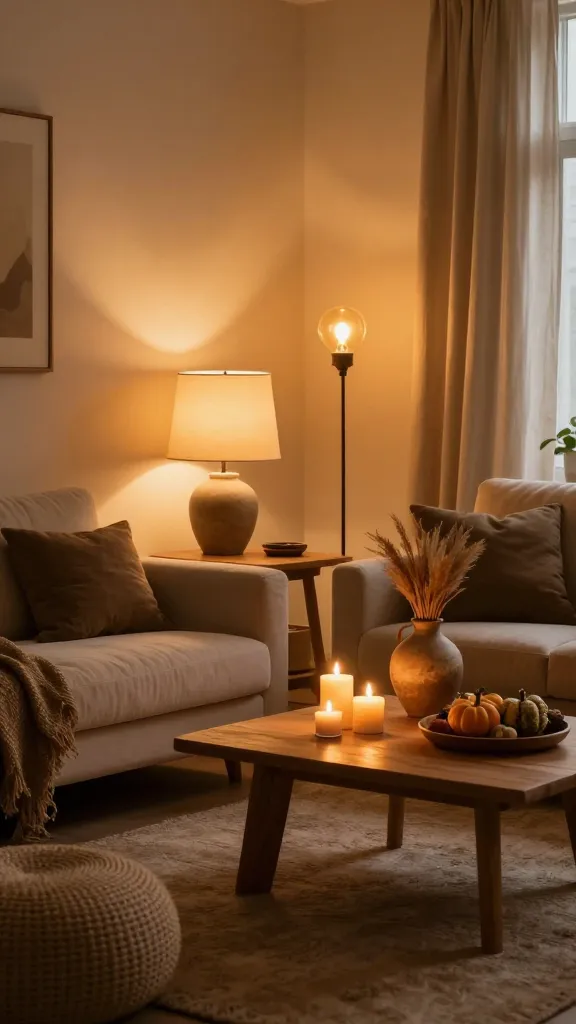
Switch to warm-toned lamps (2700K-3000K bulbs) and place them at different heights for layered light. Avoid harsh white ceiling lights that create clinical shadows. Warm lighting signals coziness and invites you to slow down.
Our favourite room in every home we’ve lived in was always the brightest — usually the kitchen, where life happened. Children at the table with tea and cookies and homework while I prepared meals. But even that room needed to shift in autumn. The bright daylight that worked in summer felt harsh by October. So I switched to warm-toned table lamps and floor lamps, and the whole mood changed. Evenings felt calmer. The room felt more inviting.
Research on lighting and mood confirms that warm white light (2700K-3000K) promotes relaxation and calms the nervous system, improving emotional connection and cosiness. Place lamps at different heights — a floor lamp in the corner, a table lamp on the side table, a small lamp on the shelf. The layered effect creates depth and warmth that overhead lighting can’t replicate.
Takeaway: Use warm-toned lamps at different heights. Turn off the overheads. Let the glow do the work.
6. What Kind of Art Echoes Autumn Without Being Literal?
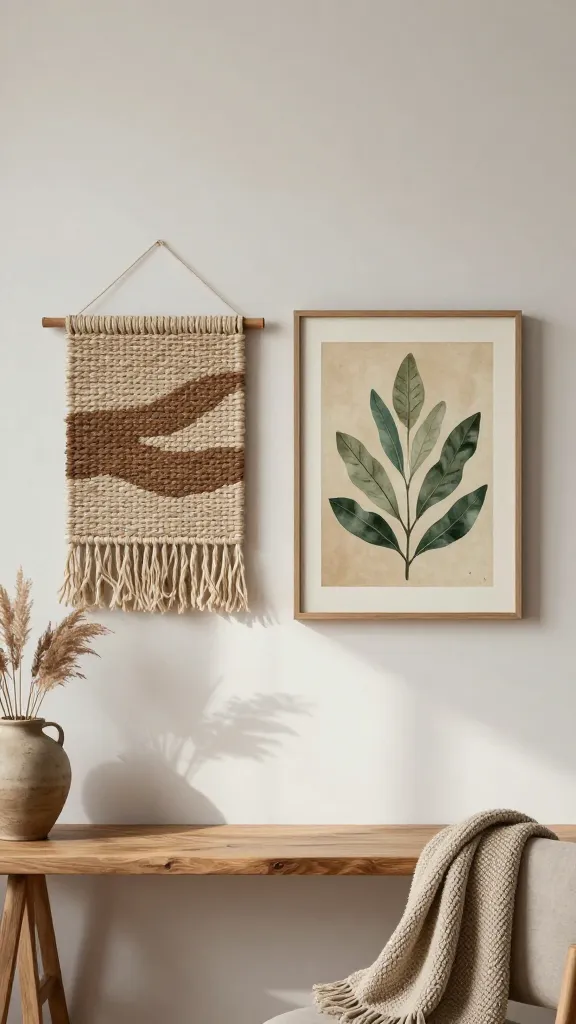
Choose art with earthy tones and natural textures — woven wall hangings, framed botanical prints, handmade ceramics. Avoid mass-produced, bright graphic prints that clash with the room’s palette. Let art echo the outdoors quietly.
When we moved countries every few years, I learned to leave most art behind. By the time we settled, I had stopped hanging whatever I found cheap and started choosing pieces that echoed the natural world — a woven wall hanging in neutral hues, a framed botanical print with a soft matte, a small ceramic sculpture with organic shapes. The room felt more cohesive, more grounded.
Hang art at eye level and maintain negative space around each piece. One or two well-chosen pieces beat five mediocre ones. The goal is to create a sense of calm, not visual clutter.
Takeaway: Pick one to two pieces that echo nature. Hang them with breathing room. Let them anchor the wall.
7. How Do You Add Autumn Scent Without Overpowering the Room?
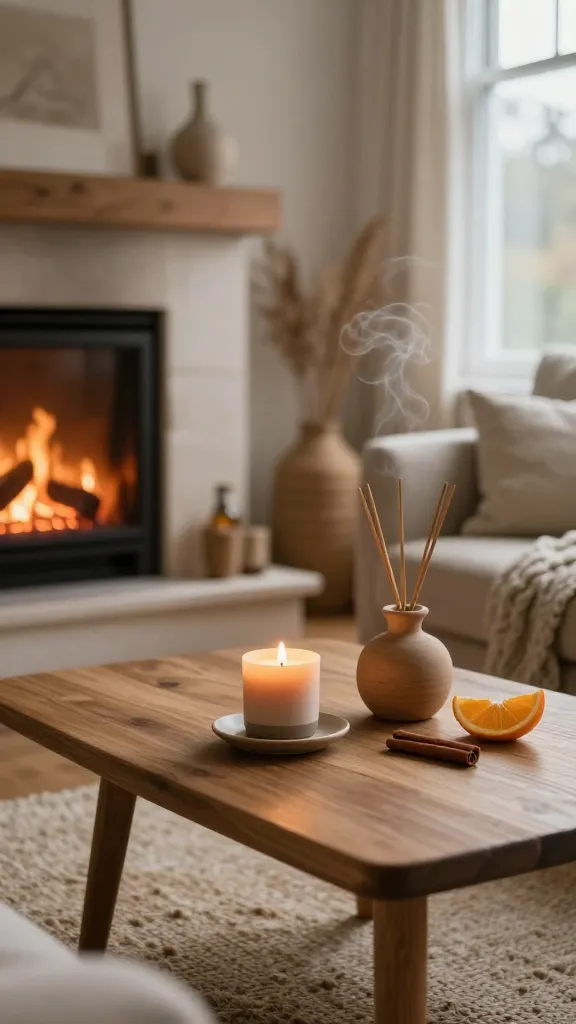
Use subtle, natural scents — simmer citrus peels and cinnamon sticks, bruise fresh herbs, or use a light essential oil diffuser. Avoid overpowering candles and synthetic air fresheners. Let the scent be gentle and authentic.
Scent is the most direct pathway to memory and emotion. Neuroscience research on olfaction shows that smell bypasses the brain’s rational centres and connects directly to the limbic system — the seat of emotion and memory. That’s why the smell of simmering citrus in autumn can make your whole apartment feel warmer, even when it’s cold outside.
My mother would put out bowls of dried citrus that scented the house, and she’d bake warm-spice cookies with nutmeg and cloves. I still make a cocoa using star anise, cinnamon bark, cloves, nutmeg, and cardamom in autumn — the scent fills the kitchen and drifts through the house. I avoid strong artificial scents that irritate rather than comfort. Instead, I simmer orange peels and cinnamon sticks on low heat, or place bruised rosemary in a small bowl. The scent is subtle, natural, and changes as the day progresses. It’s more powerful than any candle, and it’s free.
Takeaway: Simmer citrus and cinnamon. Bruise herbs. Keep scent gentle and authentic.
8. How Does Functional Storage Keep Autumn Decor Tidy?
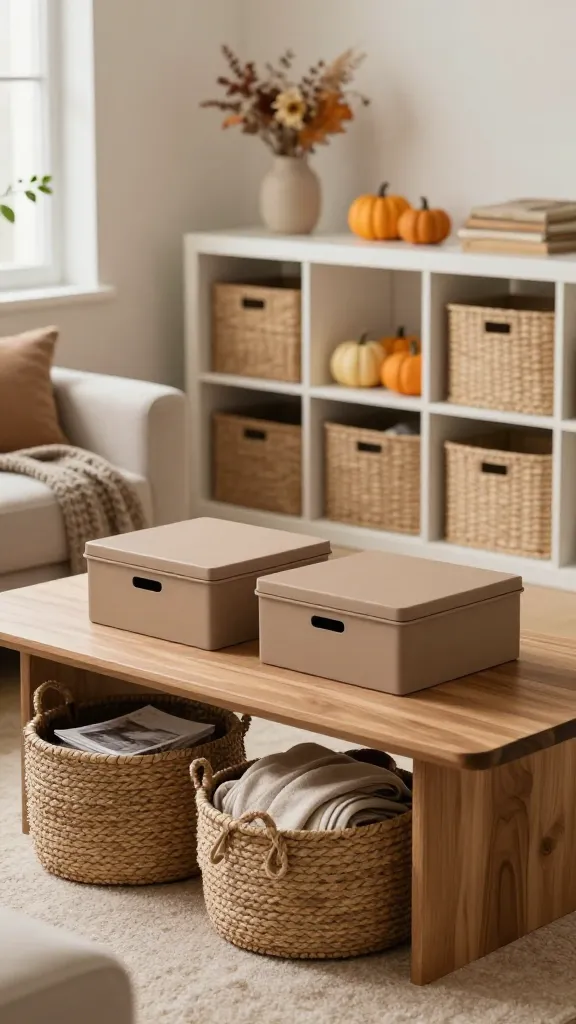
Use uniform baskets or bins in natural colours to store blankets, magazines, and seasonal items. Functional storage keeps clutter down while looking refined. Choose pieces that blend with your palette, not contrast with it.
Storage became a catch-all for random objects in our early homes — mismatched bins, plastic containers, overflowing baskets. The space felt chaotic. Then I invested in woven baskets in natural tones, and everything changed. Blankets went in one basket. Magazines in another. Seasonal decor in a third. The room felt calmer, more intentional.
The key is uniformity. Choose baskets in similar colours and materials. Place them on shelves, under tables, or in corners. They should blend with the room, not stand out as storage solutions.
Takeaway: Use natural-toned baskets for storage. Keep them uniform. Let them blend.
9. Why Does a Decluttered Fireplace Feel More Autumnal?
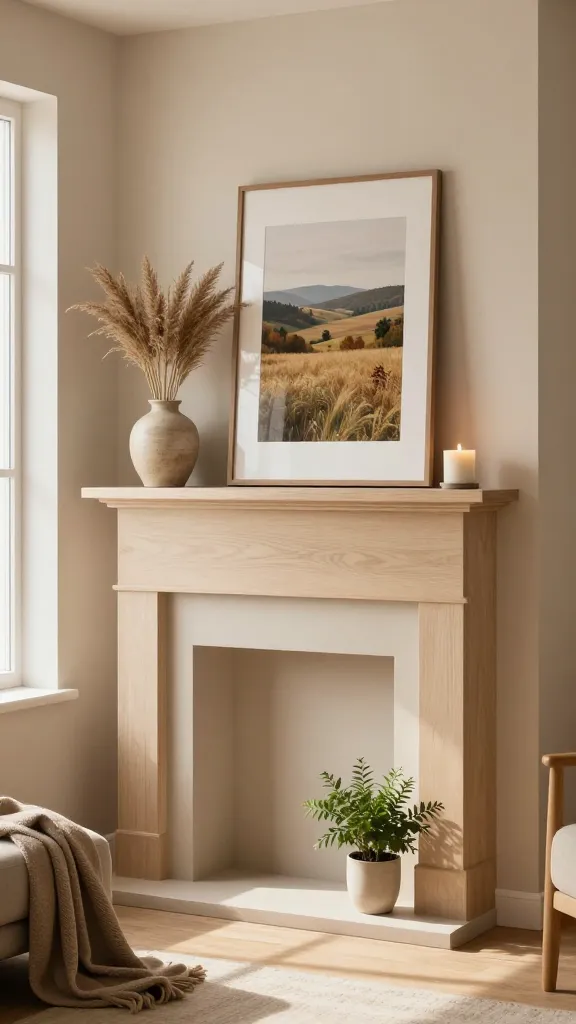
Keep the fireplace or focal corner simple and tidy — one ceramic vase with dried grasses, one framed landscape photograph, maybe one small plant. An uncluttered focal point feels seasonally appropriate and visually calm.
I used to pile random objects on the mantel — candles, books, figurines, seasonal trinkets. It looked busy and stressed. Then I cleared it down to three items: a ceramic vase with dried grasses, a framed photograph, and a small plant. The fireplace became a focal point instead of a clutter magnet. The room felt more pulled together.
Limit to two to three decorative items and one plant. Maintain clear surfaces for safety and visual calm. The fireplace should invite you to slow down, not overwhelm you with stuff.
Takeaway: Clear the mantel. Add one vase, one photo, one plant. Let it breathe.
10. How Do Seasonal Cushions Shift a Room’s Mood?
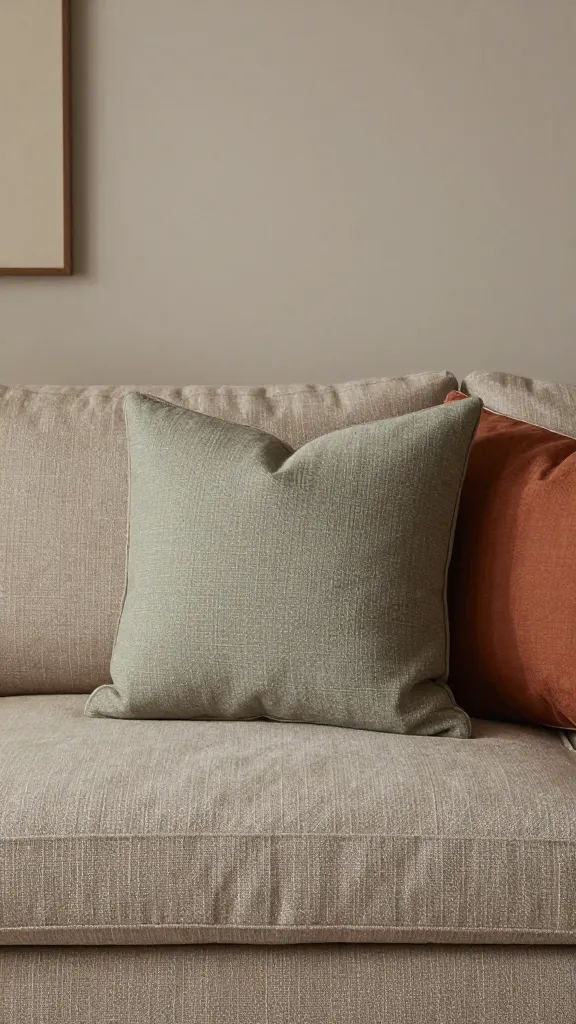
Swap two to three cushion covers seasonally — sage and taupe in autumn, soft blues and greens in spring. Choose fabrics with a matte finish and subtle texture. Cushions are an easy way to shift the mood without committing to a full redesign.
I used to buy new cushions every season, and my storage closet overflowed. Then I realised I could just swap covers. I keep two sets: one for autumn and winter (sage, taupe, terracotta), one for spring and summer (soft blue, pale green, cream). I swap them at the equinoxes, and the room feels different without buying anything new.
Choose cushions with subtle patterns or textured weaves, not bright graphic prints. Two complementary cushions refresh the look without overhauling the room. The key is restraint — less is more.
Takeaway: Swap two to three cushion covers at the equinox. Keep patterns subtle, textures rich.
11. What Natural Elements Feel Autumnal Without Being Kitschy?
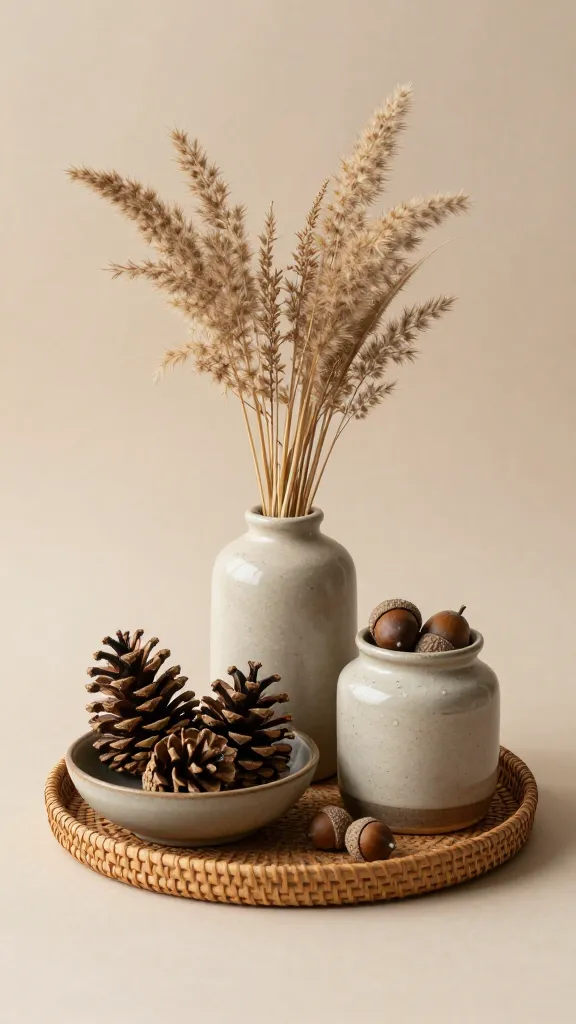
Place a few natural elements on a tray or in bowls — pinecones, dried grains, seed pods, acorns. Keep arrangements simple: one tray with three to five items at varying heights. Natural elements draw the eye more than colour alone.
In every house we’ve lived in, the children would gather pine cones on walks. We’d bring them home and arrange them in bowls or on trays — simple, unforced, connected to the season. A bowl of pinecones on the coffee table. A vase of dried grasses on the shelf. A ceramic jar with a few acorns. Each piece connects to the season without looking like a craft project.
The key is simplicity. One tray, three to five items, varying heights. Avoid overly fussy arrangements that look forced. Let the natural beauty of the elements speak for itself.
Takeaway: One tray, three to five natural elements. Keep it simple. Let them breathe.
12. How Do You Style a Coffee Table for Autumn?
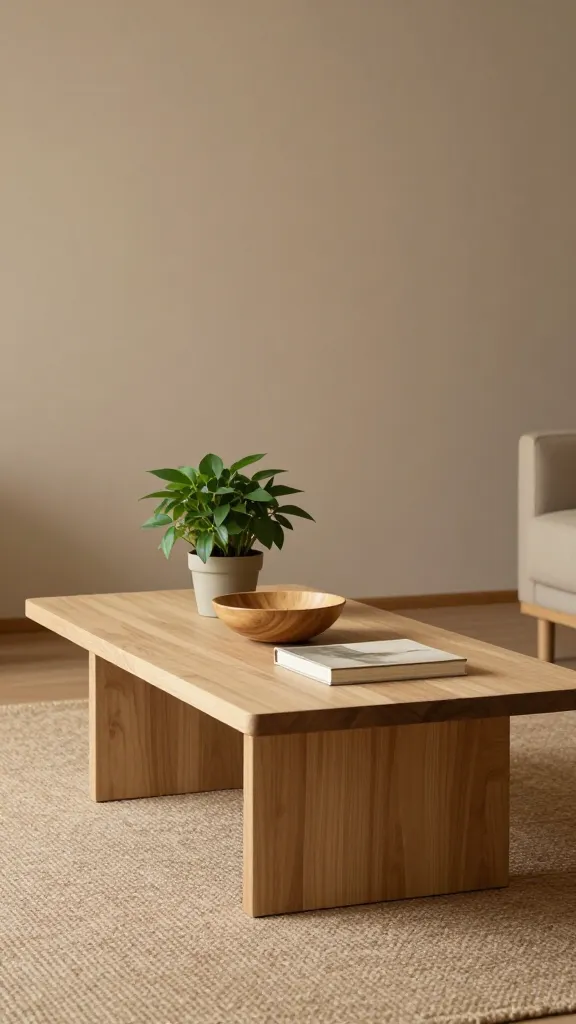
Keep coffee table styling minimal — one book, one plant, one natural accessory. Use a tray to corral items and keep edges clear for practical use. A tidy coffee table anchors the room and prevents seasonal clutter.
Our coffee table became a dumping ground in the early years — mail, books, remote controls, random objects. It looked messy and felt stressful. Then I started styling it intentionally: one book (something I’m reading), one small plant, one natural bowl. That’s it. Three items. The table looks calm, and it’s still functional.
Use a tray to corral the items. Keep the edges clear so you can actually use the table. The coffee table should anchor the room, not add to the chaos.
Takeaway: One book, one plant, one natural accessory. Use a tray. Keep edges clear.
13. What Kind of Wreath Feels Modern, Not Kitschy?
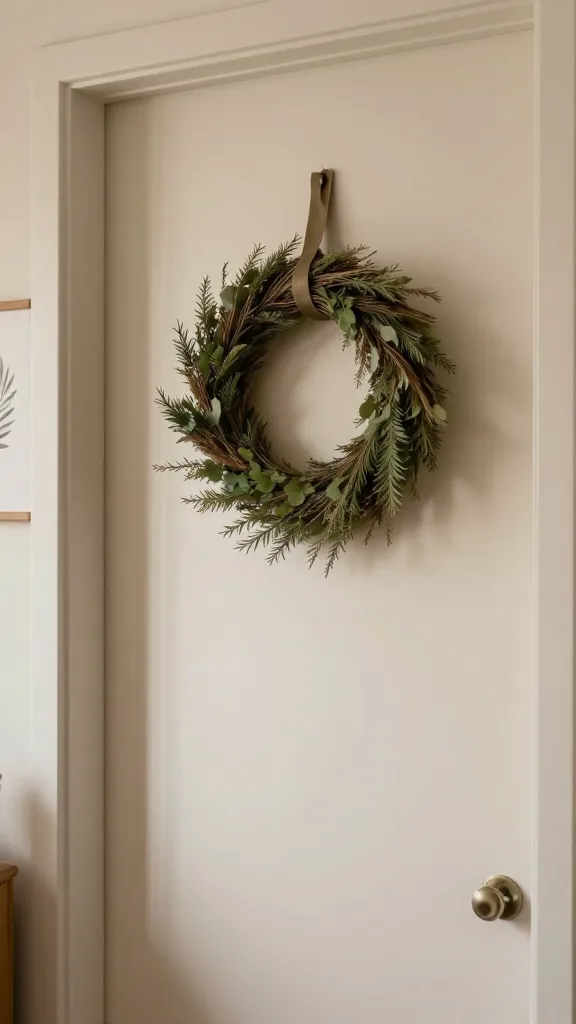
Choose a slender, handmade-looking wreath in muted tones — dried fern, twigs, eucalyptus. Avoid overly glossy greenery that reads fake. Hang at an appropriate scale for the door or wall. A modest wreath elevates the entry without looking seasonal cosplay.
I bought big, bold wreaths every autumn for years, and they looked ridiculous by November. Then I switched to a slender twig wreath with dried fern, and it lasted all season. It’s simple, handmade-looking, and doesn’t scream “craft project.” The key is proportion — a wreath that’s too large overwhelms a small door, while one that’s too small looks lost.
Hang at eye level, centered on the door or wall. Choose materials that dry well and last — twigs, dried fern, eucalyptus. Avoid anything glossy or plastic-looking. The wreath should feel like a natural extension of the season, not a decoration.
Takeaway: Slender wreath, muted tones, appropriate scale. Let it feel handmade, not manufactured.
14. How Does a Windowsill Garden Add Autumn Life?
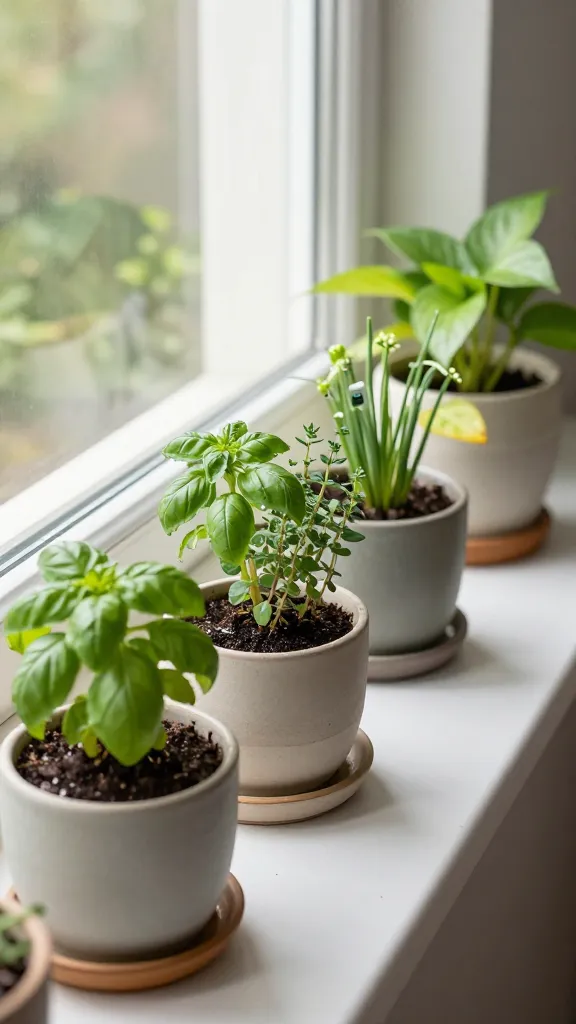
Place a few compact pots on a sunlit sill — miniature herbs, low-light greenery, succulents — to bring life indoors without taking up floor space. A small, well-placed windowsill garden adds life and connects you to the natural world.
The windowsill used to collect dust and random objects. Then I placed three small pots there — rosemary, thyme, and a small succulent — and the space came alive. The herbs smell wonderful when I brush past them. The succulent adds texture. The whole windowsill feels intentional.
Herb gardening guides note that many culinary herbs thrive in containers with bright, indirect light and occasional dryness. Choose plants that tolerate windowsill conditions. Use ceramic pots in neutral tones that match your palette. Water sparingly and allow soil to dry between waterings. The garden should feel effortless, not high-maintenance.
Takeaway: Three small pots, sunlit sill, herbs or succulents. Let them bring life without crowding.
15. How Do You Refresh a Room Without a Full Redecorate?
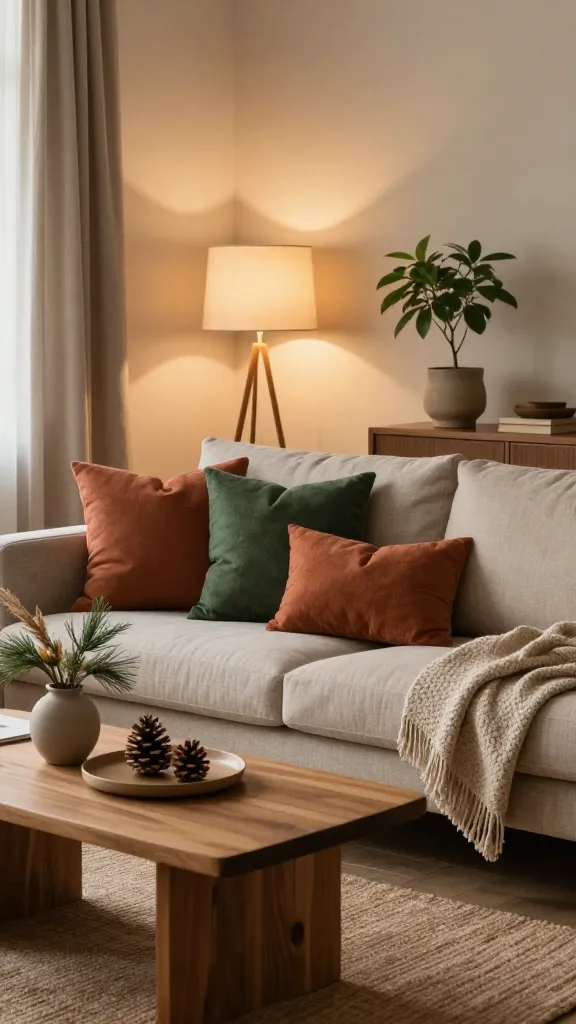
Rotate two to three items across rooms every few weeks — swap cushion covers, move a plant to a new spot, refresh lighting with a new shade. Small, deliberate changes keep the space feeling fresh without drifting into kitsch.
I used to think seasonal decor meant a full overhaul — buying new items, rearranging furniture, starting from scratch. Then I learned the power of small shifts. Swap the cushion covers. Move the pothos from the shelf to the coffee table. Add a new lamp shade. The room feels different, but I haven’t bought a thing or spent hours rearranging.
The key is intention. Don’t change everything — just two to three items per refresh. Rotate them across rooms. The result feels fresh and seasonal without becoming overwhelming.
Takeaway: Swap two to three items every few weeks. Keep it small. Let the changes accumulate.
Earthy Autumn Decor Elements Compared
| Element | Best For | Seasonal Impact | Longevity |
|---|---|---|---|
| Layered textiles (wool, linen, rattan) | Sofas, chairs, beds | High — tactile warmth | Years (reusable) |
| Live plants (pothos, zz, snake) | Shelves, tables, corners | High — living connection | Months to years |
| Natural wood accents | Furniture, trays, bowls | Medium — organic warmth | Years |
| Warm lighting (2700K lamps) | Corners, side tables | High — mood shift | Bulb life (1-3 years) |
| Natural elements (pinecones, acorns) | Trays, bowls, mantels | Medium — seasonal detail | Season (reusable if stored) |
| Seasonal cushions (sage, taupe) | Sofas, chairs | Medium — colour shift | Years (swap covers) |
Frequently Asked Questions
What makes autumn decor feel earthy rather than kitschy?
Earthy autumn decor relies on natural textures, muted tones, and simple shapes. Avoid bright, saturated colours and busy patterns. Choose materials like linen, wool, wood, and ceramic finishes that feel grounded and timeless. The goal is to connect to the natural world, not replicate a craft project.
How can I refresh my space without buying new items?
Start with what you own. Swap cushion covers, rotate textiles, move plants to new spots, and rearrange natural elements. Most people already have items in autumn-appropriate palettes — they just need to be brought out and repositioned. Intentional rotation beats new purchases.
What plants thrive in autumn indoor lighting?
Choose robust varieties that tolerate lower light and dry indoor air: pothos, snake plant, zz plant, spider plant. Pair them with simple, neutral planters that match your colour palette. Water sparingly — autumn indoor air is drier, and plants need less frequent watering.
How do I avoid overdoing seasonal scent?
Choose one subtle scent source and use it sparingly. Simmer citrus peels and cinnamon sticks on low heat, or use a light essential oil diffuser. Avoid overpowering candles and synthetic air fresheners. Ventilate after using scent sources. The goal is gentle and authentic, not overwhelming.
Conclusion
Autumn decor doesn’t have to mean plastic pumpkins and neon orange. It can mean layered textures, earthy tones, natural elements, and warm lighting. Start with a neutral base, add two to three natural statements, and adjust as the season shifts. You don’t need to buy new items — you need to choose better, fewer things that connect to the natural world.
Your home should feel like a reflection of the season, not a craft project. Less kitsch, more earth. Less noise, more calm. If you want to extend this grounded approach through the rest of the year, my guides on seasonal home transitions, intentional home design, and creating a cozy rest corner show how to keep your space feeling earthy and calm across every season.
Leave a Reply