8 Natural Christmas Wreath and Garland Ideas That Aren’t Kitsch
· thehazelcottage@mail.com

When I was young, my parents lived in a forest near Lieshout, in the Netherlands. Every December, my father would take us into the forest to look for a suitable Christmas tree. These days, trees are grown on purpose and cut when they reach a certain size. In our case, if we couldn’t find the perfect tree within a week, my father would look up into the older trees, select one, and chop it down. Then he’d cut off the crown to use as our Christmas tree. We’d gather pinecones, pine branches, and sometimes lucky finds like real mistletoe or special red berries — poisonous, so we couldn’t eat them, but perfect for adding colour. That’s where I learned that the best Christmas decor comes from the earth, not a catalogue.
Here are eight practical wreath and garland ideas that feel seasonal without shouting “holiday excess.” Most use standard garden centre finds and common tools. All of them create something personal, not plastic.
1. How Do You Build a Pine Cone Garland Without Overwhelming the Space?

A garland should frame a space, not dominate it — use a lightweight natural garland base and add sparse pine cones at regular intervals, two to three per metre. Mix in a few sprigs of evergreen with airy filler like boxwood or holly.
Research on biophilic design shows that incorporating natural elements into indoor spaces reduces stress and improves wellbeing. Your guests may not articulate why the garland feels welcoming, but their nervous systems register the natural textures and respond. The key is balance — enough greenery to feel seasonal, enough space to feel calm.
We’d gather pinecones in the forest and spray them with silver or gold paint — in reality, grey or yellow paint — and use them on the tree. Then pine branches and small pinecones would decorate the tables and the stairs. I used to pile pine cones thick along the garland, and it looked heavy, busy, and overwhelming. Then I learned restraint. Now I space the pine cones — two to three per metre — and fill in with airy evergreen sprigs. The result is a garland that frames the mantel without overwhelming it.
Limit the overall density to about a third of the garland length for visual balance. Add small holly berries or dried citrus slices for subtle colour. Use floral wire or twist ties to secure elements. The garland should read calm and seasonal, not heavy.
Takeaway: Sparse pine cones. Airy filler. Two to three per metre. Let it breathe.
2. What Makes an Eucalyptus Wreath Feel Modern, Not Kitschy?

The silvery-grey leaves of eucalyptus feel modern, not traditional, and when combined with wintergreen sprigs, they create a clean scent and soft look that doesn’t scream Christmas kitsch. Incorporate a few muted accents like dried orange slices or pine tips for a calm, airy circumference with a delicate fragrance profile.
Choose balanced rounds and space eucalyptus evenly around the ring. Secure with flexible floral wire to keep shape even as it dries. The fragrance should remain inviting over weeks, not fade in days. Mist lightly every few days to extend freshness.
I bought bright green wreaths with red bows for years, and they always looked generic. Then I discovered eucalyptus. The silvery-grey leaves feel modern, not traditional. The scent is clean, not overpowering. I pair it with wintergreen for a subtle fragrance, and add a few dried orange slices for warmth. The wreath looks like it belongs in a modern apartment, not a catalogue.
Takeaway: Eucalyptus and wintergreen. Muted accents. Flexible wire. Mist to preserve.
3. How Does a Compact Rosehips Wreath Work in Small Spaces?
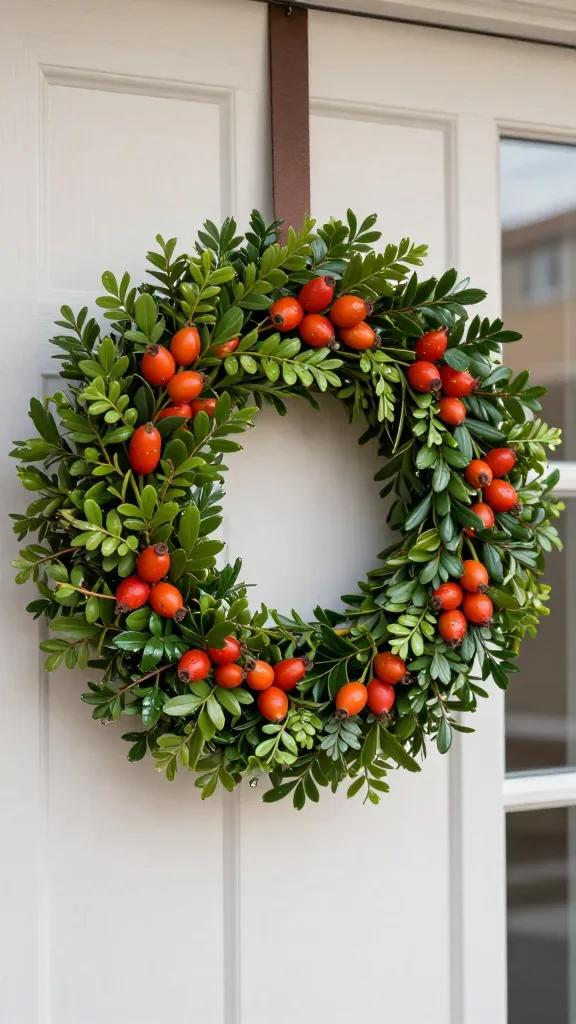
Keep the design clean and sturdy — five to seven rosehips per wreath with minimal other additions. Small elements should be precise, not cluttered. Use fresh rosehips and a healthy supply of green boxwood to create a compact wreath that works on apartment doors or windows.
Use fresh rosehips and prune boxwood stems to fit — fifteen to twenty centimetres in length. Keep the boxwood ends trimmed and hydrated before assembly. Secure tightly with floral wire to prevent sagging. The wreath should feel intentional, not sparse.
In the forest, we’d look for special red berries that we couldn’t eat as they were poisonous, but they added such beautiful colour to our decorations. I thought wreaths had to be big and bold. Then I moved to a studio apartment, and the front door was tiny. A standard wreath would have looked overwhelming. So I made a small one — just boxwood and a few rosehips. The rosehips add a touch of red without looking Christmas-y. The boxwood is architectural, clean, modern. It fit the space perfectly.
Takeaway: Small wreath. Fresh rosehips. Boxwood base. Keep it precise.
4. Why Does Burlap and Evergreen Feel Rustic, Not Garish?
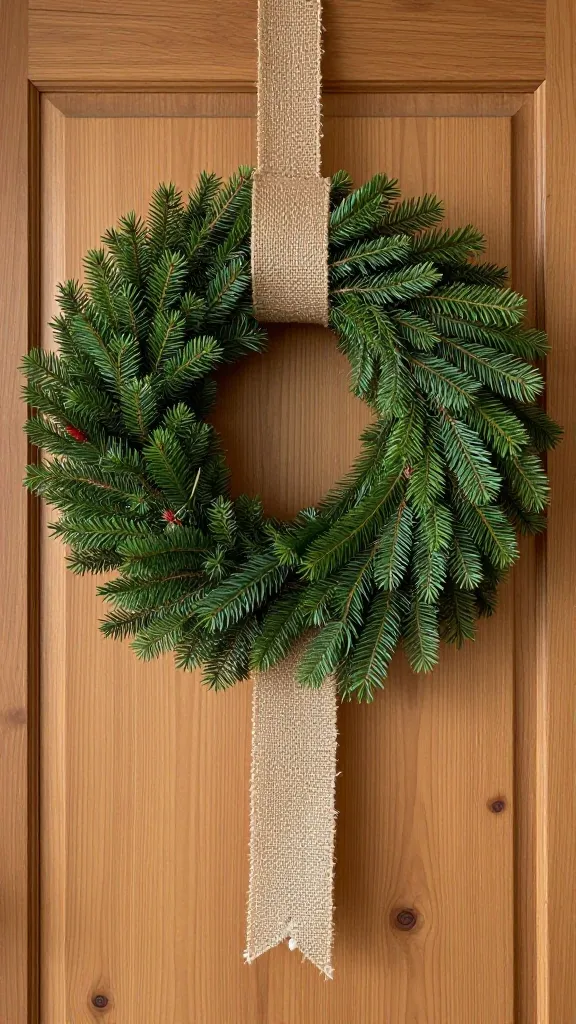
Wrap a narrow burlap ribbon around a grapevine wreath core — not a full burlap base — and add evergreen sprigs. Use a limited palette: green, brown, and a single accent colour. The result is a tactile, country-modern look that avoids garish colour bundles.
Seal cut burlap ends with clear craft glue to prevent fraying. Let texture speak without heavy colour competition. The wreath should feel restrained, not overwhelming. Restraint is key.
I wrapped entire wreaths in burlap for years, and they looked heavy, rustic in a dated way. Then I learned to use burlap as a ribbon — a narrow wrap around the grapevine base, not a full covering. The texture is there, but it’s subtle. The evergreen sprigs add freshness. The grapevine shows through, adding its own texture. The wreath feels handmade, not manufactured.
Takeaway: Narrow burlap ribbon. Grapevine base. Evergreen sprigs. Keep it restrained.
5. How Do White Berries Add Modern Contrast to Green?

Limit to six to eight white berries per wreath or garland segment. Attach with a tiny dab of hot glue or floral wire. Rotate placement so they punctuate rather than dominate. White berries stand out against green, giving a crisp, contemporary feel when used sparingly.
If white feels too stark, switch to dark berries or seed pods. Or use small sprigs of evergreen with a handful of dried citrus for colour pop. The goal is contrast, not dominance. The berries should enhance the greenery, not compete with it.
I scattered white berries everywhere for years, and they looked chalky, out of place, overwhelming. Then I learned to use them as punctuation marks, not the headline. Six to eight berries per wreath, spaced evenly, create contrast without chaos. The white pops against the green, but it doesn’t shout.
Takeaway: Six to eight berries. Punctuation, not headline. Attach securely. Rotate placement.
6. What Makes a Cedar Wreath Feel Warm Without Being Rustic?
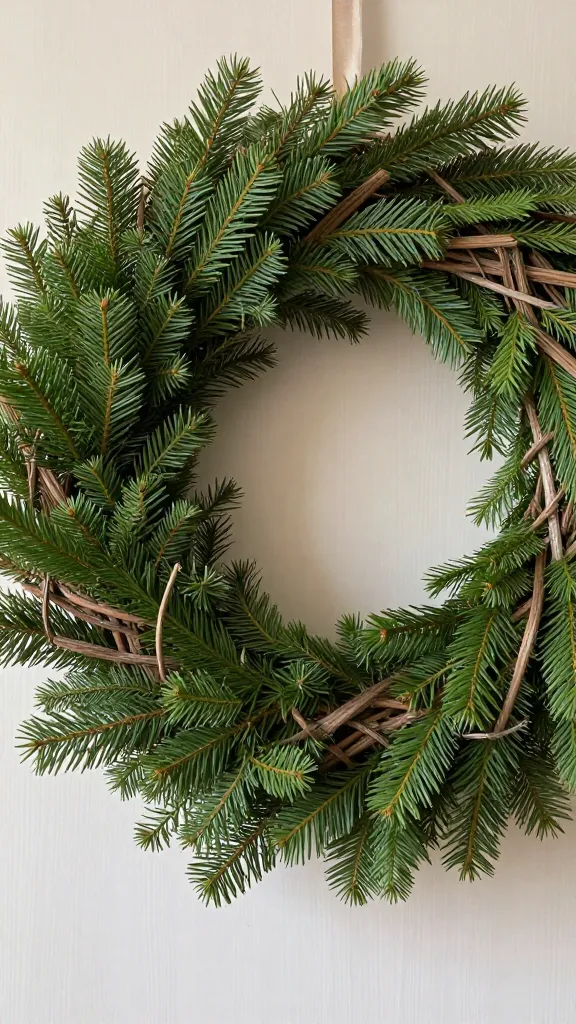
Combine fresh cedar tips with a natural, untreated wicker base to create a wreath that reads warm without being rustic kitsch. Add minimal accents like dried orange slices for a gentle colour highlight. Prioritise even distribution and a stable base to maintain symmetry over time.
Cedar needles shed naturally, but you can minimise it by choosing fresh tips and securing them well. The wicker base should be natural, untreated — no glossy finishes that look fake. The overall ring should feel balanced, not lopsided. Symmetry matters, even in rustic decor.
I bought cedar wreaths that shed needles everywhere for years, and they looked bedraggled within a week. Then I started making my own. I choose a sturdy wicker base and secure loose needles with thin wire. I balance the weight around the ring to maintain shape. I hang with a discreet ribbon loop to reduce sag. The wreath lasts for weeks, and it doesn’t shed all over the floor.
Takeaway: Fresh cedar. Wicker base. Thin wire. Balanced weight. Discreet hanging.
7. How Does Ivy Add a Modern Edge to a Wreath?
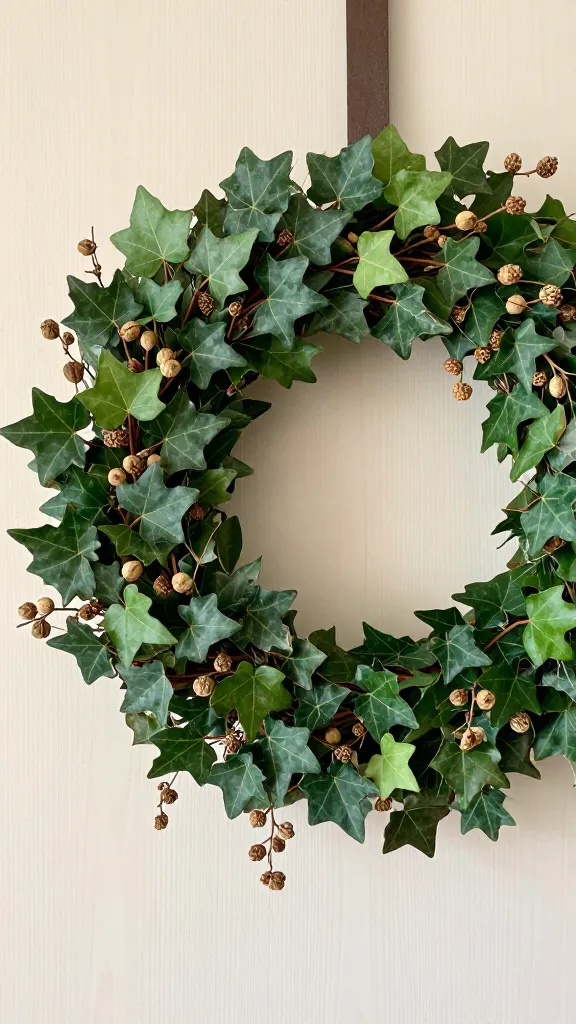
Trim ivy to six-to-eight-inch lengths and place evenly around the ring. Use a couple of seed pods as anchors rather than full clusters. Keep the arrangement slightly off-centre for a natural look. Trailing ivy adds a modern edge when paired with small seed pods and a restrained colour palette.
Keep ivy slightly off-centre for a natural look — perfection reads as manufactured. Use small pine sprigs and a few blue juniper berries for colour depth if you want more visual interest. The negative space should guide the design. Ivy should contour, not overwhelm.
I let ivy grow long and trail everywhere for years, and the wreath looked messy, overgrown, untidy. Then I learned to trim it — six to eight inches, placed evenly, with seed pods as anchors. The ivy contours the wreath instead of overwhelming it. The seed pods add texture without clutter. The overall look is clean, modern, intentional.
Takeaway: Trimmed ivy. Seed pod anchors. Off-centre placement. Let negative space guide.
8. Why Does a Citrus and Juniper Garland Feel Fresh, Not Cloying?
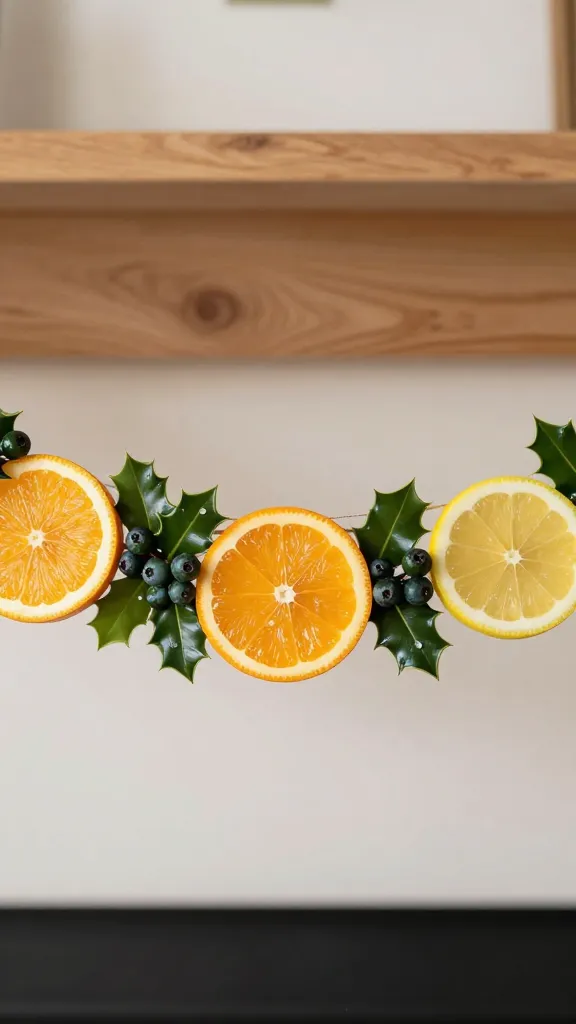
Soak citrus slices briefly before assembly to plump them up, then secure each piece with a small dab of hot glue. Attach in alternating directions to maintain a balanced line. Juicy citrus slices with juniper berries create a modern, fresh scent without the “holiday bakery” vibe.
Scent is the most direct pathway to memory and emotion. Neuroscience research on olfaction shows that smell bypasses the brain’s rational centres and connects directly to the limbic system — the seat of emotion and memory. That’s why the scent of citrus at Christmas can transport you to a specific moment, a specific feeling. The garland isn’t just visual — it’s sensory.
My mother would put out a couple of bowls filled with sliced lemons and oranges that she had dried especially for the season, and it would scent the house nicely. Best of all were the warm-spice cookies that would come out — peppernote, I think — with special spices such as nutmeg and cloves. I still make a cocoa using star anise, cinnamon bark, cloves, nutmeg, and cardamom at Christmas, just like she did, with a thick, warm cocoa drink. That scent is Christmas for me. I used to hang citrus garlands that dried out within days, looking dull and shrivelled. Then I learned to soak the slices briefly before assembly — just ten minutes in water — to plump them up. I secure each piece with hot glue so they don’t shift. The result is a garland that smells fresh, not cloying.
If citrus dries too quickly, switch to fresh holly leaves for green texture with fewer maintenance needs. Or use a few dried orange wheels for a soft pop of colour. Keep citrus accents sparse and well-placed for a crisp, modern finish.
Takeaway: Soak citrus. Hot glue. Alternating directions. Keep it sparse.
Natural Christmas Decor Materials Compared
| Material | Best For | Longevity | Scent |
|---|---|---|---|
| Pine cones | Garlands, table decor | Months (reusable) | Subtle woodsy |
| Eucalyptus | Wreaths, garlands | 2-4 weeks | Clean, medicinal |
| Rosehips | Small wreaths, accents | 3-6 weeks | None |
| Cedar | Wreaths, garlands | 2-3 weeks | Warm, woody |
| Citrus (dried) | Garlands, bowls | 4-8 weeks | Bright, fresh |
| Ivy | Wreaths, trailing accents | 1-2 weeks | None |
Frequently Asked Questions
Can I reuse these wreaths year after year?
Yes, but plan for storage and gentle handling. Remove all decorations, store in a cool, dry place, and avoid crushing the ring. A grapevine or wicker base can last for years if stored properly, and you can refresh accents each year with a few new pieces to keep the look current.
What indoor humidity level is best for greenery?
Keep a steady room humidity — drastic swings will dry out greens quickly. Aim for typical living room humidity, roughly forty to sixty percent. Mist occasionally if the air is very dry, but avoid constant wet foliage, and most natural wreaths will last two to six weeks indoors with proper care.
How long do natural wreaths typically last?
With proper care, most natural wreaths stay visually appealing for two to six weeks indoors. If the room is very dry, expect closer to two to three weeks. Keep wreaths away from direct heat sources, mist lightly every few days, and store properly after the season to maximise life.
Should I add ribbons or lights?
Ribbons should enhance, not dominate. Choose one kind of ribbon in a muted colour and finish with a matte texture. If using lights, opt for battery-powered, warm-white LEDs and place them sparingly to keep the natural look intact — the greenery should be the star, not the accessories.
Conclusion
Clear, natural materials can feel refined without leaning into kitsch. You don’t need a professional budget or fancy tools — you need intention. Start with one or two of these ideas, then adapt to your space and taste. The wreath you make from foraged branches will always feel more personal than the one you buy from a catalogue. Your front door, your mantel, your staircase — they deserve something handmade, something that carries the memory of the walk where you gathered the materials, the afternoon you spent assembling it, the scent that fills the room when you hang it. That’s what makes a house feel like a home at Christmas. If you want to extend this natural approach to the rest of your holiday decor, my guides on natural Christmas decor, earthy autumn decor, and harvest table ideas show how to keep your home feeling grounded and intentional through every season.
Leave a Reply