12 Natural Christmas Decor Ideas for an Un-Plastic, Earthy Christmas
· thehazelcottage@mail.com

We bought a good quality plastic tree in the end. Finding a real one where we lived was genuinely difficult, and a tree you keep for thirty years is its own kind of recycling. Our children still love visiting relatives in Europe who do it properly: going out, choosing one, clamping it upright in the hall, decorating it over an evening. The imperfections are the point.
We cannot avoid plastic entirely. Real candles are too risky now that good fairy lights exist, so we buy the kind where one dead bulb does not kill the string and the bulbs can be replaced. Everything else that can be natural is. The baubles are wood now, carved angels and birds and small disks printed with family photographs, and that shift changed how we decorate. Sourcing is harder and each piece costs more, so we buy fewer. Every one of them has a year or a trip attached to it.
Here are twelve practical ideas for an un-plastic, earthy Christmas. Most use items you already own or can gather for free. A few require a trip to the garden centre. All of them create a home that feels grounded, warm, and unmistakably yours.
1. How Does a Pine Cone Garland Set a Natural Tone?
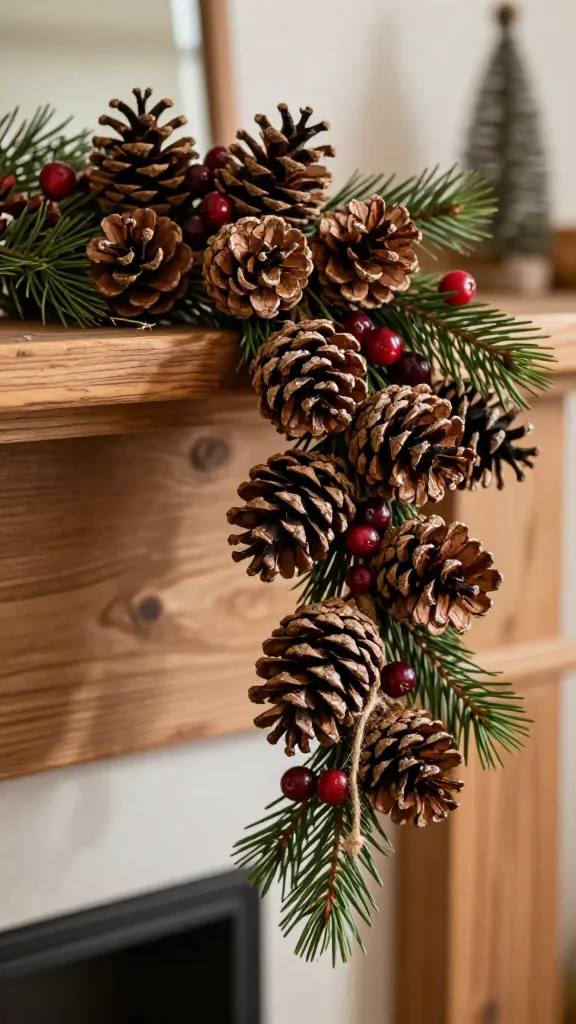
Thread twenty to twenty-five pine cones onto jute string, alternating with dried cranberries or citrus slices. The natural texture brings a woodland vibe without synthetic materials. A six-to-seven-foot garland creates a seasonal backdrop that smells as good as it looks.
Research on biophilic design shows that incorporating natural elements into indoor spaces reduces stress and improves wellbeing. Your guests may not articulate why the garland feels welcoming, but their nervous systems register the natural textures and respond.
We still use the age-old spray-painted pinecones, not traditional and definitely not the most environmentally friendly approach, but the sparkle they bring to the tables, desks, shelves, and wreaths is worth it. A walk through the park yields all the cones you need, free. Threaded with dried cranberries, the red reads as colour rather than as decoration, and the whole thing smells like the forest for weeks if you keep it off the radiator.
Gently wipe cones with a dry cloth to remove dust before threading. Tie a length of jute string through the cone bases every six to eight inches. Keep the garland away from direct heat to extend its life.
Takeaway: Forage pine cones. Thread onto jute. Alternate with dried fruit. Keep it under seven feet.
2. Why Do Branch Centerpieces Feel More Festive Than Store-Bought?
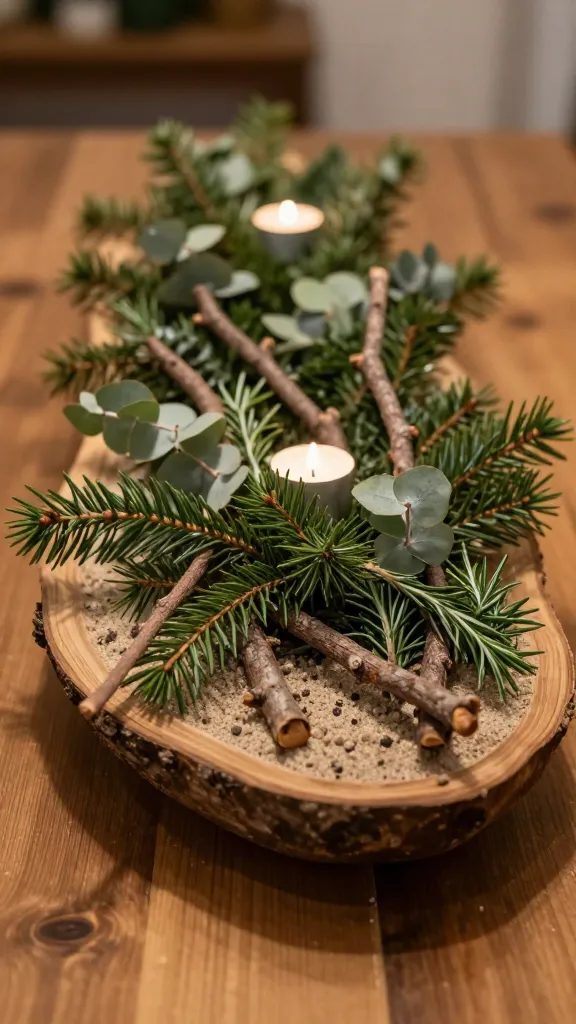
Gather three to five sturdy branches from a walk, dry them thoroughly, and secure them in a low, wide container with sand or pebbles. Add a few sprigs of evergreen, eucalyptus, or rosemary for scent. A branch centerpiece anchors the table with rustic elegance that pairs with real aroma and texture.
Choose birch, maple, or alder branches from outdoor cleanups. Dry them for a few days before arranging to prevent sap from dripping. Secure them in sand or pebbles for stability. The centerpiece should enhance the meal, not compete with it.
We even have a bare branch that we decorate as a Christmas tree, it fits perfectly in the bathroom, where its shape fits just right. Height without bulk is the whole trick. Branches give you structure at eye level and still leave the sightline across the table clear, which a bought centrepiece almost never does. Ours sits in a wide ceramic bowl that was already in the cupboard.
Takeaway: Three to five branches. Low container. Sand base. Evergreen sprigs for scent.
3. How Do Dried Citrus Ornaments Add Warmth to the Tree?

Slice oranges, lemons, or grapefruits a quarter-inch thick, lay them on a rack, and dry at 200°F for two to three hours until crisp. String six to eight slices on twine for sun-kissed, fragrant tree ornaments. They smell amazing, hold their colour, and last beyond the holiday season with proper storage.
Slice fruit a quarter-inch thick for even drying. Lay on a rack, not directly on the baking sheet, so air circulates. Dry at 200°F for two to three hours, checking occasionally. Store in a paper bag with silica gel to prevent moisture buildup. String on twine with a small sprig of rosemary for extra scent.
We also keep a few well-selected fruits that are replaced as they get old, oranges, zesty lemons, even grapefruit and limes, placed in trays on tables. The scent is fresh, not overpowering, and the colour is natural and warm. The first batch I ever dried came out badly. Some slices curled, others never crisped, and about half went in the bin. The survivors were translucent and smelled extraordinary, which was enough to make it a December habit.
Takeaway: Quarter-inch slices. Low and slow. Store in paper. String on twine.
4. What Makes Evergreen Arrangements Feel Alive?
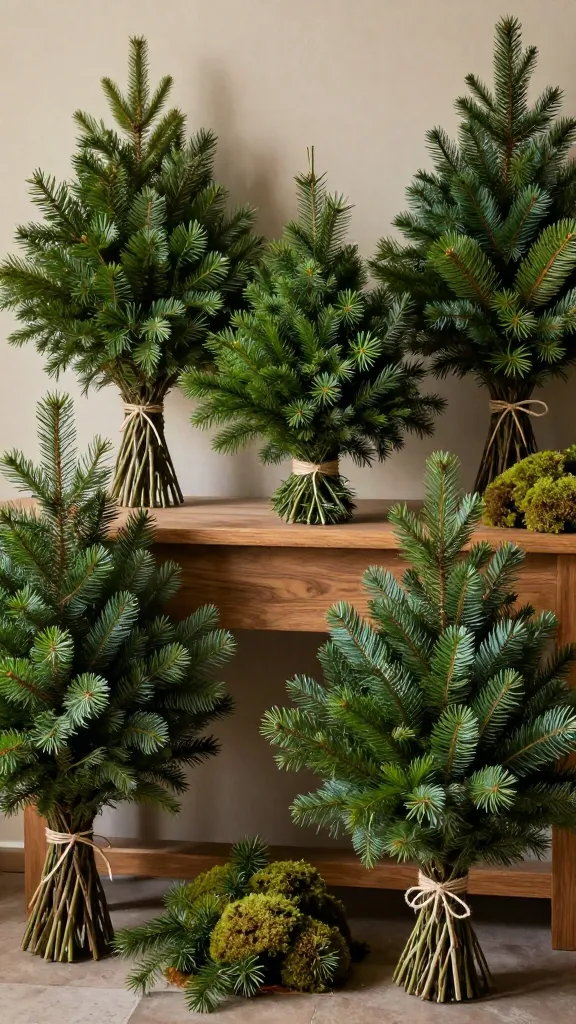
Bundle fresh evergreen stems, pine, cedar, bay, with twine and place three small arrangements around the home. Fresh greenery brings life to any room and reduces dependence on synthetic decor. The varied scents create a layered, natural fragrance that evolves over the season.
Keep greenery in bright indirect light and mist lightly in the morning. Store bundles away from heat sources to extend freshness. Rehydrate by wrapping stems in a damp cloth for thirty minutes if they start to droop. The arrangements should last two to three weeks with care.
The house is not lit like all the other houses, less is more, and there is no need for ten million lights that provide more lumens than the sun. Shadows play as big a role as brightness, and a few well-chosen fir branches provide a scent that is unmistakably ours. We place simple fir branches over the fireplace, and they carry name-cards, the perfect receptacles for the random children’s wish lists, or our traditional Christmas tease-poem. Three or four stems of different evergreens, tied with twine and scattered through the rooms, beat one large wreath by a distance. Pine is sharp and clean. Cedar is warm and woody. Bay sits underneath both and grounds them.
Takeaway: Three small bundles. Varied evergreens. Place around the home. Mist daily.
5. How Do Seed Pod Ornaments Add Texture to the Tree?
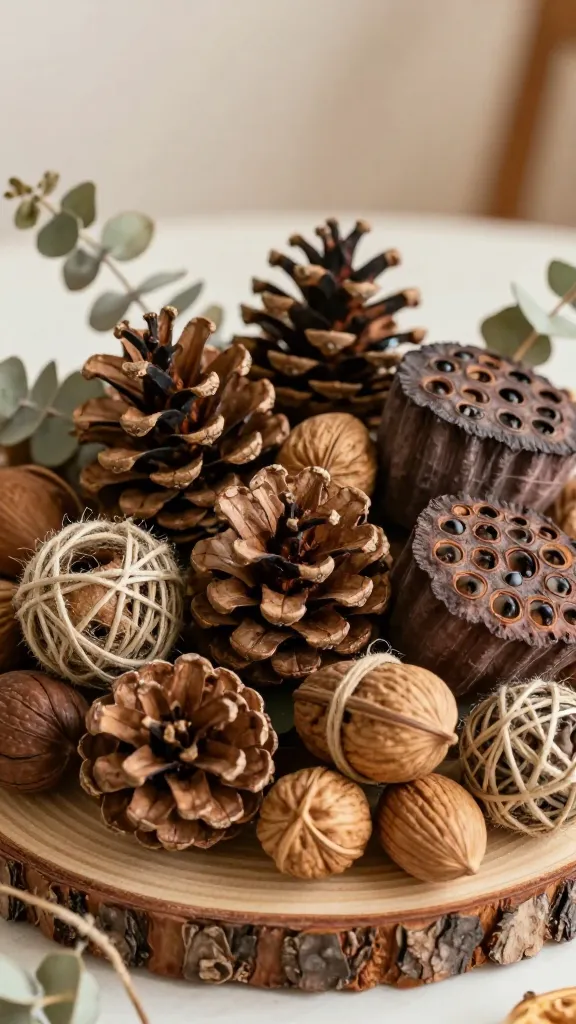
Harvest seed pods and nuts from late autumn, seal with a light spray of matte clear lacquer, and attach with natural twine to the tree. The ornaments feel grounded, honest, and unlike anything plastic. A display of twelve to fifteen pieces using varied shapes creates visual interest without overwhelming.
Seal pods with a light spray of matte clear lacquer to prevent cracking. Attach with natural twine or raffia. Combine with dried eucalyptus for a scent hint. Store in a breathable container after the season to prevent moisture buildup.
We’ve moved away from plastic baubles and now have several decorative ornaments made of wood: carved angels, birds, balls, and small disks with images of our family on them. Each item is better quality and comes with a memory of a trip or a specific year. Acorns, sweetgum balls and lotus pods collect in coat pockets all autumn with no plan behind them. Sealed with matte lacquer and hung on twine, they catch the light in a way glass never does, and the tree ends up looking collected rather than decorated.
Takeaway: Forage seed pods. Seal with matte lacquer. Attach with twine. Vary the shapes.
6. Why Does a Burlap Candle Centerpiece Feel Rustic?
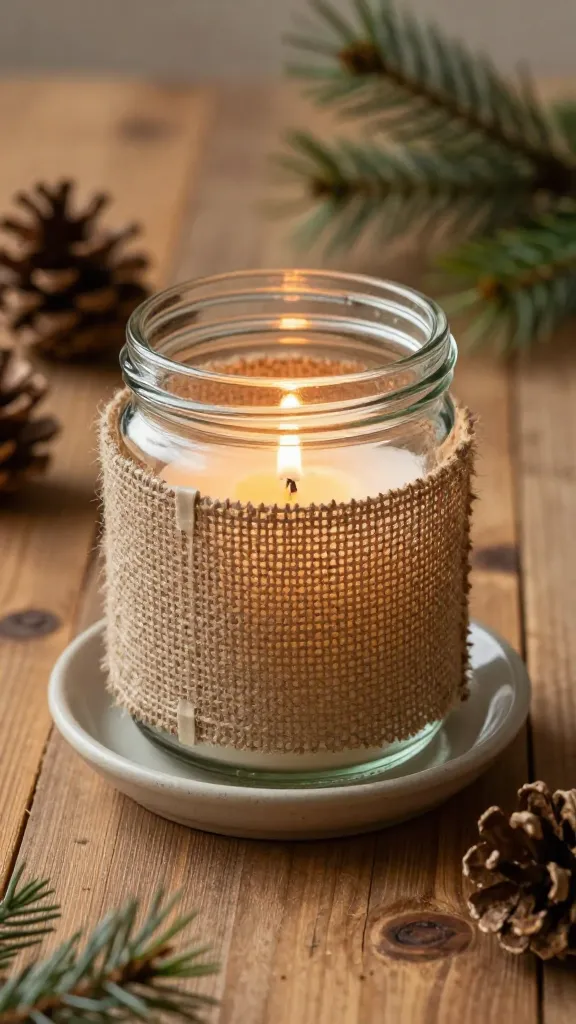
Wrap a glass jar in burlap or jute fabric, place a reusable tea-light inside, and set it on a ceramic or metal saucer. The burlap provides rustic warmth without plastic bases. A low-profile centerpiece glows without disposable materials.
Place candles on a ceramic or metal saucer to protect surfaces. Use a short, wide jar to minimize heat buildup. Trim burlap edges and seal with fabric glue for longevity. The centerpiece should be low-profile so it doesn’t block conversation across the table.
Using real candles is simply too risky in the days of good quality fairy lights, and we make sure to buy those where the bulbs can be replaced or where burning one bulb out does not kill the entire string, this is important. But for smaller accents, a burlap-wrapped jar with a tea-light feels handmade and warm. A pasta sauce jar wrapped in a scrap of burlap does the same job as an expensive holder. The weave breaks the light, so the glow lands soft instead of glaring.
Takeaway: Glass jar. Burlap wrap. Tea-light inside. Saucer underneath. Keep it low.
7. How Do Wool Ornaments Add Softness to the Tree?
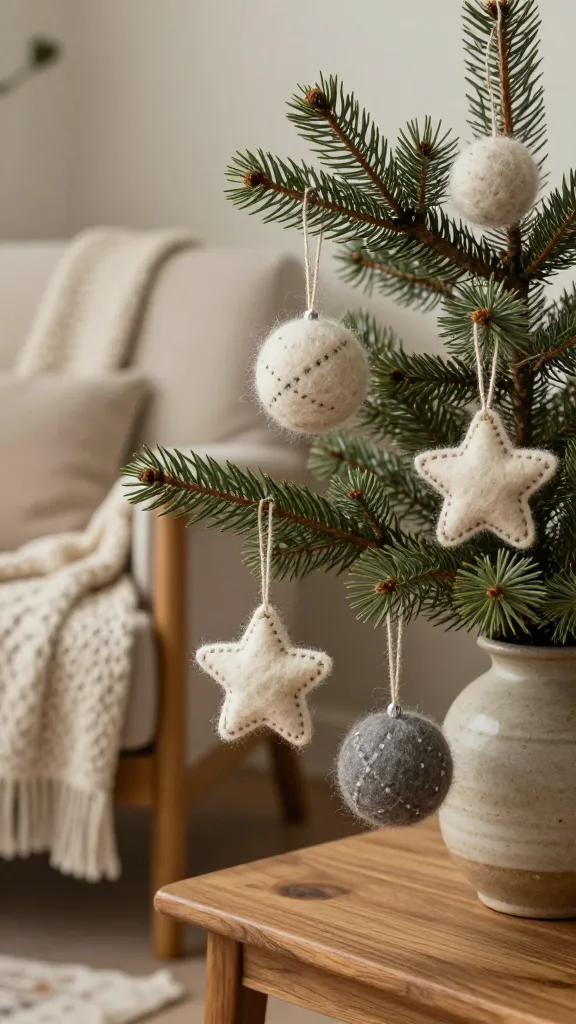
Hand-stitch simple shapes from dense felt, stars, balls, trees, using natural cotton thread. Six to eight pieces build a soft, tactile tree that stays intact year after year. Wool ornaments add texture without the slick look of plastic.
Choose dense felt that won’t fray easily. Reinforce with a simple stitch. Attach with natural cotton thread rather than metal hooks. Store flat to keep shapes well. The ornaments should feel handmade, not manufactured.
We also hang special cookies on the tree that the children can dunk in their tea at any time, as long as they replace them soon afterwards. These are harder cooking, broas from Portugal, and they last two to three months easily. The smell of the cookies mixing with the fir branches is unmistakably Christmas. The first wool stars were cut and stitched by a two-year-old who wanted to help, stuffed with lavender, lopsided in every direction. Years on, those are the ones she looks for first in the box.
Takeaway: Dense felt. Simple shapes. Cotton thread. Store flat. Let them be imperfect.
8. What Makes a Wreath from Local Greens Feel Personal?
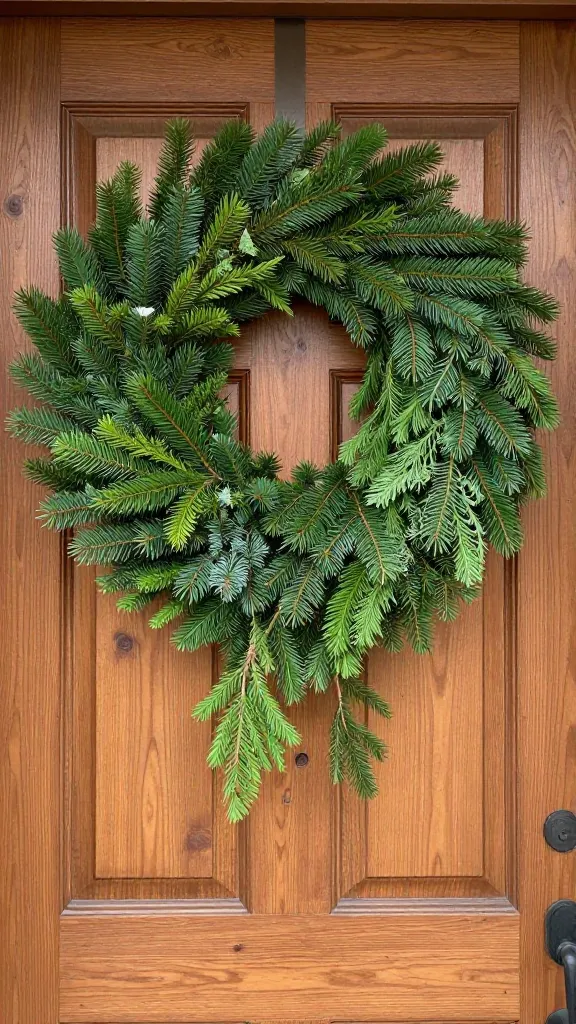
Craft a wreath from evergreen boughs picked up locally, secured with floral wire instead of plastic ties. Add a few seed pods and pine cones for accents. A sixteen-to-twenty-inch wreath graces an entry or mantel for weeks, bringing a welcome scent and visual anchor.
Secure greens with floral wire, not plastic ties. Add a few evergreen boughs around the base for fullness. Hang away from direct heat sources to extend life. The wreath should feel collected, not manufactured.
We have a couple of young fir branches that are joined, more like a bouquet than a wreath, as we lack the patience. But it still brings that fresh, forest scent to the door. Garden centres will usually sell you their offcut boughs cheaply. Wired onto a grapevine base that gets reused every year, with cones and dried citrus worked in, it holds its scent for weeks away from direct heat.
Takeaway: Fresh evergreen boughs. Floral wire. Pine cones and citrus. Keep it under twenty inches.
9. How Do Paper Ornaments Add a Handmade Touch?
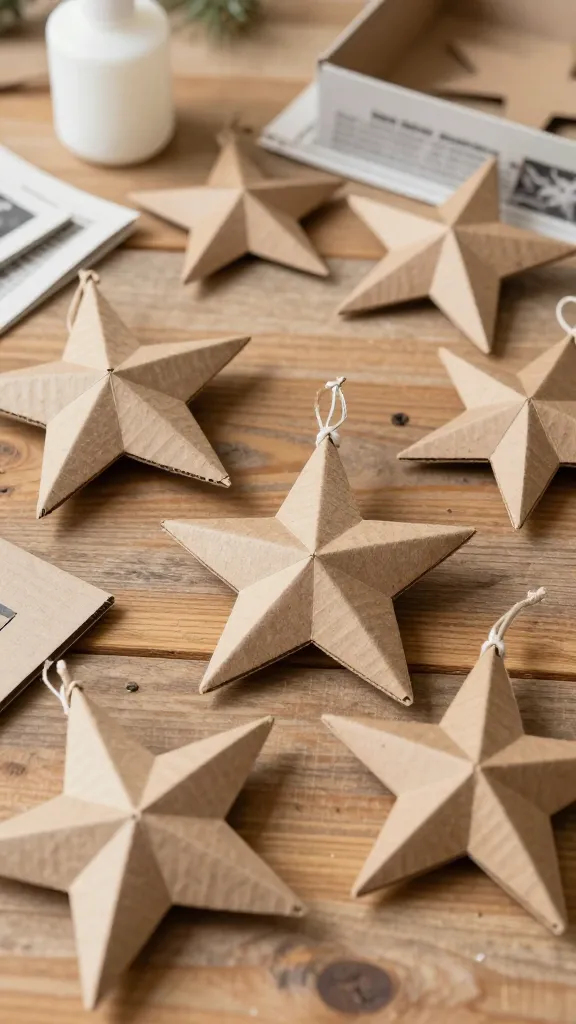
Cut four to six stars from recycled cardboard and two to three rounds from kraft paper. Seal with a matte brush-on sealer to improve moisture resistance. Hang as a cohesive mobile or garland. Paper ornaments offer charm and resilience without plastics.
Use white glue and newspaper strips for strong, lightweight shapes if you’re making paper-mache. For simpler ornaments, cut directly from cardboard or kraft paper. Seal with matte brush-on sealer to prevent warping. Store flat in a labeled box to avoid crushing.
An old cereal box cuts into perfectly good stars. Sealed with matte sealer the card holds its shape, and the slight warps that come with drying are exactly why they look handmade rather than bought.
Takeaway: Recycled cardboard. Kraft paper. Matte sealer. Store flat. Let them be handmade.
10. Why Do Herb Bundles Add Scent Without Overpowering?
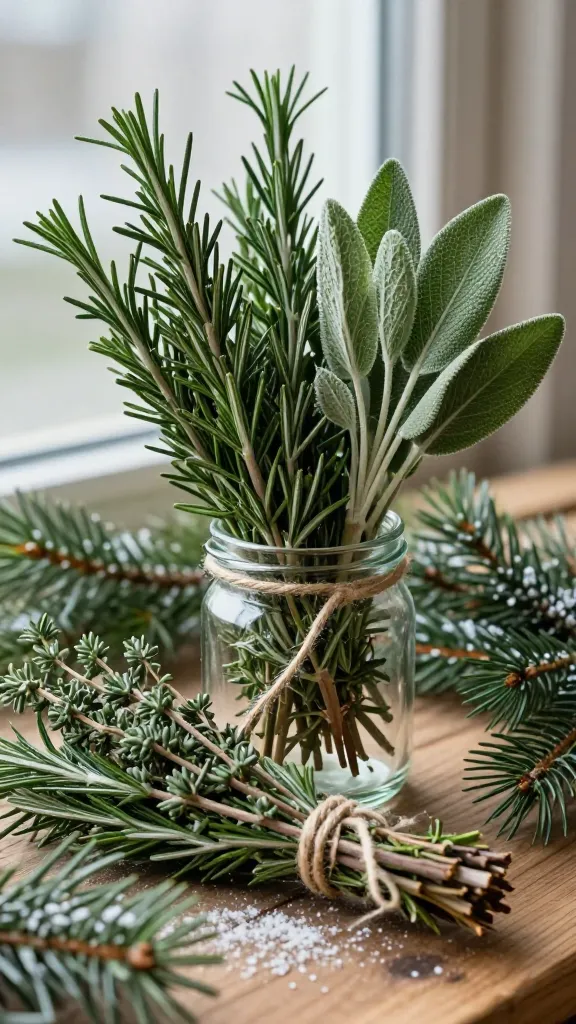
Bundle fresh rosemary, sage and thyme with twine, then set three to five small bunches around the dining area. They add scent and greenery with no plastic involved, and the fragrance arrives before anyone sits down.
Scent is the most direct pathway to memory and emotion. Neuroscience research on olfaction shows that smell bypasses the brain’s rational centres and connects directly to the limbic system, the seat of emotion and memory. That’s why the smell of rosemary at Christmas can transport you to a specific moment, a specific year, a specific feeling.
Cut them earlier in the day and tie the stems so they hold together. Set the bundles near the platters without touching them. You want a background note, not a competing one, and herbs cut hours ahead give you exactly that.
Takeaway: Small herb bundles. Tied with twine. Placed strategically. Keep it subtle.
11. How Do Clay Pot Mini-Trees Add Earthy Charm?
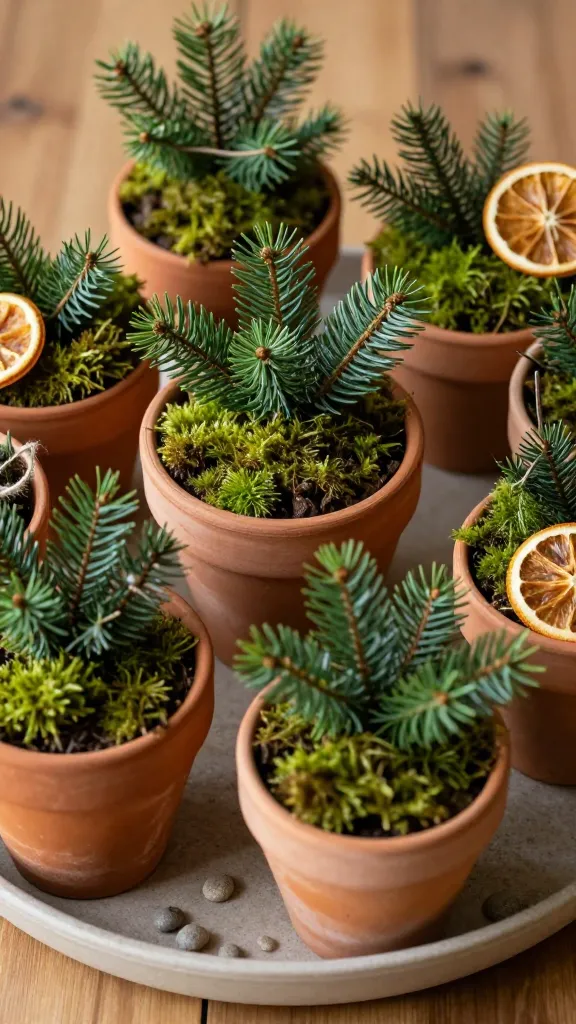
Fill three small terracotta pots with natural greenery, moss balls, or potted plants. Vary the heights to create depth on a shelf or mantel. Clay pot mini-trees create a rustic, earth-toned display that doubles as plant decor.
Place pots on a tray with a thin layer of pebbles for drainage. Use a lightweight potting mix and water from the rim sparingly. Add a small moss layer to retain moisture. The mini-trees should last for weeks with minimal care.
Unglazed terracotta does most of the work here. Moss balls need nothing but an occasional misting, the evergreen sprigs supply the scent, and the pots read as garden rather than shop.
Takeaway: Three terracotta pots. Varied heights. Moss balls or evergreens. Keep them misted.
12. Why Does a Fabric Tree Skirt Feel Warmer Than Plastic?
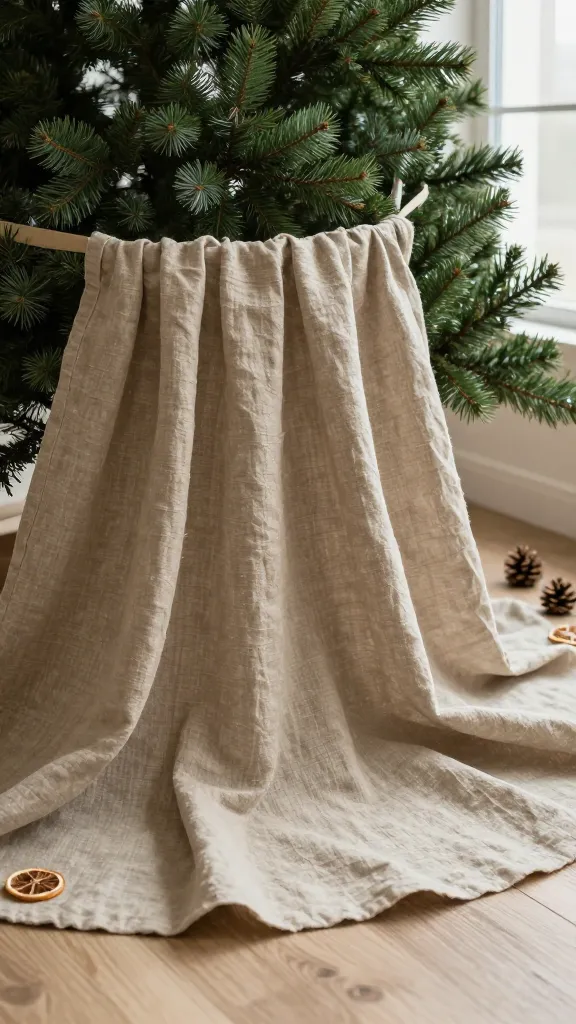
Skip plastic tree skirts and wrap a natural fabric skirt, heavy cotton, linen, or knit wool, around the base. It hides cords and adds a soft, tactile finish. A six-to-eight-foot skirt fully conceals stands while adding warmth.
Choose heavy cotton or linen that cleans easily. Secure with a simple cord or tie to prevent shifting. Wash between seasons to prevent odour buildup. The skirt should be large enough to fully conceal the base but not so large that it overwhelms the space.
Ours is a linen table runner cut down to size. It cost nothing, it hides the stand and the cable run, and it gives the base of the tree something soft to sit on.
Takeaway: Natural fabric. Six to eight feet. Conceal the base. Wash between seasons.
Is a real tree actually greener than a plastic one?
Not automatically, and this is where the natural-is-better instinct breaks down. The Carbon Trust puts a two-metre artificial tree at roughly 40kg of CO2e, around ten times a real tree that is burned after Christmas. That sounds decisive until you divide it by the years you keep it. Reused for long enough, and the range usually quoted is seven to twenty years depending on weight and materials, the artificial tree comes out ahead of buying a freshly cut one every December.
The variable almost nobody mentions is disposal. A real tree sent to landfill decomposes and releases methane, which is why the same tree carries about 16kg of CO2e that way and roughly a fifth of that if it is chipped for the garden or replanted with its roots. So the honest answer is that a real tree beats plastic only if you deal with it properly afterwards, and a plastic tree beats a real one only if you refuse to replace it for a decade. Our thirty-year tree is not the compromise it looks like.
Natural vs Plastic Christmas Decor Compared
| Element | Natural Version | Plastic Alternative | Key Difference |
|---|---|---|---|
| Tree | Real fir or bare branch | Plastic tree (30-year use) | Real trees have scent and imperfection; plastic is convenient |
| Ornaments | Wood, wool, seed pods, dried citrus | Plastic baubles | Natural ornaments carry memories; plastic is uniform |
| Garlands | Pine cones, dried fruit, evergreens | Plastic tinsel | Natural garlands smell like forest; plastic looks fake |
| Lighting | Candles (risky), fairy lights (replaceable bulbs) | LED string lights | Choose lights where 1 bulb out doesn’t kill the string |
| Tree skirt | Linen, cotton, wool | Plastic with printed patterns | Natural fabric is soft and grounded; plastic looks cheap |
| Wreaths | Fresh evergreen boughs, fir branch bouquet | Plastic wreaths | Fresh greens have scent and life; plastic is static |
Frequently Asked Questions
How can I decorate for Christmas without plastic or single-use items?
Focus on natural materials you can source from a garden centre or yard cleanup: pine cones, evergreen branches, dried citrus, and handmade textiles. Combine these with simple storage solutions like jars, twine, and ceramic bases for a timeless, earthy look that lasts for years.
Will fresh greens last through December indoors?
Yes, if you keep them away from heat and direct sun, mist them lightly in the morning, and trim stems every few days. Rehydrate by standing the stems in a small amount of water for a few hours every week, and most evergreens will last two to three weeks with proper care.
What should I do with decorations after Christmas?
Store items in breathable containers with natural packing materials. Dry citrus slices can be preserved and reused for next year with careful drying and sealing. Pine cones and branches can be cleaned, dried, and stored for future seasons, while wool and felt ornaments should be stored flat to maintain shape.
How do I create a cohesive natural look without overdoing it?
Limit your palette to two to three natural hues, green, brown, and a touch of natural red or orange. Repeat shapes and textures across different elements: cones, berries, and wood. This creates harmony without feeling cluttered, less is more when it comes to natural decor.
Conclusion
Earthy, plastic-free Christmas decor isn’t just possible, it’s deeply satisfying. You’re not buying something manufactured; you’re making something personal. The pine cones you foraged. The citrus you dried. The herbs you bundled. The ornaments you stitched. Each piece carries a story, a memory, a moment. Start with one idea this year. Add another next year. Over time, these small, natural touches accumulate into a Christmas that feels warm, grounded, and unmistakably yours. If you want to extend this natural approach to the rest of your seasonal decor, my guides on earthy autumn decor, seasonal home changes, and harvest table ideas show how to keep your home feeling intentional through every season.
Leave a Reply