10 Simple Ways to Slow Down Your Home Life This Weekend
· thehazelcottage@mail.com
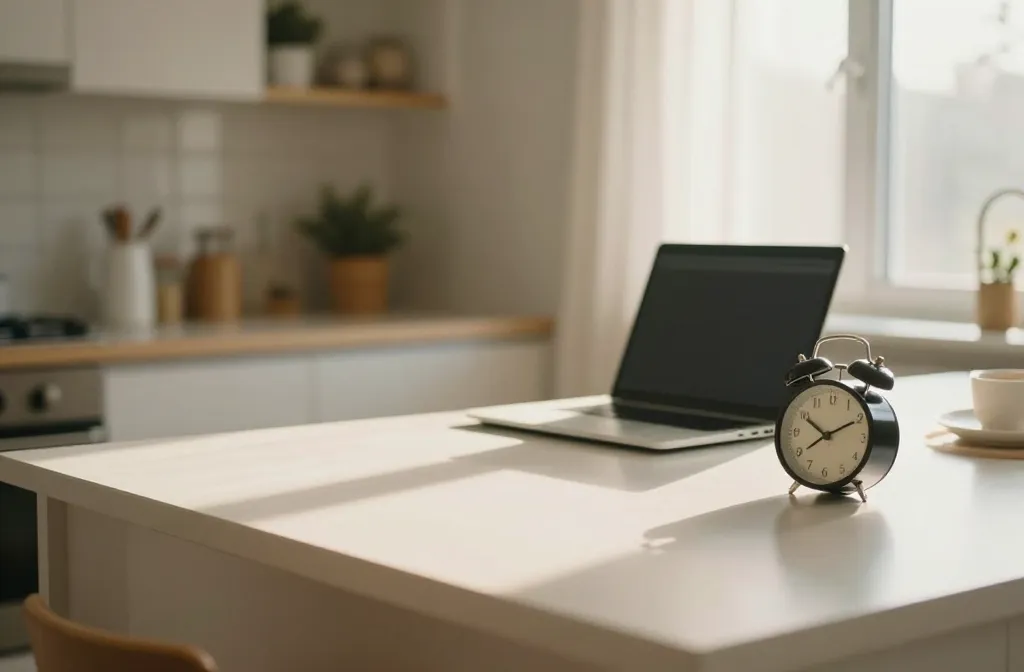
Weekends disappeared in a blur of chores and chores-in-disguise. Saturday morning arrived with the best intentions, and by Saturday afternoon, I’d cleaned, errand-run, and task-switched my way into exhaustion. Moving countries every three or four years taught me that you can’t control everything, but you can protect a few pockets of calm. If your home life feels chaotic and your weekends feel like a second work week, here are ten practical, do-this-this-weekend steps to reclaim calm — without requiring special tools or complex skills.
1. How Do You Protect a Block of Time Just for You?

Set aside a single ninety-minute block on Saturday morning with no devices. Turn off notifications, tell a family member you’re offline, and protect that time like an appointment. This unplugged reset restores your focus and gives you back a sense of control over the weekend.
When your home calendar runs on autopilot, tiny tasks sneak into large swaths of your weekend. The result is a constant to-do loop that leaves you drained by Sunday night. I let Saturday slip away this way for years — checking email, responding to texts, jumping between chores — until I started blocking ninety minutes every Saturday morning. Phone in another room. No screens. Just me, a notebook, and whatever I wanted to do with that time.
Sometimes I read. Sometimes I write. Sometimes I just sit and think. The point isn’t productivity — it’s choice. For ninety minutes, I decide how the time gets used instead of letting the inbox decide.
Takeaway: Schedule a ninety-minute unplugged block this weekend. Protect it.
2. Why Does Clearing One Surface Change Everything?
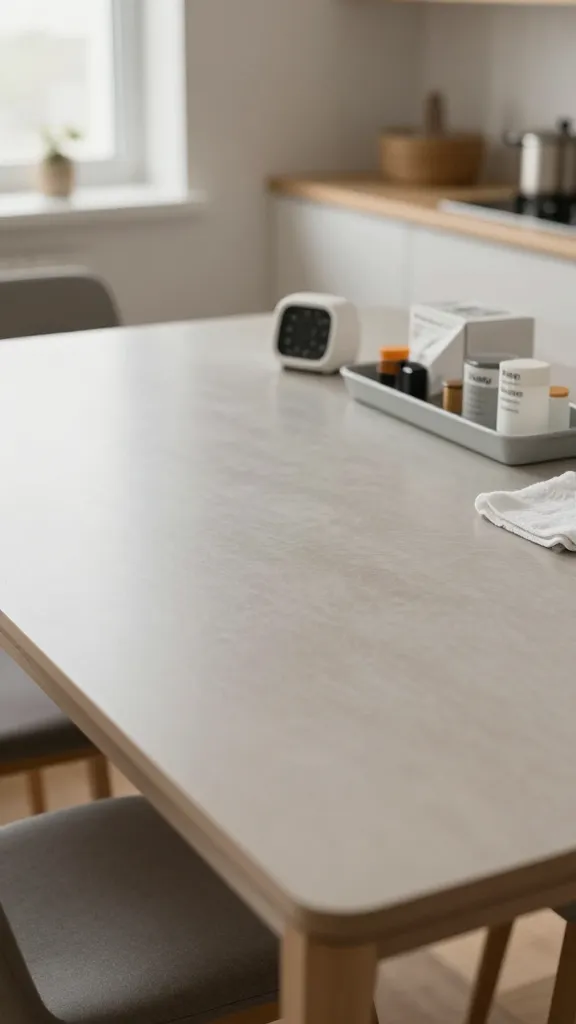
Choose one surface per room — the kitchen counter, the entryway table, your desk — and clear it completely in twenty minutes. A single cleared surface dramatically reduces decision fatigue and speeds up everything else.
Clutter spreads mentally and physically. Research on environmental stress shows that visual clutter increases cortisol and makes it harder to focus or relax. When every table, counter, and shelf holds a mix of items, you waste minutes looking for the same thing repeatedly, and doorways feel blocked by belongings.
I pick one surface each Saturday morning. I set a timer for twenty minutes, sort items into keep, donate, or trash, and wipe the surface clean. That one clear spot becomes an anchor of calm that the rest of the room organises around. By Sunday, I’ve usually cleared two or three surfaces, and the whole apartment feels lighter.
Takeaway: Pick one surface this weekend. Set a timer. Clear it in twenty minutes.
3. How Does a Two-Meal Plan Save Your Weekend?
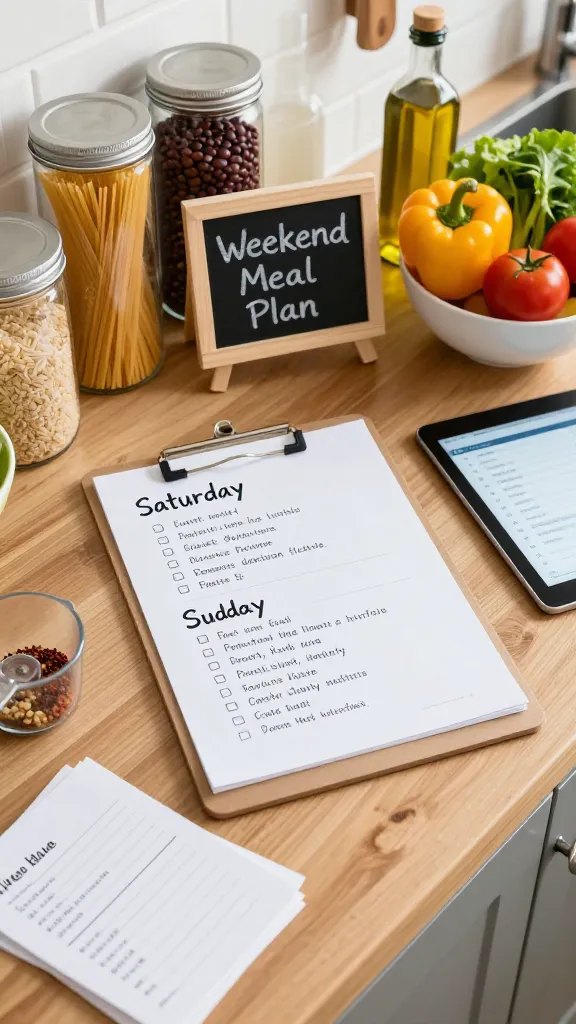
Draft a two-meal plan for Saturday and Sunday, including at least one option using pantry staples. List ingredients, check the pantry, and prep components that store well. A simple plan lowers friction and frees up your weekend for something other than deciding what to eat.
Evening decision fatigue compounds when you don’t know what to cook and end up ordering delivery. I spent twenty minutes every night staring into the fridge, then gave up and ordered something. The food was fine, but the decision-making drained me. Now I plan two meals on Saturday morning — not ten, not a full week, just two. One for Saturday night, one for Sunday. I check the pantry, write a short list, and by Saturday afternoon, I’ve prepped what I can.
The key is keeping it simple. Don’t plan elaborate meals. Plan meals you actually want to eat, with ingredients you already have or can get in one trip. That’s it.
Takeaway: Create a two-meal plan this weekend. Keep it simple. Prep what stores well.
4. How Do You Batch Tasks Without Burning Out?
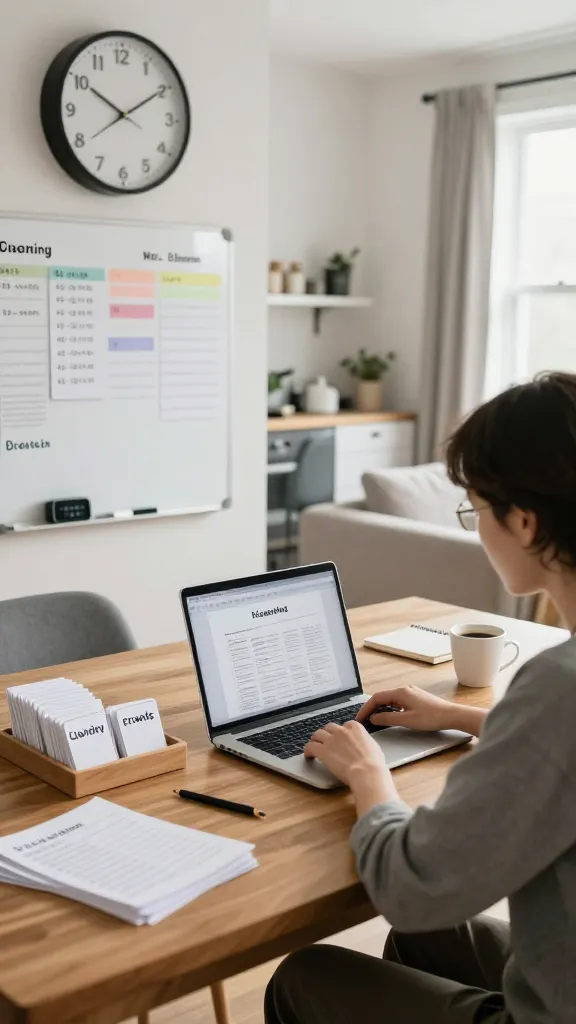
Group chores by type — cleaning, laundry, errands — and block forty-five to sixty minutes for each batch. Resist mid-batch interruptions. Switching between unrelated tasks drains energy and productivity; batching similar tasks lets you finish more in less time with less fatigue.
I jumped between chores for years, feeling scattered all day. I’d start laundry, then remember the kitchen needed cleaning, then realise I needed to pick up something from the store, and by the end of the day, nothing was finished. Now I batch: Saturday morning is for cleaning. Saturday afternoon is for errands. Sunday morning is for laundry. Each batch gets its own time block, and I don’t switch until it’s done.
Research on task management confirms that switching between tasks increases cognitive load and reduces efficiency. Batching isn’t just about getting more done — it’s about getting done without the mental churn.
Takeaway: Create two task batches this weekend. Complete each one without interruption.
5. What Happens When You Replace Screen Time with Low-Tech Pleasures?

Designate a sixty-minute screen-free window on Saturday. Spend the time reading, doing a simple hobby, or taking a short walk. Charge devices in a different room to remove temptation. Replacing screen time with hands-on, low-tech activities restores balance and helps you reset for the week ahead.
Screens drain energy and steal time. I defaulted to scrolling during every idle moment — waiting for the kettle to boil, sitting on the couch, lying in bed. By Sunday night, I felt mentally exhausted, and I couldn’t pinpoint why. Then I started a sixty-minute screen-free block on Saturday afternoons. I’d put my phone in the bedroom, grab a book, and sit in the rest corner I’d created. The difference was immediate: by Sunday, I felt rested instead of drained.
Research on screen time and stress shows that prolonged digital stimulation increases cortisol and disrupts circadian rhythms. Georgetown research on digital detoxes found that after just two weeks of reduced screen time, people could maintain attention for longer — comparable to reversing about 10 years of age-related decline.
Takeaway: Set a sixty-minute screen-free block this weekend. Put the phone in another room.
6. How Do You Create a Cozy, Low-Maintenance Weekend Zone?
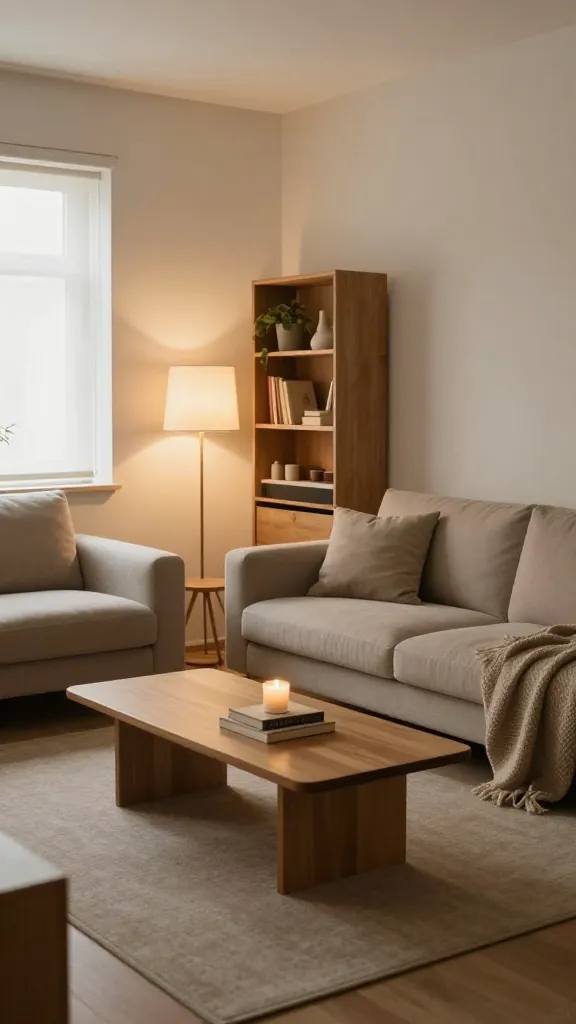
Choose one room to optimize for the weekend: remove twenty to thirty percent of items, establish a simple cleaning routine, and introduce warm lighting. A calm, low-maintenance zone reduces stress and helps you recover from the week.
Our favourite room in every home was always the kitchen — where life happened. Children at the table with tea and cookies and homework while I prepared meals. But even that room needed taming on weekends. I let every room become a catch-all for stuff for years — the living room held laundry, the bedroom held work papers, the kitchen held everything else. By Saturday, the whole apartment felt busy and crowded. Now I pick one room each weekend to simplify — not deep clean, just simplify. I remove items that don’t belong, wipe surfaces, and adjust the lighting. That one room becomes a sanctuary for the weekend, and the calm spreads.
The goal isn’t perfection — it’s a space that invites rest instead of adding to the chaos.
Takeaway: Choose one room this weekend. Remove what doesn’t belong. Add warm light.
7. What Simple Tools Automate Weekend Home Care?
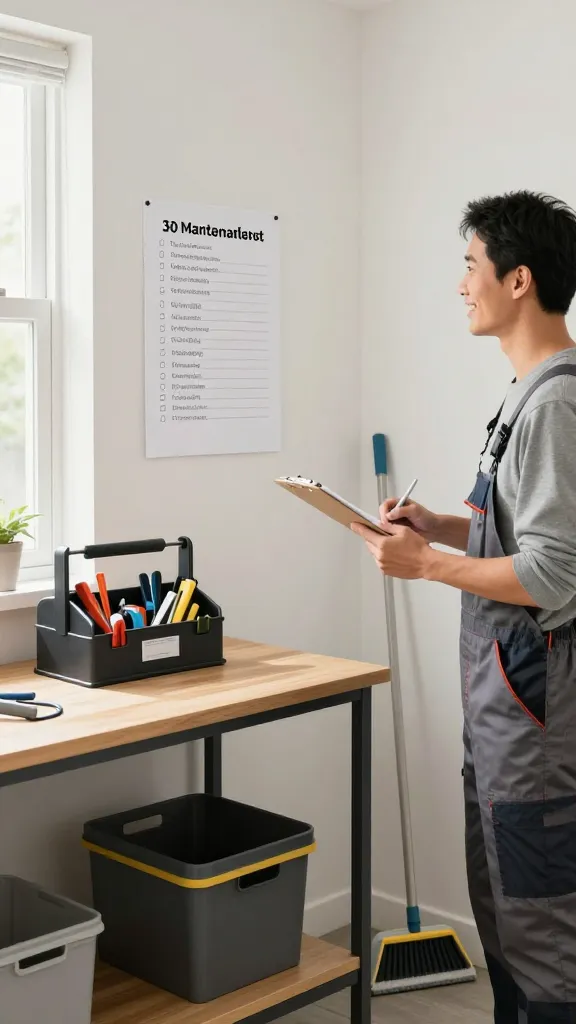
Keep a labeled cleaning caddy with essentials in each room, and set up a thirty-minute monthly maintenance routine. You don’t need fancy gadgets — a basic checklist and ready-to-grab tools save hours of searching and deciding.
I spent half of Saturday looking for the right cleaning supplies. The sponge was in the kitchen, the spray was under the sink, the cloths were in the laundry room. By the time I gathered everything, I’d lost momentum. Now I keep a small caddy in each room — bathroom, kitchen, living area — with the basics: spray, cloths, a small brush. When I see something that needs cleaning, I grab the caddy and handle it in minutes instead of making a production of it.
The thirty-minute monthly maintenance is even simpler: I walk through the apartment with a checklist — check smoke detectors, clean the fridge coils, wipe down baseboards — and handle what I find. It takes half an hour and prevents small issues from becoming big ones.
Takeaway: Set up a cleaning caddy in each room. Schedule a thirty-minute monthly maintenance walk-through.
8. Why Does Finishing One Project Matter?
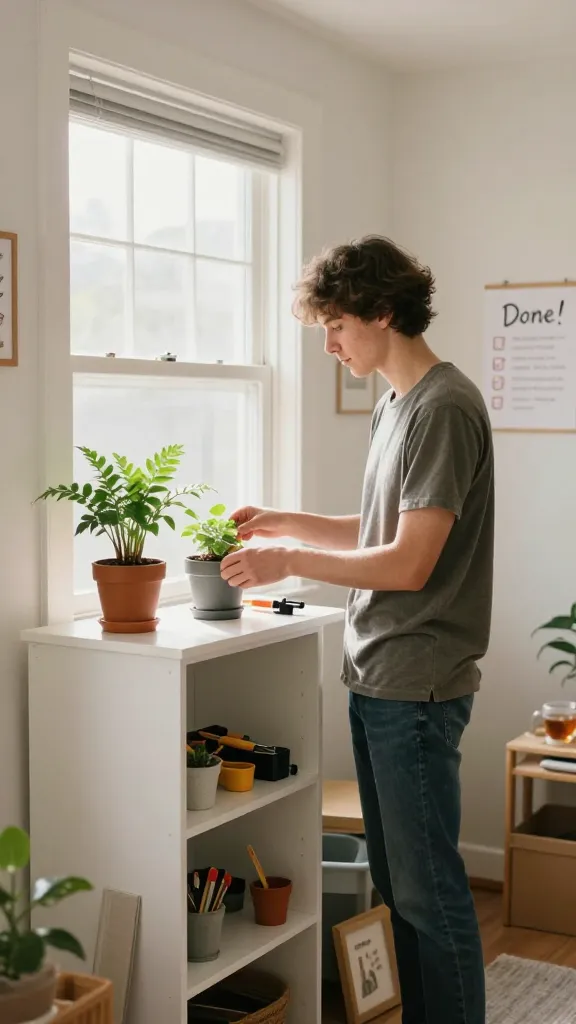
Choose a small, finishable project — organizing a closet shelf, potting a few plants, clearing a drawer — and complete it this weekend. Having a tangible win empowers you to reclaim weekend momentum instead of letting half-done tasks linger.
Multiple half-done tasks lingered on my lists for months — the junk drawer, the bookshelf, the coat closet. They sat there, unfinished, and every time I walked past them, I felt a small sting of failure.
Then I picked one — just one — and finished it in a Saturday afternoon. The junk drawer. I emptied it, sorted it, threw away what I didn’t need, and organised the rest into small containers. It took two hours, and when I was done, I felt something I hadn’t felt in weeks: accomplishment. That one finished project gave me momentum for the next one, and the next.
The key is choosing something you can actually finish in one session. Not reorganising the garage — organising one drawer. Not repainting the kitchen — potting three plants. Small wins compound.
Takeaway: Choose one small project. Finish it this weekend. Celebrate the win.
9. How Do You Set Boundaries for Weekend Errands?

Identify three essential items you’ll buy this weekend, plan one centralised shopping trip in daylight, and carry a simple list. Errand overdrive drains energy — a restrained approach keeps you from frittering away hours chasing supplies you don’t need.
I found myself running back and forth to stores all weekend for years. I’d go for milk, come home, realise I needed eggs, go back, see something else I needed, stay longer. By Sunday, I’d spent hours in stores and felt exhausted. Now I plan one trip, write a list of three to five items, and stick to it. If I forget something, I wait until next weekend or order it online. The boundary is simple: one trip, one list, done.
Takeaway: Limit weekend errands to one focused shopping trip with a clear list.
10. How Does a Five-Minute Reflection Reset Your Week?

Spend ten minutes Sunday evening noting two wins from the weekend and two tasks for next weekend. Put a reminder in your calendar to revisit the plan midweek. Without reflection, the weekend momentum fades — a quick wrap-up helps you start the new week with intention and calm.
I used to wake up Monday scattered and unfocused, the weekend already a blur. Then I started a Sunday evening ritual: grab a notebook, write two things that went well, write two things I want to do next weekend. It takes five minutes, and it does something powerful — it creates closure. I’m not carrying the weight of an unfinished weekend into Monday. I’m acknowledging what happened, learning from it, and choosing what comes next.
Research on reflection and wellbeing shows that this kind of practice reduces anxiety and improves emotional regulation. You’re not just planning — you’re closing one chapter and opening the next with clarity.
Takeaway: End the weekend with a five-minute reflection. Write two wins, two tasks for next weekend. Close the notebook.
Weekend Slow-Down Strategies Compared
| Strategy | Time Required | Impact Level | Best For |
|---|---|---|---|
| 90-minute unplugged block | 90 minutes | High — restores focus + choice | Saturday morning reset |
| Clear one surface | 20 minutes | Medium — reduces decision fatigue | Quick visual calm |
| Two-meal plan | 15 minutes | Medium — eliminates evening friction | Reducing decision fatigue |
| Batch tasks | 45-60 min per batch | High — prevents mental churn | Getting done without exhaustion |
| 60-minute screen-free block | 60 minutes | High — restores attention + mood | Saturday afternoon rest |
| One finishable project | 1-3 hours | High — builds momentum | Creating accomplishment |
Frequently Asked Questions
How can I start small if I’m overwhelmed on Friday?
Begin with the ninety-minute unplugged reset block on Saturday morning. It’s tiny but powerful. You’ll find that momentum grows when you protect a single, quiet period without devices. Start there, and add one other practice next weekend.
What if I live with others who resist downtime?
Explain the plan briefly and set clear expectations: one unplugged block, one decluttered surface, one meal plan. Ask for support by modelling calm behaviour and sticking to your plan yourself. You can’t control others, but you can protect your own rhythm.
What’s a realistic time frame for decluttering a surface?
Twenty minutes per surface is plenty. Use a timer, and don’t overthink what to keep — keep only what you truly use or love. After two or three surfaces, you’ll notice a meaningful improvement in space and mood.
Which weekend project should I pick if I’m short on time?
Choose a project you can complete in under three hours. Organise a chaotic cabinet, pot a few plants, or purge a single bookshelf. A finish is a powerful motivator — it gives you momentum for the next one.
How do I maintain the habit next weekend?
Schedule two recurring ninety-minute blocks on the same weekend each week. Keep a short, rotating list of three tasks you’re working toward so you always have a purpose for the block. Consistency compounds — after four weekends, the rhythm becomes automatic.
Conclusion
These ten steps have helped me reclaim calm without demanding major changes. You don’t need to do all ten this weekend — start with one or two, and notice what shifts. Protect a ninety-minute block. Clear one surface. Plan two meals. Finish one project. Small, intentional choices accumulate into weekends that feel like yours instead of something that happens to you.
Monday doesn’t have to feel like a crash. It can feel like a continuation of a weekend well spent. If you want to build on this rhythm, my guides on Sunday rituals for a grounded home, intentional home design, and morning rituals for a slow start show how to keep your weekends — and your weekdays — feeling calm and intentional.
Leave a Reply